
Khotyn on the Dniester
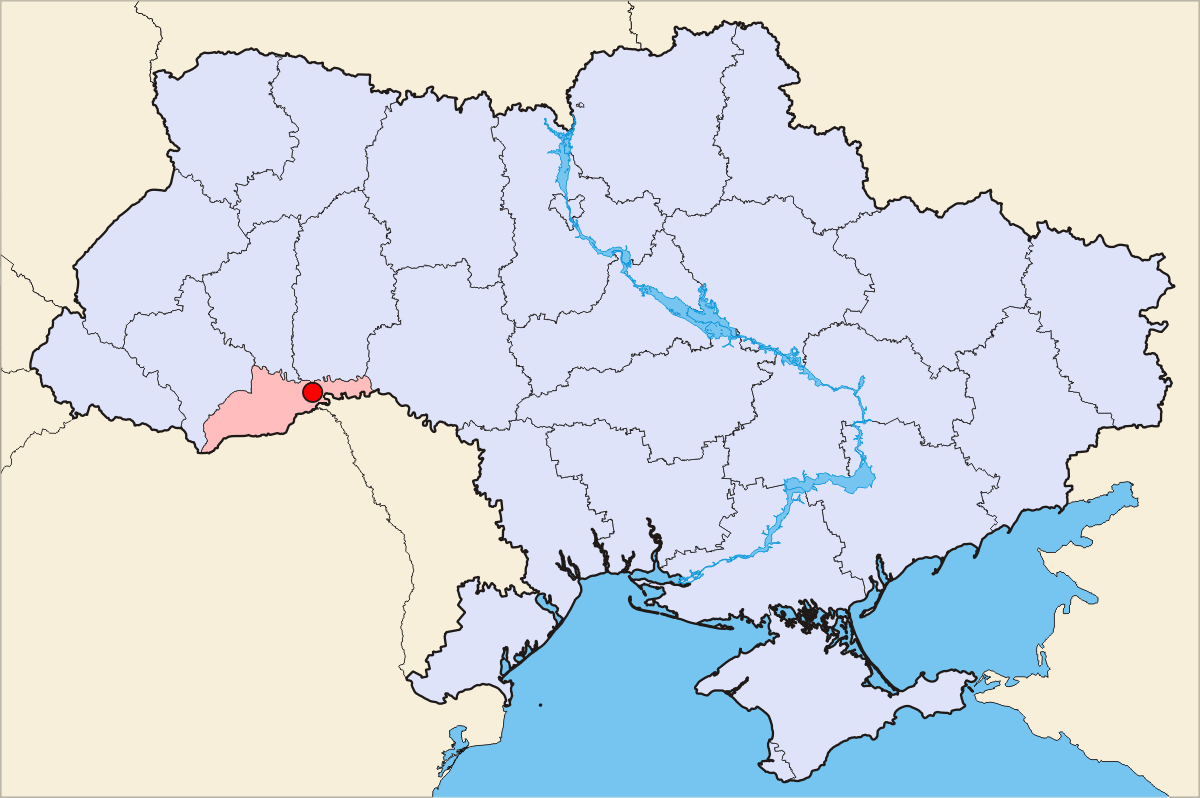
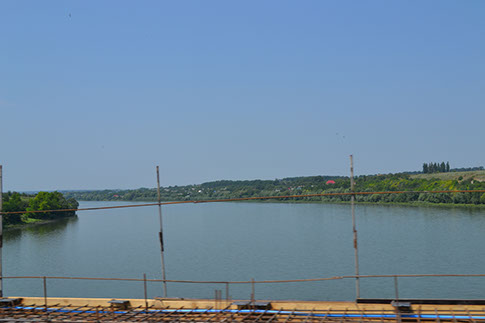
Khotyn stands above the Dniester in Chernivtsi Oblast, western Ukraine. Its fortress guarded a river crossing, and its markets connected the town with Podolia and the surrounding countryside. Jews formed roughly half of its population by the end of the nineteenth century.
The Jewish community supported prayer houses, schools, a hospital, charities, shops, and workshops. The History and Jewish Life pages follow the people who lived here and the changes they experienced.
Names you may find in records
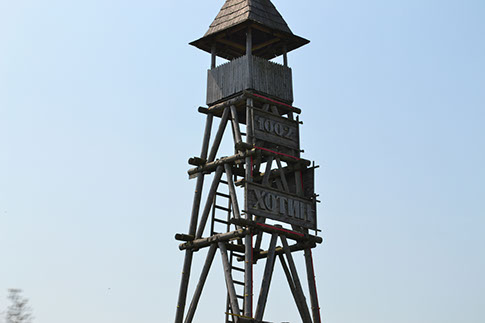
This site uses Khotyn, the preferred English spelling of the Ukrainian name Хотин. Search catalogues using Khotin, Hotin, Chotin, Chotyn, Chocim, and Choczim as well. Hebrew and Yiddish sources also use חוטין.
Changing borders
| Period | Setting | Names found in sources |
|---|---|---|
| Medieval–1812 | Moldavia and the Ottoman frontier, with repeated changes in military control | Hotin, Chocim, Choczim, and other forms |
| 1812–1918 | Bessarabia, Russian Empire; seat of Khotin uyezd (district) | Хотин / Khotin |
| 1918–1940 | Romania; seat of Hotin County | Hotin |
| 1940–1941 | Ukrainian Soviet Socialist Republic, Soviet Union | Хотин |
| 1941–1944 | Romanian wartime administration | Hotin |
| 1944–1991 | Ukrainian Soviet Socialist Republic, Soviet Union | Хотин |
| 1991–Present | Independent Ukraine; now in Dnistrovskyi Raion, Chernivtsi Oblast | Хотин / Khotyn |
The town and its district
A family described as “from Khotyn” may have lived in the town, its larger district, or a village registered with a Jewish community elsewhere. Briceni, Lipcani, Novoselytsia, and Sokyriany appear frequently in the region’s records. Across the Dniester lies Kamianets-Podilskyi; Chernivtsi is to the southwest.
Boundaries changed. JewishGen’s 1824 community registers include Ataki (now Otaci) in Khotyn district; it later belonged to Soroca district. Search both the place where a family lived and the community where it was registered. See Genealogy & Records.
Jewish population at a glance
| Year | Reported Jewish population | Source |
|---|---|---|
| 1847 | 1,067 families | Pinkas ha-kehilot |
| 1880–1881 | 10,229 people; about 63% of 16,173 residents | Khotyn memorial book, pp. 11–20 |
| 1897 | 9,291 people; roughly half the town | Pinkas ha-kehilot |
| 1930 | About 5,800 people; 37.7% of the town | Pinkas ha-kehilot |
What remains
The surviving Jewish cemetery, the former Great Synagogue, family photographs, and community memories preserve parts of Jewish Khotyn. The maps and photographs help place these landmarks within the modern city.
Khotyn and historic Bessarabia
Khotyn is in Ukraine today. Its Jewish family records and community history are also part of historic Bessarabia, the region between the Prut and Dniester rivers. JewishGen’s BessarabiaSIG brings together research projects, articles, and records for this region. Start with its Khotyn town page or Khotyn district page; district collections may include neighboring towns.
Sources for the Khotyn snapshot
- JewishGen Bessarabia Research Division. “Khotin” town page: projects, documents, cemetery data, alternate names, and indexed collections. Read source
- Ancel, Jean, and Theodore Lavi, eds. “חוטין” (Ḥoṭin) [Khotyn]. In פנקס הקהילות: רומניה (Pinkas ha-kehilot: Romanyah [Encyclopedia of Jewish Communities: Romania]), vol. 2, 353–57. Jerusalem: Yad Vashem, 1980. Read English translation.
- Ciobanu, Ștefan, ed. Basarabia: Monografie regională [Bessarabia: A Regional Monograph]. Chișinău: Imprimeria Statului, 1926. Khotyn: pp. 92–93 and 195–199. Read source
- Ștefan Ciobanu, ed., Basarabia: Monografie Regională (Chișinău: Imprimeria Statului, 1926), pp. 195–199. Read source
- Shlomo Shitnovitzer, ed., ספר קהילת חוטין (בסרביה) (Sefer kehilat Ḥoṭin (Besarabyah)) [Book of the Khotyn Community (Bessarabia)] [The Book of the Community of Khotin (Bessarabia)] (Tel Aviv: Khotin (Bessarabia) Society, 1974), pp. 11–20. Read translation
- Shlomo Shitnovitzer, ed., ספר קהילת חוטין (בסרביה) (Sefer kehilat Ḥoṭin (Besarabyah)) [Book of the Khotyn Community (Bessarabia)] (Tel Aviv, 1974), Yiddish historical section, pp. 115–130; linked through the JewishGen Yizkor Book Project. Read translation
- Encyclopedia of Ukraine. “Khotyn.” Read source
- Khotyn State Historical-Architectural Reserve. Official heritage information on the fortress and modern site. Read source
- JewishGen Bessarabia Research Division. “Bessarabia Revision Lists,” especially the explanation of the 1824 kehila registers. Project description.
Notes on sources
The 1847 figure counts families; the later figures count individuals and should not be read as a continuous census series. Pinkas ha-kehilot gives 5,781 Jews in 1930; other compilations give slightly different totals. The rounded figure above avoids false precision. Town and district totals must be kept separate.
See the Sources & Bibliography for publication details, original-language titles, and image credits.