
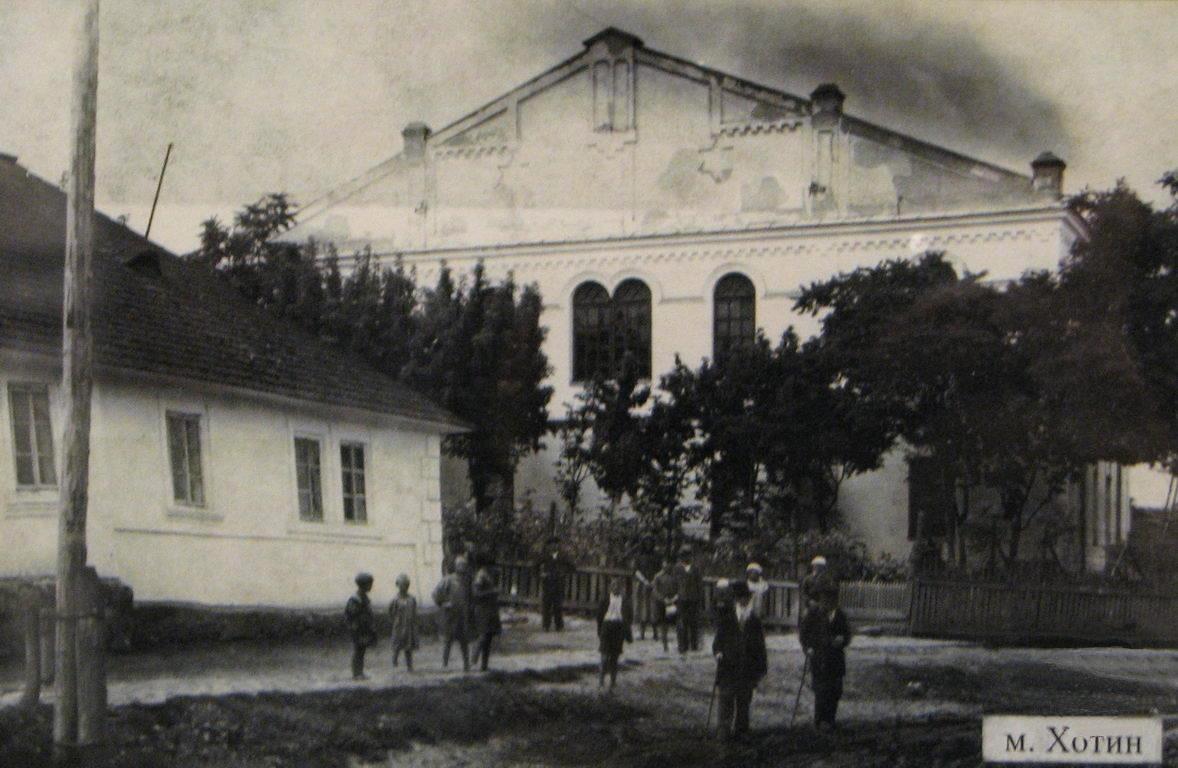
Seventeen prayer houses in 1926
The 1926 regional survey edited by the Bessarabian historian Ștefan Ciobanu recorded seventeen Jewish prayer houses in Khotyn. They included synagogues, neighborhood prayer groups, and study houses.
Some buildings were monumental; others were modest. Their functions overlapped. A kloyz could be a place of daily prayer, Talmud study, charity, social conversation, and informal community politics. The Dovid Shmuel kloyz is remembered in connection with the Talmud Torah, illustrating how religious buildings anchored education as well as worship.
Rabbis and religious officials
Khotyn supported rabbis, ritual slaughterers (shochtim), cantors, teachers, scribes, and burial officials. Reference works associate Rabbi Isaiah Schorr with the town in the nineteenth century.
Rabbinic authority existed beside an elected communal administration. Religious officials answered ritual questions, supervised elements of kashrut (Jewish dietary law) and burial, and represented tradition; communal councils handled budgets, schools, welfare, and negotiations with the state. Neither sphere was completely separate from the other.
Hasidism, study, and Haskalah
Hasidic religious movements influenced Khotyn alongside the Haskalah (Jewish Enlightenment). The Hebrew writer Avraham Ber Gottlober described the town during his nineteenth-century travels.
Religious practice and educational choices varied within families. Parents could maintain traditional observance while sending children to modern schools.
Kashrut and communal finance
Interwar community records show how ritual and public finance intersected. The takse, a levy connected with kosher meat and other communal revenue, helped fund institutions. This system turned everyday acts of eating into part of the communal budget. Disputes over ritual supervision could therefore also be disputes over money, authority, and public priorities.
Communal funds also supported Passover supplies and food relief. The Holidays page describes these arrangements.
Shabbat and the weekly transformation of the city
The memorial book recalls freshly cleaned houses, polished candlesticks, and families gathering for prayer and walks on Shabbat. Read these neighborhood memories on the Holidays page.
Religious life under Romania and the Soviet Union
Romanian rule permitted extensive Jewish communal and religious organization, though the state regulated recognized communities and citizenship. The Soviet annexation of 1940 abolished much of that autonomy. After the Holocaust, a small congregation nevertheless survived: Soviet Council for Religious Cults records from 1952–1953 document a registered Jewish religious community in Khotyn.
The synagogue as memory and evidence
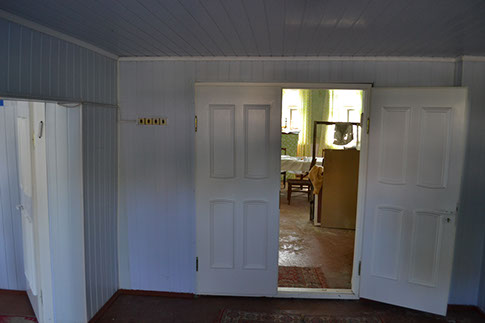
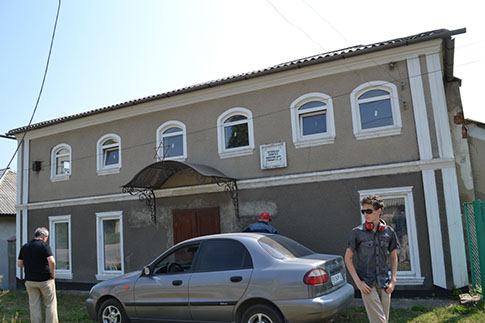
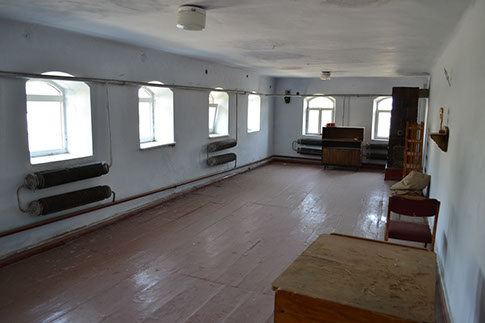
The historic Great Synagogue photograph and Anna Royzner’s 2013 photographs record different buildings and periods. The former Great Synagogue survives in altered form; the 2013 collection also shows rooms used for Jewish gatherings.
Sources for synagogues, rabbis, and religious life
- Ciobanu, Ștefan, ed. Basarabia: Monografie regională [Bessarabia: A Regional Monograph]. Chișinău: Imprimeria Statului, 1926. Khotyn: pp. 92–93 and 195–199. Read source
- Gottlober, Avraham Ber. “מסע ברוסיה החדשה” (Masa be-Rusya ha-Hadasha) [Journey in New Russia]. 1864. Reprinted in זכרונות ומסעות (Zikhronot u-masa’ot [Memoirs and travels]). Jerusalem: Bialik Institute, 1976. Read digitized text.
- Shlomo Shitnovitzer, ed., ספר קהילת חוטין (בסרביה) (Sefer kehilat Ḥoṭin (Besarabyah)) [Book of the Khotyn Community (Bessarabia)] (Tel Aviv, 1974), communal records and institutions, pp. 131–145; linked through the JewishGen Yizkor Book Project. Read translation
- Ancel, Jean, and Theodore Lavi, eds. “חוטין” (Ḥoṭin) [Khotyn]. In פנקס הקהילות: רומניה (Pinkas ha-kehilot: Romanyah [Encyclopedia of Jewish Communities: Romania]), vol. 2, 353–57. Jerusalem: Yad Vashem, 1980. Read English translation.
- Soviet Council for Religious Cults. Ukrainian SSR reports on registered synagogues and religious communities, 1952–1953. Central State Archives of Supreme Bodies of Power and Government of Ukraine (TsDAVO), fond 4648; digitized by J-Doc, item 990 and related Chernivtsi Oblast reports. Read source
- My Shtetl / JewUA. “Jewish Khotyn.” Modern heritage photographs, synagogue and cemetery context, and local historical compilation. Read source
- Shlomo Shitnovitzer, ed., ספר קהילת חוטין (בסרביה) (Sefer kehilat Ḥoṭin (Besarabyah)) [Book of the Khotyn Community (Bessarabia)] [The Book of the Community of Khotin (Bessarabia)] (Tel Aviv: Khotin (Bessarabia) Society, 1974), pp. 11–20. Read translation
- Shlomo Shitnovitzer, ed., ספר קהילת חוטין (בסרביה) (Sefer kehilat Ḥoṭin (Besarabyah)) [Book of the Khotyn Community (Bessarabia)] (Tel Aviv: Khotin (Bessarabia) Society, 1974), “Life in Town,” printed pp. 97–104. JewishGen Yizkor Book Project. Full book citation.
- Shlomo Shitnovitzer, ed., ספר קהילת חוטין (בסרביה) (Sefer kehilat Ḥoṭin (Besarabyah)) [Book of the Khotyn Community (Bessarabia)] (Tel Aviv: Khotin (Bessarabia) Society, 1974), “Jewish Life in Khotyn,” printed pp. 219–229. JewishGen Yizkor Book Project. Full book citation.
- Хотин туристичний / Khotyn Tourist, official tourism site of the Khotyn community. “Синагога” (Synahoha) [Synagogue]. Local historical description, present use, and mapped location of the former Great Synagogue. Direct page.
- P. G. Dmitriev and P. V. Sovetov, eds., Moldova în epoca feudalismului, vol. VII, parts I–II (Chișinău: Știința, 1975), Hotin Jewish list; working transcription at J-Roots.
Notes on sources
The Vania story is a humorous memoir account. It is presented as a recollection of social contact, with no conclusion about religious rulings. The precise office denoted by “Hakham” in the 1774 list is unspecified. The 2013 photographs retain the collection’s building identifications; a street address linking each interior and exterior has not been established.
The Vania episode is a humorous recollection in “Life in Town,” pp. 99–100. It describes a non-Jewish driver being mistaken for a participant in the prayer quorum; it does not establish a local religious rule.
See the Sources & Bibliography for publication details, original-language titles, and image credits.