
Birth: entering family and community
A child entered several systems at once. Family members gave a Hebrew or Yiddish name shaped by kinship and memory, while state authorities recorded a civil name in Russian or Romanian forms. Boys entered the covenant through circumcision; girls and boys were both incorporated into networks of grandparents, sponsors, siblings, and extended relatives.
Birth registers may give dates, parents, residence, witnesses, and the names of religious officials. Families also passed down names in memory of deceased relatives.
Naming: Hebrew, Yiddish, Russian, and Romanian identities
Names could take different forms in family speech, synagogue use, and civil records. A child’s Hebrew or Yiddish name might appear differently in Russian or Romanian documents. See Family and Household for local examples and Genealogy & Records for registers.
Childhood and coming of age
Children learned the expectations of family, religion, work, and public behavior gradually. Boys’ religious education moved toward bar mitzvah; girls acquired household religious knowledge and, increasingly, formal schooling. Adolescence could also bring apprenticeship, wage work, Zionist youth activity, sports, or preparation for migration.
A bar mitzvah rarely appears in state records, yet it marked a major family event. Photographs, invitations, prayer books, inscriptions, or family stories may preserve it where archives do not.
Courtship and marriage
Marriage joined two families and often two localities. Matchmaking, parental negotiation, affection, economic calculation, and social reputation all played roles in varying proportions. By the early twentieth century young people also met through schools, political groups, libraries, cultural circles, and workplaces, creating opportunities beyond traditional matchmaking.
Civil and religious procedures coexisted. A marriage could be meaningful religiously before or after the state paperwork was completed, and bureaucratic requirements changed with the government. Russian and Romanian marriage records therefore need to be interpreted within their legal period.
The wedding day
Weddings brought relatives, neighbors, musicians, and ritual officials together. Clothing, meals, and music reflected household means and help from family or community members.
For poor couples, marriage could strain household finances. Communal charity and relatives might help with necessities. Family photographs from weddings, where they survive, can be among the richest visual records of kin networks because several generations appear together.
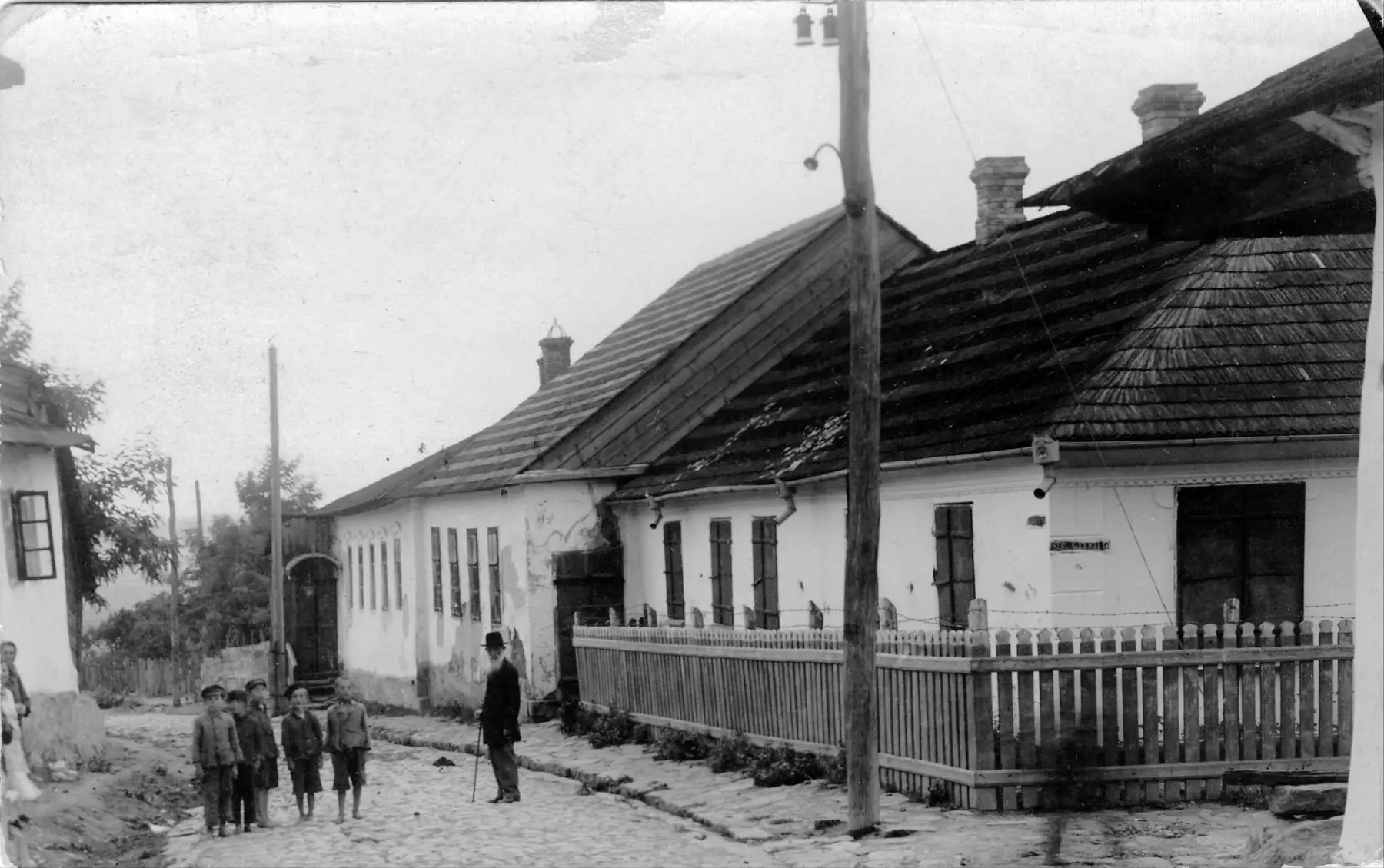
Illness, healing, and the Jewish hospital
Illness brought household care, physicians, folk practice, pharmacy, and communal medicine together. Khotyn’s Jewish hospital, founded in the 1860s, gave poor patients access to treatment, medicine, and kosher meals. Community descriptions emphasize its charitable character and its service beyond the Jewish population.
Medical records rarely survive as accessible genealogical files because of privacy and archival loss, but hospital reports, physicians’ directories, death records, and communal budgets can reveal the institutional setting of illness.
Death, hevra kadisha, and burial
The hevra kadisha, or burial society, prepared the dead for burial and cared for the cemetery. Families marked graves and observed periods of mourning.
The Khotyn cemetery page describes the surviving burial ground and links to its photographed records.
Mourning and memory
Shiva, anniversary observance, synagogue memorial prayer, and cemetery visits kept the dead within family life. After emigration, descendants often continued these practices at new burial grounds. Landsmanshaft cemetery sections in New York recreated a piece of local geography by placing people from the same hometown near one another.
The Holocaust ruptured ordinary mourning. Many victims had no known grave, and surviving relatives often learned deaths only years later. Pages of Testimony, memorial-book lists, plaques, and mass-grave monuments became substitute forms of burial memory.
Trace births, marriages, and burials
Use the records guide to find surviving registers and indexes. For gravestones and burial records, visit the Khotyn cemetery page and diaspora cemeteries page.
Sources for weddings, family, and lifecycle
- FamilySearch. Catalog entry for Jewish metrical books associated with Khotin/Khotyn and Chernivtsi State Archive holdings, including material cataloged under fond 1245. View archive catalogue
- JewishGen. Romania–Moldova Database, including Bessarabia Vital Records, Revision Lists, voter lists, directories, and related datasets. View database
- JewishGen Bessarabia Research Division. “Bessarabia Revision Lists” database description and project documentation. View database
- Shlomo Shitnovitzer, ed., ספר קהילת חוטין (בסרביה) (Sefer kehilat Ḥoṭin (Besarabyah)) [Book of the Khotyn Community (Bessarabia)] (Tel Aviv, 1974), communal records and institutions, pp. 131–145; linked through the JewishGen Yizkor Book Project. Read translation
- Ancel, Jean, and Theodore Lavi, eds. “חוטין” (Ḥoṭin) [Khotyn]. In פנקס הקהילות: רומניה (Pinkas ha-kehilot: Romanyah [Encyclopedia of Jewish Communities: Romania]), vol. 2, 353–57. Jerusalem: Yad Vashem, 1980. Read English translation.
- JewishGen Bessarabia Research Division. “Khotin Jewish Cemetery” project. Photographed and indexed July 2010; 2,693 burial records and 2,693 photographs uploaded to JOWBR. Read source
- JewishGen. JewishGen Online Worldwide Burial Registry (JOWBR). Search Khotin/Khotyn burial records and photographs. View database
- Museum of Family History. Independent Chotiner Bessarabian Benevolent Association, Wellwood Cemetery, New York: landsmanshaft and burial-plot documentation. Read source
- Yad Vashem. Central Database of Shoah Victims’ Names and document/testimony collections; search Khotin/Hotin/Khotyn and variants. Read source
- Shlomo Shitnovitzer, ed., ספר קהילת חוטין (בסרביה) (Sefer kehilat Ḥoṭin (Besarabyah)) [Book of the Khotyn Community (Bessarabia)] (Tel Aviv: Khotin (Bessarabia) Society, 1974), “Life in Town,” printed pp. 97–104. JewishGen Yizkor Book Project. Full book citation.
- Shlomo Shitnovitzer, ed., ספר קהילת חוטין (בסרביה) (Sefer kehilat Ḥoṭin (Besarabyah)) [Book of the Khotyn Community (Bessarabia)] (Tel Aviv: Khotin (Bessarabia) Society, 1974), “The Community,” printed pp. 131–145. JewishGen Yizkor Book Project. Full book citation.
See the Sources & Bibliography for publication details, original-language titles, and image credits.