
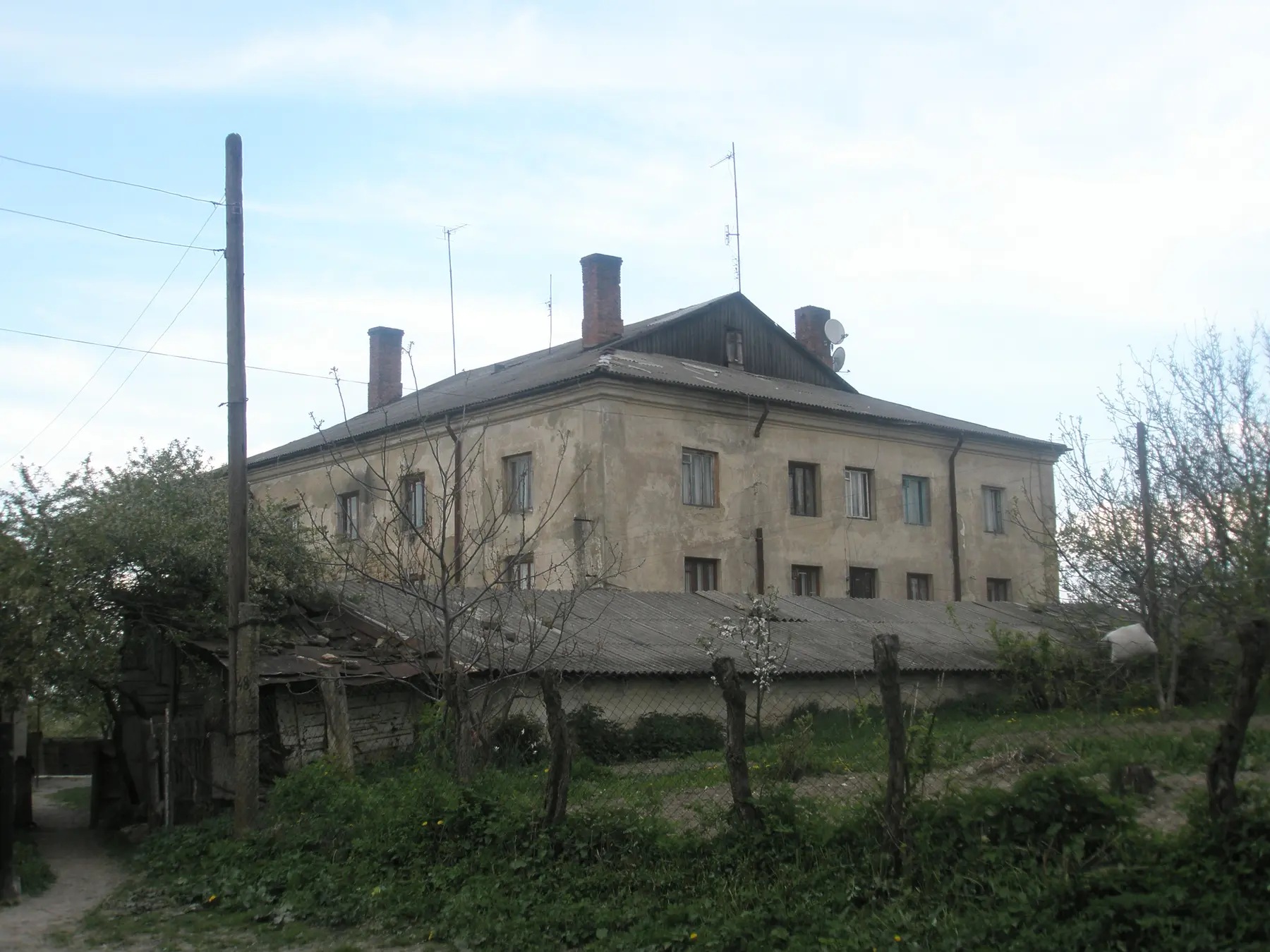
1944–1948: Return to a Soviet city
Soviet forces restored Ukrainian Soviet Socialist Republic (Ukrainian SSR) authority in 1944. Jewish survivors returned from Transnistria, evacuation, military service, and other wartime routes, but they came back to a city transformed by murder, population movement, property loss, and Sovietization. Prewar communal corporations did not regain their legal status, and many former homes and businesses could not simply be reclaimed.
Community reconstruction therefore occurred primarily through families, informal networks, and the limited space allowed for religious worship. Some survivors settled elsewhere from the beginning, particularly in Chernivtsi and other larger cities where work, relatives, or Jewish social networks were easier to find.
Return could mean searching for a surviving relative, discovering that a former neighbor had died, or finding a house occupied by someone else. People who had lived through different wartime routes came back with different losses and documents. Children born afterward learned about an earlier town from those who remembered it firsthand.
1952–1953: A registered congregation
The Soviet state restricted independent Jewish organization, especially during the late Stalin period. A registered congregation nevertheless continued in Khotyn. Council for Religious Cults records from 1952–1953 are held in record group 4648 at the Central State Archives of Supreme Bodies of Power and Government of Ukraine, known by its Ukrainian abbreviation TsDAVO. They have been digitized by J-Doc, an online Jewish documentary archive.
Registration subjected worshippers to state oversight. The resulting files record the presence of an organized congregation after the Holocaust.
The archive’s records are evidence of particular worshippers and officials in a specific period. They offer a way to investigate what a registered Jewish congregation could do in Soviet Khotyn, while family and holiday practices often remained outside formal registration.
1953–1970: Family life after communal destruction
After Stalin’s death, families continued religious observance in homes and available prayer spaces. The cemetery received new burials, and survivors passed memories of prewar Khotyn to children educated under Soviet rule.
The Electronic Jewish Encyclopedia reports approximately one thousand Jews in Khotyn around 1970.
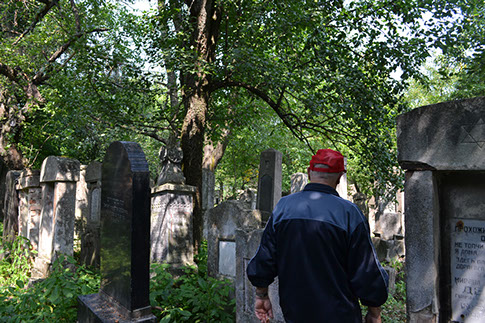
The loss of schools and charities did not erase relationships among survivors. Homes, the cemetery, and occasions for worship carried practices between generations. The remaining congregation lived alongside families who had moved to larger cities but still thought of Khotyn as their hometown.
1970–1989: Emigration and an aging community
During the later Soviet decades, emigration and moves to larger cities reduced the Jewish population. Families kept in touch with relatives abroad and preserved photographs and memories of the town.
The cemetery continued to receive burials. Its later inscriptions connect the prewar community with people who lived through the Soviet period.
Photographs, household papers, and burial inscriptions from these decades can connect someone remembered only as a survivor with a spouse, children, occupation, and years of life after the war. For descendants, that later life is part of the community’s history.
In 1974, former residents and families published Khotyn’s memorial book in Tel Aviv. Edited by Shlomo Shitnovitzer, it gathered memories of homes, schools, work, and the people murdered during the war. Its publication gave dispersed descendants a way to remember the community together. Read the available English translations.
1989–1991: The end of the Soviet period
Glasnost, the policy of greater public openness, and perestroika, political and economic restructuring, eased some Soviet restrictions in the late 1980s. Jewish communities gained opportunities to discuss their history and religion publicly. Many former residents of Khotyn were by then living elsewhere.
Ukraine became independent in 1991. Descendants, archives, and cemetery projects continued preserving the history of the town’s Jewish community.
The widening possibility of public Jewish activity came after decades in which much communal memory had traveled through households rather than institutions. By independence, descendants were scattered among several countries, and the town’s history had become a shared project across those distances.
Sources for 1944–1991
Notes on sources
The population estimate for about 1970 is attributed to the Electronic Jewish Encyclopedia; the underlying town-level statistical table has not been identified. In archival citations, fond means a record group.
- Soviet Council for Religious Cults. Ukrainian SSR reports on registered synagogues and religious communities, 1952–1953. Central State Archives of Supreme Bodies of Power and Government of Ukraine (TsDAVO), fond 4648; digitized by J-Doc, item 990 and related Chernivtsi Oblast reports. Read source
- Electronic Jewish Encyclopedia. “Хотин” (Khotin) [Khotyn]. Read source
- JewishGen Bessarabia Research Division. “Khotin Jewish Cemetery” project. Photographed and indexed July 2010; 2,693 burial records and 2,693 photographs uploaded to JOWBR. Read source
- JewishGen. JewishGen Online Worldwide Burial Registry (JOWBR). Search Khotin/Khotyn burial records and photographs. View database
- My Shtetl / JewUA. “Jewish Khotyn.” Modern heritage photographs, synagogue and cemetery context, and local historical compilation. Read source
See the Sources & Bibliography for publication details, original-language titles, and image credits.