
Shabbat: the weekly boundary between work and sacred time
Friday preparations brought a visible change to Jewish streets: cleaning, cooking, closing shops, and getting ready for prayer and family meals. A recollection of Tailors’ Street preserves the scene.
Rosh Hashanah, Yom Kippur, and the crowded synagogue calendar
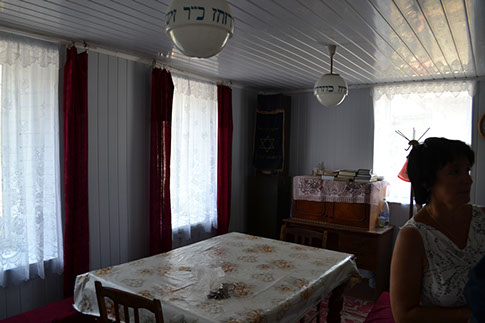
Rosh Hashanah and Yom Kippur brought families to synagogue for prayers of judgment, repentance, and remembrance. Khotyn’s several congregations provided places for residents to worship.
Sukkot and Simchat Torah
Sukkot, the festival of booths, was followed by Simchat Torah, celebrating the completion of the annual Torah-reading cycle. Khotyn’s memoirs vividly recall the children’s lanterns and the singing in the streets.
Purim: gifts, food, costume, and neighborhood sociability
Khotyn-born informants interviewed in 2004–2009 recalled masked Purim performers visiting houses, singing, and collecting small gifts of money. Their accounts appear in the ethnographic study cited below.
Purim customs include mishloach manot, gifts of food to friends, and gifts to the poor.
Passover: matzah on a communal scale
The Jewish community organized flour purchasing, matzah baking, and distribution before Passover. Families who could not pay received help with matzah and other holiday provisions.
Sources for holidays, customs, and food
- Shlomo Shitnovitzer, ed., ספר קהילת חוטין (בסרביה) (Sefer kehilat Ḥoṭin (Besarabyah)) [Book of the Khotyn Community (Bessarabia)] (Tel Aviv, 1974), communal records and institutions, pp. 131–145; linked through the JewishGen Yizkor Book Project. Read translation
- Shlomo Shitnovitzer, ed., ספר קהילת חוטין (בסרביה) (Sefer kehilat Ḥoṭin (Besarabyah)) [Book of the Khotyn Community (Bessarabia)] [The Book of the Community of Khotin (Bessarabia)] (Tel Aviv: Khotin (Bessarabia) Society, 1974), pp. 11–20. Read translation
- Shlomo Shitnovitzer, ed., ספר קהילת חוטין (בסרביה) (Sefer kehilat Ḥoṭin (Besarabyah)) [Book of the Khotyn Community (Bessarabia)] (Tel Aviv, 1974), Yiddish historical section, pp. 115–130; linked through the JewishGen Yizkor Book Project. Read translation
- Ancel, Jean, and Theodore Lavi, eds. “חוטין” (Ḥoṭin) [Khotyn]. In פנקס הקהילות: רומניה (Pinkas ha-kehilot: Romanyah [Encyclopedia of Jewish Communities: Romania]), vol. 2, 353–57. Jerusalem: Yad Vashem, 1980. Read English translation.
- My Shtetl / JewUA. “Jewish Khotyn.” Modern heritage photographs, synagogue and cemetery context, and local historical compilation. Read source
- Shlomo Shitnovitzer, ed., ספר קהילת חוטין (בסרביה) (Sefer kehilat Ḥoṭin (Besarabyah)) [Book of the Khotyn Community (Bessarabia)] (Tel Aviv: Khotin (Bessarabia) Society, 1974), “Jewish Life in Khotyn,” printed pp. 219–229. JewishGen Yizkor Book Project. Full book citation.
- Shlomo Shitnovitzer, ed., ספר קהילת חוטין (בסרביה) (Sefer kehilat Ḥoṭin (Besarabyah)) [Book of the Khotyn Community (Bessarabia)] (Tel Aviv: Khotin (Bessarabia) Society, 1974), “The Community,” printed pp. 131–145. JewishGen Yizkor Book Project. Full book citation.
- Amosova, Svetlana, and Maria Kaspina. “Детские воспоминания о праздниках: евреи и славяне о Пуриме” (“Detskie vospominaniia o prazdnikakh: evrei i slaviane o Purime”) [Childhood Memories of Holidays: Jews and Slavs on Purim]. Лехаим (Lekhaim) [To Life], no. 2 (214), February 2010. Digital article
Notes on sources
The Purim accounts are attributed to the informants interviewed by Amosova and Kaspina. Their presence in Khotyn does not establish that a custom was unique to the town. The earlier suggestion about Tashlich at the Dniester was not tied to a local recollection and has been omitted.
See the Sources & Bibliography for publication details, original-language titles, and image credits.