
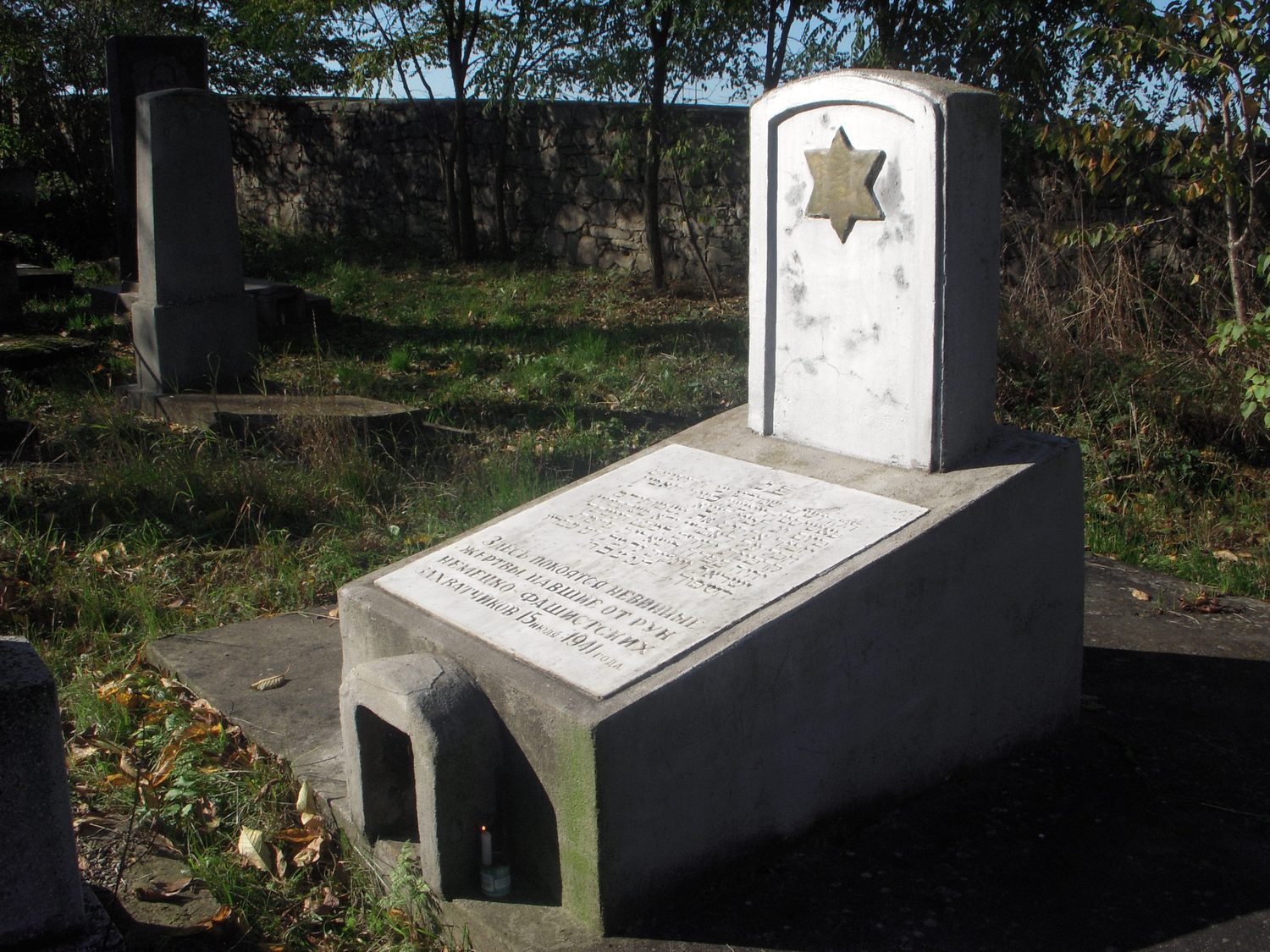
June–July 1940: The Soviet annexation of northern Bessarabia
Following a Soviet ultimatum in late June 1940, Romanian forces withdrew and Soviet troops entered Khotyn. The city became part of the Ukrainian Soviet Socialist Republic. The Dniester here ceased to be an international frontier, while travel toward Romania came under new restrictions.
Soviet agencies took over government, policing, schools, and economic administration. Residents who had lived under Romanian rule now faced a new set of authorities and regulations.
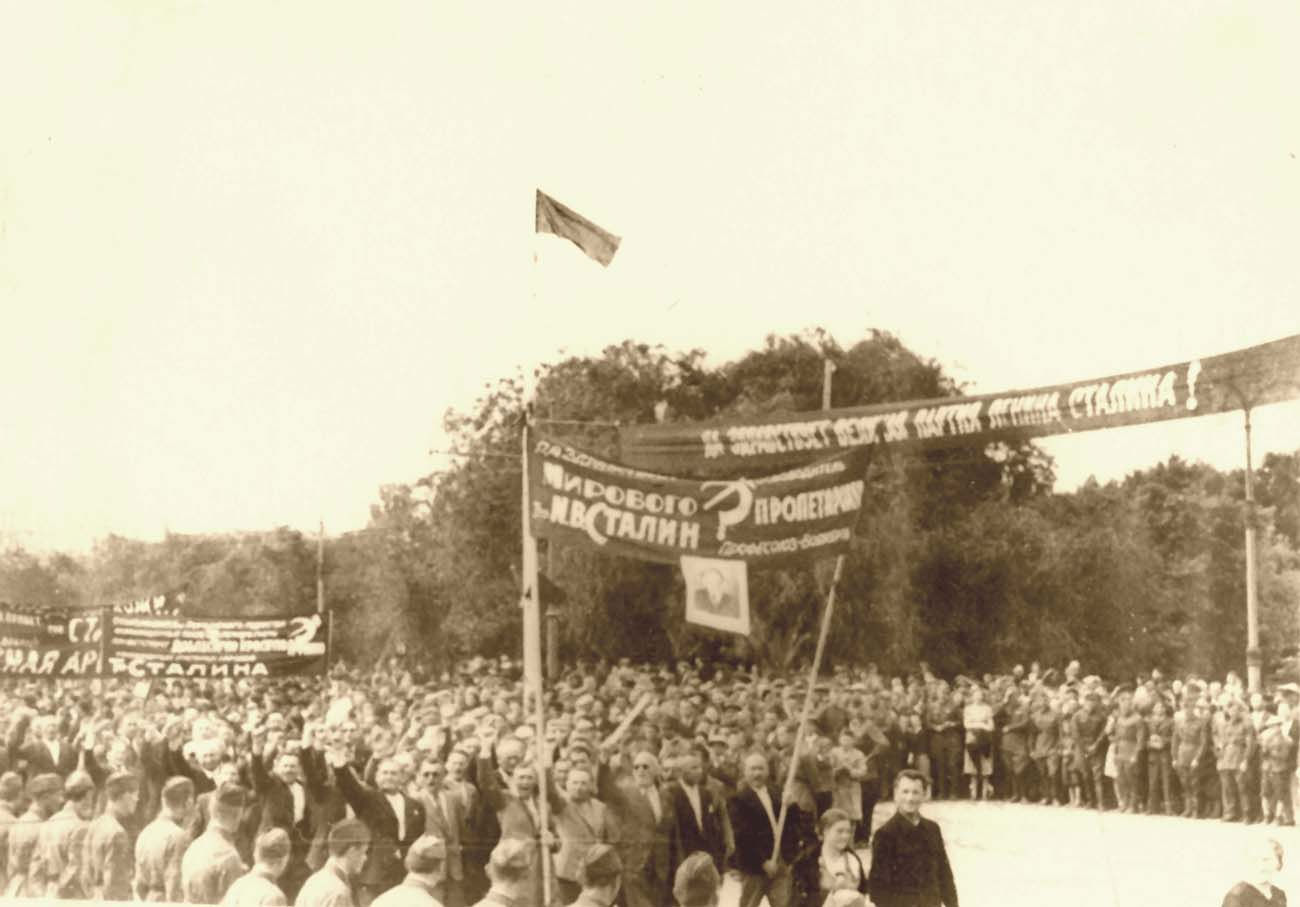

The Soviet takeover changed a family’s livelihood and the community’s ability to provide help. Former schools, charities, and societies no longer operated independently. These losses came before the German and Romanian invasion, which put residents in immediate physical danger.
Summer–Autumn 1940: Nationalization and the end of independent communal institutions
Nationalization took businesses and property out of private hands. The communal council, independent schools, charities, and Zionist organizations lost their freedom to operate.
The community history recalls the closure of the Tarbut school and the dispersal of its Hebrew and Yiddish library. Families lost institutions that had provided education, loans, and help in difficult times.
1940–June 1941: Arrests, deportations, and uncertainty
Soviet security policies targeted former officials, property owners, political activists, Zionists, and people classified as socially suspect. Khotyn memorial literature describes arrests and deportations during this first Soviet year.
Arrest or deportation could remove a parent or wage earner from a household. Nationalization cost families their businesses, and contact with relatives abroad became dangerous. The organizations that had offered relief were themselves being dismantled.
22 June–early July 1941: War returns to Khotyn
Germany invaded the Soviet Union on 22 June 1941, with Romania joining the campaign to recover Bessarabia and northern Bukovina. Khotyn again became a military objective. Soviet authorities evacuated some personnel and residents eastward, while others fled independently or remained because escape was impossible, too dangerous, or seemed unnecessary.
The distinction between those who evacuated, those deported by the Soviets, those mobilized into Soviet service, and those trapped under Romanian-German occupation later shaped survival. Families were scattered in several directions before mass anti-Jewish violence even began.
Early July 1941: The occupation begins
As Germany and Romania attacked the Soviet Union, Khotyn’s Dniester crossing drew air raids and refugees. Some residents fled or were evacuated eastward; others remained or were unable to get away.
Romanian troops entered in early July. The account in Pinkas ha-kehilot dates their entry to 7 July and describes killings near the market, searches of homes, and the confinement of Jewish residents.
The assault struck the same streets where families had traded, studied, and worshipped. People who had been doctors, teachers, and rabbis were selected for killing in an attack on the community’s leadership as well as its members.
July 1941: Confinement and forced labor
Jewish residents were assembled at a school compound. In the Pinkas account, men identified as rabbis, teachers, doctors, and other community figures were selected and taken away to be shot. Those remaining faced overcrowding, robbery, and forced labor.
Local memorial accounts describe prisoners clearing damaged buildings and roads and working on the river crossing. The town’s schools, synagogues, and streets had become places of confinement.
31 July 1941: Leaving Khotyn
The Pinkas account describes an order to prepare for expulsion on 30 July, followed by assembly near the town clock before dawn the next day. Families left with what they could carry. Guards and others robbed them along the way.
The route led toward Secureni, where Jews from Khotyn and other communities were crowded into a camp. Later deportations carried survivors across the Dniester into Transnistria, the territory between the Dniester and Southern Bug administered by Romania during the war.
The journey dispersed people who had lived as neighbors. A descendant may find the town of birth recorded as Khotyn and a wartime location recorded as Secureni or a place in Transnistria. Those different names can belong to one person’s continuous history.
1941–1944: Survival in Transnistria
Deportees faced hunger, disease, forced labor, and violence. Khotyn families were scattered among camps, ghettos, and villages. Relatives and other deportees shared food and shelter; Jewish relief organizations sought permission to send assistance.
One survivor, Rose Jaffe, later remembered Popovits, Shargorod, and Kapaygorod. In a recording made decades afterward, she sang a song she associated with Transnistria in 1943–1944. Read her story and follow the recording on Migration and Diaspora.
1944: Liberation and return
Soviet forces retook Khotyn in 1944. Survivors returned from deportation, evacuation, hiding, and military service to find relatives missing and homes destroyed or occupied. Some rebuilt their lives in Khotyn; others settled elsewhere.
The prewar network of Jewish schools, charities, and congregations was gone. A smaller Jewish community continued after the war, as described on the postwar history page.
Remembering people and places
The town’s memorials, family photographs, survivor accounts, and Pages of Testimony preserve names and experiences. The local fortress reserve identifies the grounds now associated with School No. 5 as a site of wartime confinement.
For a relative, begin with Yad Vashem, the United States Holocaust Memorial Museum, and the Genealogy & Records page. Search historical town spellings and places of deportation as well as Khotyn.
Survivors’ accounts
The memorial volume includes accounts of persecution, deportation, and survival. Read the available translations through the Khotyn Yizkor Book contents.
Sources for 1940–1944
- Shlomo Shitnovitzer, ed., ספר קהילת חוטין (בסרביה) (Sefer kehilat Ḥoṭin (Besarabyah)) [Book of the Khotyn Community (Bessarabia)] (Tel Aviv, 1974), Holocaust section, pp. 83–96; linked through the JewishGen Yizkor Book Project. Read translation
- Shlomo Shitnovitzer, ed., ספר קהילת חוטין (בסרביה) (Sefer kehilat Ḥoṭin (Besarabyah)) [Book of the Khotyn Community (Bessarabia)] (Tel Aviv, 1974), Yiddish destruction section, pp. 199–217. Read translation
- Ancel, Jean, and Theodore Lavi, eds. “חוטין” (Ḥoṭin) [Khotyn]. In פנקס הקהילות: רומניה (Pinkas ha-kehilot: Romanyah [Encyclopedia of Jewish Communities: Romania]), vol. 2, 353–57. Jerusalem: Yad Vashem, 1980. Read English translation.
- International Commission on the Holocaust in Romania. Final Report, ed. Tuvia Friling, Radu Ioanid, and Mihail E. Ionescu (Iași: Polirom, 2004), especially the Bessarabia, Bukovina, and Transnistria chapters. Read source
- Mircu, Marius. Pogromurile din Basarabia și alte câteva întâmplări [The pogroms in Bessarabia and several other events] (Bucharest, 1947), Khotin passages.
- United States Holocaust Memorial Museum. Selected archival records relating to Chernivtsi Oblast and wartime Jewish persecution; collection search and catalog. View archive catalogue
- European Holocaust Research Infrastructure. Description of USHMM-selected Chernivtsi archival records and related collection units. View archive catalogue
- Yad Vashem. Central Database of Shoah Victims’ Names and document/testimony collections; search Khotin/Hotin/Khotyn and variants. Read source
- American Jewish Joint Distribution Committee Archives. New York Office, 1933–1944, Countries and Regions: Latvia–Yugoslavia finding aid; entry “Chotin, Bessarabia, 1939,” with related Romania relief, medical, yeshiva, and welfare files. View archive catalogue
- ДІАЗ “Хотинська фортеця” / Khotyn State Historical-Architectural Reserve. Holocaust remembrance article, 27 January, n.d., summarizing local sites and testimonies; identifies the former men’s gymnasium gathering site with the territory of present-day School No. 5. Digital source.
Notes on sources
The July sequence above follows the Khotyn entry in Pinkas ha-kehilot, Romania, vol. 2, pp. 353–357, translated by Ala Gamulka. It contains retrospective testimony and estimates that should be compared with the other listed accounts. No single casualty total is adopted here. Transnistria refers to Romania’s wartime occupation territory, not the boundaries of the present-day breakaway region.
See the Sources & Bibliography for publication details, original-language titles, and image credits.