
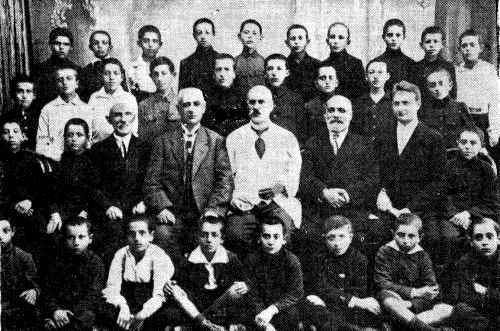
Cheder and the foundations of Jewish learning
For many boys, education began in a cheder, where reading Hebrew, prayer, Torah, and later rabbinic texts formed the traditional curriculum. Quality varied enormously with teacher, family means, and period. Girls’ religious education was usually less formal, although they learned prayers, customs, household practice, Yiddish literacy, and increasingly secular subjects through home and school.
Tuition and children’s work affected schooling. Communal support helped families meet the cost of education, and the Talmud Torah provided religious schooling for poor boys.
1847–1857: Imperial experiments in Jewish schooling
Later Jewish reference works place a government Jewish school in Khotyn in 1847 and a school for girls in 1857. These institutions belonged to broader Imperial efforts to reshape Jewish education through Russian-language and secular subjects. Such schools often generated suspicion among traditional families, but they also created new paths toward literacy, government service, and professional life.
The existence of both traditional and state schools helps explain the varied cultural profiles visible by the late nineteenth century. Khotyn could produce rabbis, artisans, merchants, maskilim (supporters of the Jewish Enlightenment), Russian-educated professionals, and eventually Zionist and socialist activists within the same generation.
Talmud Torah and communal responsibility
Donors to the Talmud Torah supplied clothing and boots as well as supporting lessons. Its association with the Dovid Shmuel prayer and study house brought pupils into contact with adult worship and learning.
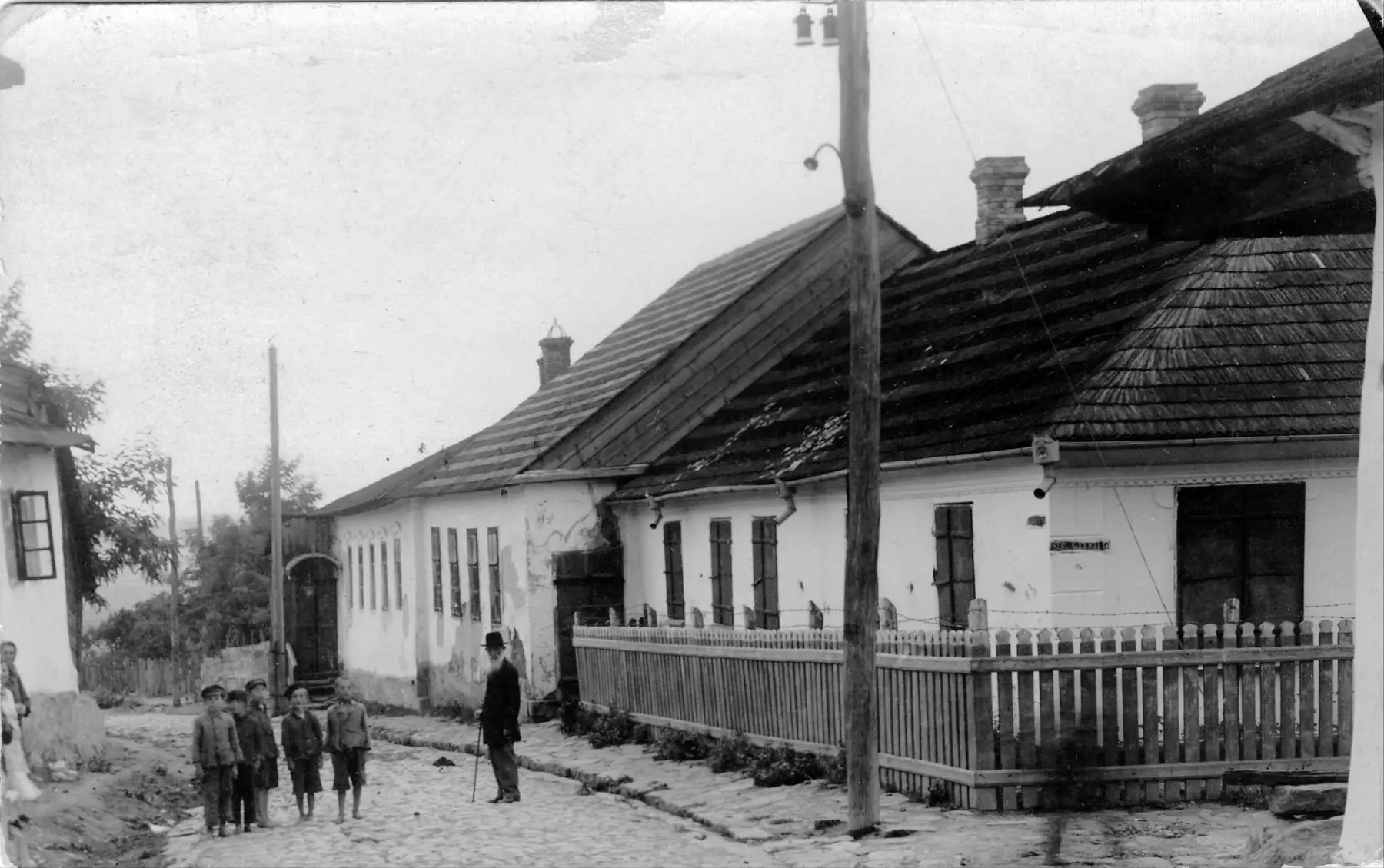
Libraries, lectures, and self-education
Khone Rayss’s books helped establish a library in the bank building. Bank clerks volunteered, while librarians Etka Shitnovitzer and Milya Barak helped readers find books in Yiddish, Hebrew, Romanian, and Russian. The memorial book recalls a busy reading room, books ordered from abroad, and Christian readers alongside Jewish neighbors.
Romanian schools, Tarbut, and a multilingual childhood
After 1918, children entered a Romanian educational system while Jewish communal institutions maintained schools and cultural programs. Interwar community records mention schools designated no. 7 for boys and no. 8 for girls and support for Tarbut, a Hebrew-language educational network. Students could therefore encounter Romanian civic schooling, Hebrew national culture, Yiddish home life, and religious instruction in overlapping settings.
These choices were political as well as educational. Hebrew schooling could express Zionist aspirations; Romanian schooling could be necessary for university or professional advancement; Yiddish culture could be tied to secular Jewish movements; traditional schooling could express religious continuity.
Music, theater, sports, and youth groups
Education extended beyond classrooms. Community memories describe a cultural circle, chorus, orchestra, lectures, performances, and sports or gymnastics activity. Youth organizations gave adolescents social identities outside family and synagogue. Zionist youth could combine Hebrew study, fundraising, physical culture, and preparation for life in Palestine.
1939: Children in an era of crisis
The community supplied food, clothing, and summer programs for children whose families needed help. A JDC archive file titled “Chotin, Bessarabia, 1939” offers a further place to investigate relief work at the end of the decade.
Class photographs, certificates, and the memorial book preserve the names and faces of pupils and teachers.
Khotyn school records in the archives
School files can contain birth dates, parents, addresses, grades, and transfers. The State Archive of Chernivtsi Oblast holds collections, or fonds, from Khotyn schools, including a lycée, a secondary school, spanning the late Imperial and Romanian periods.
Writers and teachers beyond Khotyn
Explore the lives of writers, musicians, and cultural figures connected with the town, including the poet and teacher Yisroel Goykhberg, who attended school in Khotyn.
Sources for childhood, schools, and education
- Shlomo Shitnovitzer, ed., ספר קהילת חוטין (בסרביה) (Sefer kehilat Ḥoṭin (Besarabyah)) [Book of the Khotyn Community (Bessarabia)] (Tel Aviv, 1974), communal records and institutions, pp. 131–145; linked through the JewishGen Yizkor Book Project. Read translation
- Ancel, Jean, and Theodore Lavi, eds. “חוטין” (Ḥoṭin) [Khotyn]. In פנקס הקהילות: רומניה (Pinkas ha-kehilot: Romanyah [Encyclopedia of Jewish Communities: Romania]), vol. 2, 353–57. Jerusalem: Yad Vashem, 1980. Read English translation.
- Ciobanu, Ștefan, ed. Basarabia: Monografie regională [Bessarabia: A Regional Monograph]. Chișinău: Imprimeria Statului, 1926. Khotyn: pp. 92–93 and 195–199. Read source
- Shlomo Shitnovitzer, ed., ספר קהילת חוטין (בסרביה) (Sefer kehilat Ḥoṭin (Besarabyah)) [Book of the Khotyn Community (Bessarabia)] [The Book of the Community of Khotin (Bessarabia)] (Tel Aviv: Khotin (Bessarabia) Society, 1974), pp. 11–20. Read translation
- American Jewish Joint Distribution Committee Archives. New York Office, 1933–1944, Countries and Regions: Latvia–Yugoslavia finding aid; entry “Chotin, Bessarabia, 1939,” with related Romania relief, medical, yeshiva, and welfare files. View archive catalogue
- FamilySearch. Catalog entry for Jewish metrical books associated with Khotin/Khotyn and Chernivtsi State Archive holdings, including material cataloged under fond 1245. View archive catalogue
- Harvard Ukrainian Research Institute, Fontes. State Archive of Chernivtsi Oblast digital-archive description and link to the archive. Read source
- Smithsonian Center for Folklife and Cultural Heritage. “Yiddish Wedding Hop: The Archives of Song Collector Ruth Rubin,” on Khotin-born folklorist Ruth Rubin. View archive catalogue
- Shlomo Shitnovitzer, ed., ספר קהילת חוטין (בסרביה) (Sefer kehilat Ḥoṭin (Besarabyah)) [Book of the Khotyn Community (Bessarabia)] (Tel Aviv: Khotin (Bessarabia) Society, 1974), “Education and Culture,” printed pp. 147–166. JewishGen Yizkor Book Project. Full book citation.
- My Shtetl / JewUA. “Jewish Khotyn,” modern local-heritage compilation, including synagogue, school, and community-institution material. Digital source.
Notes on sources
The “Eternal Light” building account comes from the modern JewUA heritage compilation cited below. Its institutional details await comparison with contemporary records.
See the Sources & Bibliography for publication details, original-language titles, and image credits.