History · 1848–1867
Revolution & Emancipation
Revolution ended serfdom and opened a two-decade transition from special Jewish legal restrictions to full civil equality.
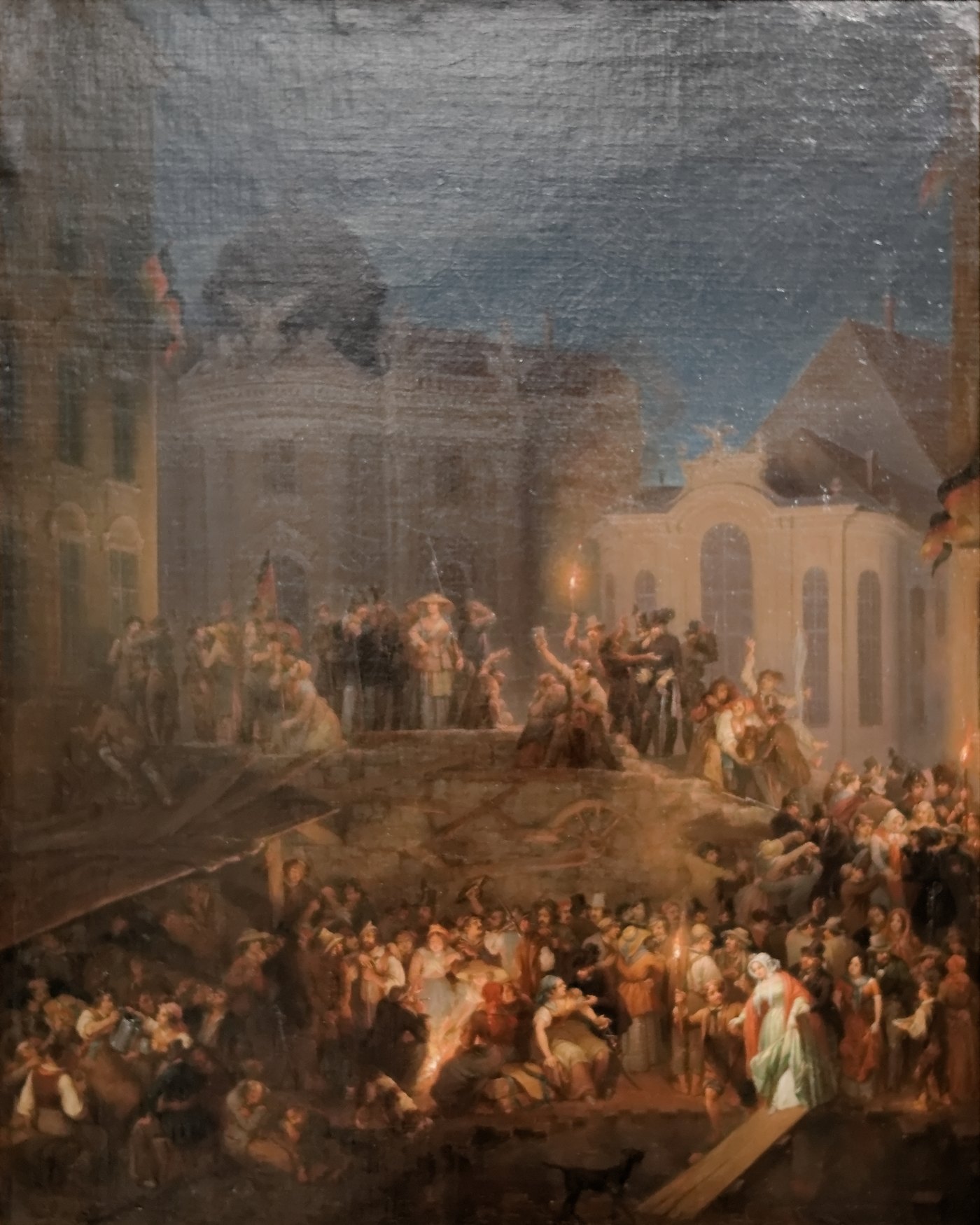
1848: revolution reaches Galicia
The revolutions of 1848 shook the Habsburg monarchy and challenged the political order that had governed Galicia since the partition. In the countryside, one change was immediate and permanent: serfdom was abolished. Peasants were freed from compulsory labor obligations to noble estates, transforming the economic relationship between Dzików, the surrounding villages and the market town.
For Jews, 1848 raised the question of civil equality. Revolutionary constitutions and political programs proposed equality before the law, freedom of religion, access to property and occupations, and the end of special Jewish disabilities. These gains were not secured all at once. The conservative reaction of the 1850s reversed parts of the revolutionary constitutional order, but the old system of Jewish legal restriction could not simply be restored unchanged.1
A gradual dismantling of restrictions
The years between 1848 and 1867 were therefore transitional. Imperial decisions in the 1850s and 1860s progressively removed barriers to economic activity, movement, and ownership of real property. Jews increasingly entered municipal life and professions even before final constitutional equality was enacted. The process was uneven, but it shifted the basic legal question from which privileges Jews possessed to whether the state could continue to deny them rights enjoyed by other subjects.2
Tarnobrzeg in the 1850s
The 1853 cadastral map and parcel registers capture Tarnobrzeg in the middle of this transition. Streets, parcels, houses and property boundaries appear with a precision that earlier descriptions rarely provide. They show a compact town organized around the market and roads leading toward Dzików and neighboring communities.
These maps also matter because the town soon changed dramatically. A major fire in 1862 destroyed much of Tarnobrzeg. Rebuilding altered houses and streets just as political and legal structures were changing around them. The town that entered the constitutional era of the late 1860s was therefore not simply the old private town with new laws; it had been physically rebuilt as well.
1867: civil equality
The constitutional settlement of 1867 established equal civil rights for Jews in the Austrian half of Austria-Hungary. Jewish men could own property, pursue occupations and professions, move within the monarchy and participate in public life without the old legal disabilities attached specifically to Jewish status.
Emancipation did not end antisemitism, poverty, or social barriers. It did change the legal foundation on which Jewish life rested. The late Habsburg decades that followed saw expansion in education, politics, migration and professional life—and a flourishing of Dzików Hasidism alongside those modern developments.
Sources cited on this page
- Joshua Shanes, Diaspora Nationalism and Jewish Identity in Habsburg Galicia, ch. 1.
- Hillel J. Kieval, scholarship on the Habsburg Jewish experience and the removal of legal barriers in the 1860s.
- Gesher Galicia, Tarnobrzeg 1853 cadastral map and companion parcel registers; Kehilat Tarnobrzeg-Dzikow for the 1862 fire and local chronology.