History · After 1945
Survivors, Diaspora, & Memory
Jewish communal life was not re-established in Tarnobrzeg after the Holocaust. Instead, the town survived in families, immigrant societies, Hasidic traditions, memorial books and the work of recovering its physical and archival traces.
A community that did not return
When the war ended, there was no large-scale re-establishment of Jewish communal life in Tarnobrzeg. Survivors emerged from Soviet territory, camps, hiding places, forests and displaced-persons centers with families and neighborhoods shattered. Some returned briefly to Polish hometowns to look for relatives or property; many concluded that their future lay elsewhere.
Tarnobrzeg had already produced a diaspora before 1939. New York, other American cities, and Palestine were part of family geography long before the Holocaust. After 1945, those networks became the principal places where the destroyed community could be rebuilt socially—even if not geographically.
Landsmanshaftn and family networks
Immigrants from a single town often formed landsmanshaftn—mutual-aid and burial societies that offered practical help in a new country. Tarnobrzeg/Dzików organizations in New York and survivor associations in Israel carried town identity forward. Cemetery plots, society constitutions, donor lists and family records can reveal relationships that no longer appear in Polish municipal archives.
These organizations were not merely nostalgic. They helped arrange burial, aid relatives, maintain social ties and later sponsor memorialization. The research trail into New York cemeteries and the Tarnobrzeg Dzikow Young Men’s Association is therefore part of the town’s history, not an appendix to it.
Memorial books as reconstructed community
The 1948 Yiddish Memories of My Shtetl, Dzikow and the much larger 1973 Tarnobrzeg–Dzików memorial book attempted something impossible in physical space: to put the community back together on paper. Their contributors reconstructed rabbis, shopkeepers, teachers, political activists, streets, prayers, jokes, arguments and wartime fates. The books are retrospective and sometimes inconsistent, but they preserve the social texture that administrative records rarely capture.
The 1973 volume itself reflects a postwar institution—the Organization of Former Residents of Tarnobrzeg-Dzików in Israel. Its table of contents moves from early history and rabbis to organizations, personalities, destruction and survivors, mirroring the way former residents understood what had been lost.
Dzików Hasidism after Dzików
The Dzików Hasidic tradition also survived beyond Tarnobrzeg. Rebbes, descendants, melodies and customs continued in Israel and elsewhere, allowing “Dzików” to remain a living Jewish name even after the local court was destroyed. This is a different form of continuity from a landsmanshaft: religious lineage and practice rather than shared immigrant hometown alone.
Recordings in the National Library of Israel preserve Dzików melodies; contemporary Hasidic communities continue to use the dynasty’s name. That survival complicates the phrase “the community disappeared.” The territorial community was destroyed, but parts of its religious culture migrated and remained alive.
Memory in Tarnobrzeg itself
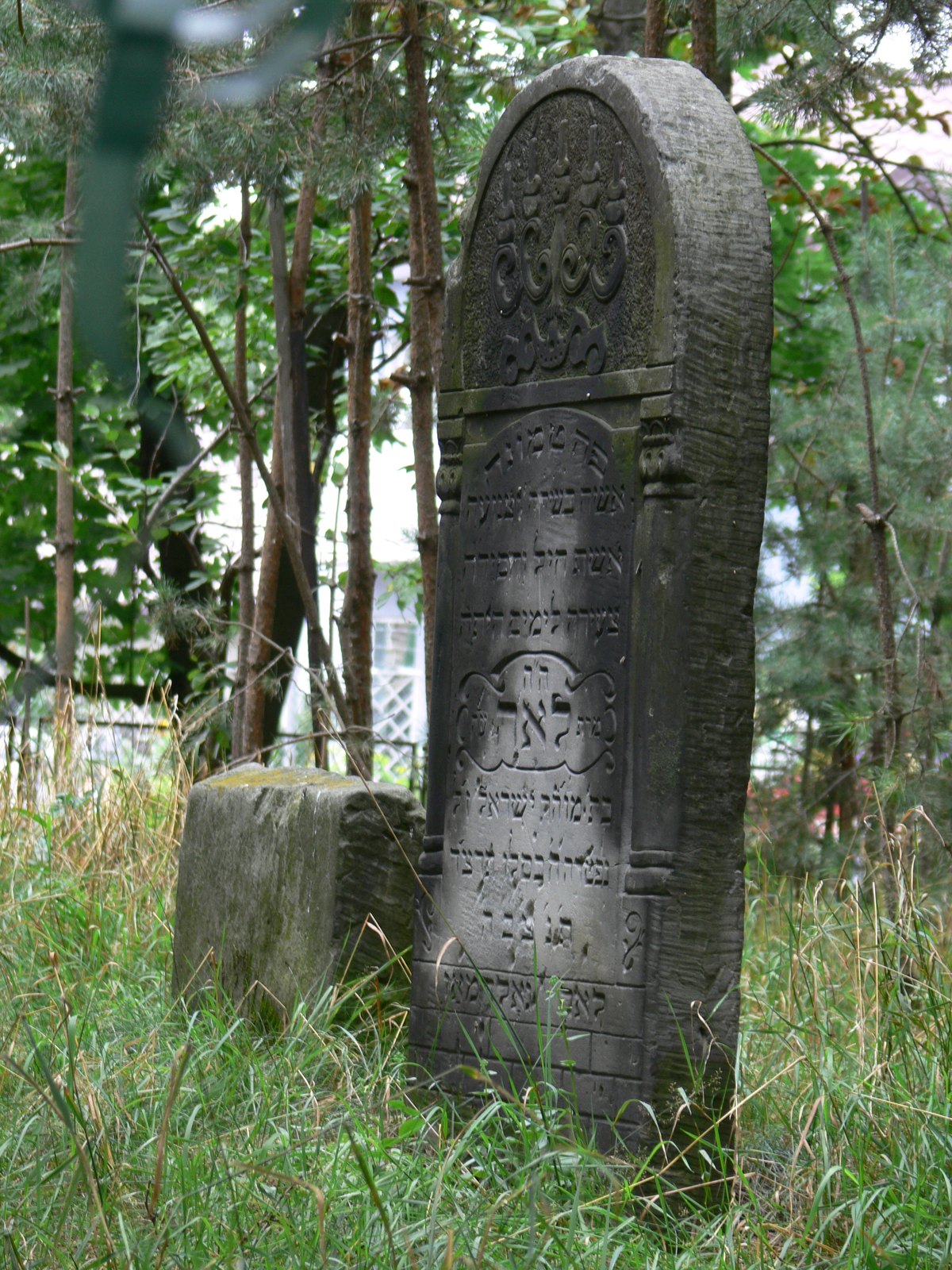
The physical landscape still holds traces: cemetery fragments and the reconstructed Hasidic ohel, the former synagogue site, archival property records, memorial plaques and photographs. Polish local historians have also recovered Jewish biographies, school lists, surnames and wartime history. The 2016 Jewish-themed issue of Tarnobrzeskie Zeszyty Historyczne is one example of this local postwar scholarship.
Archival records, survivor memory, diaspora genealogy, and the modern city preserve different parts of the same history. Taken together, they recover people, households, and institutions that would otherwise remain disconnected.
Sources cited on this page
- Yitzchok Gutwein, Memories of My Shtetl, Dzikow (Tarnobrzeg) (Paris, 1948).
- Yaakov Yehoshua Fleisher, ed., Kehilat Tarnobrzeg-Dzikow (Tel Aviv, 1973), published by the Organization of Former Residents of Tarnobrzeg-Dzików in Israel.
- YIVO and Center for Jewish History collections relating to Tarnobrzeg/Dzików landsmanshaft organizations.
- National Library of Israel collections of Dzików Hasidic music and printed works.
- Tarnobrzeskie Zeszyty Historyczne, no. 45 (2016), Jewish-history issue.