History · 1593–1772
Private Town, Borderland, & Early Jewish Settlement
Why Jews settled here, how the Tarnowski private town worked, and how a permanent Jewish community became part of the estate and market economy.
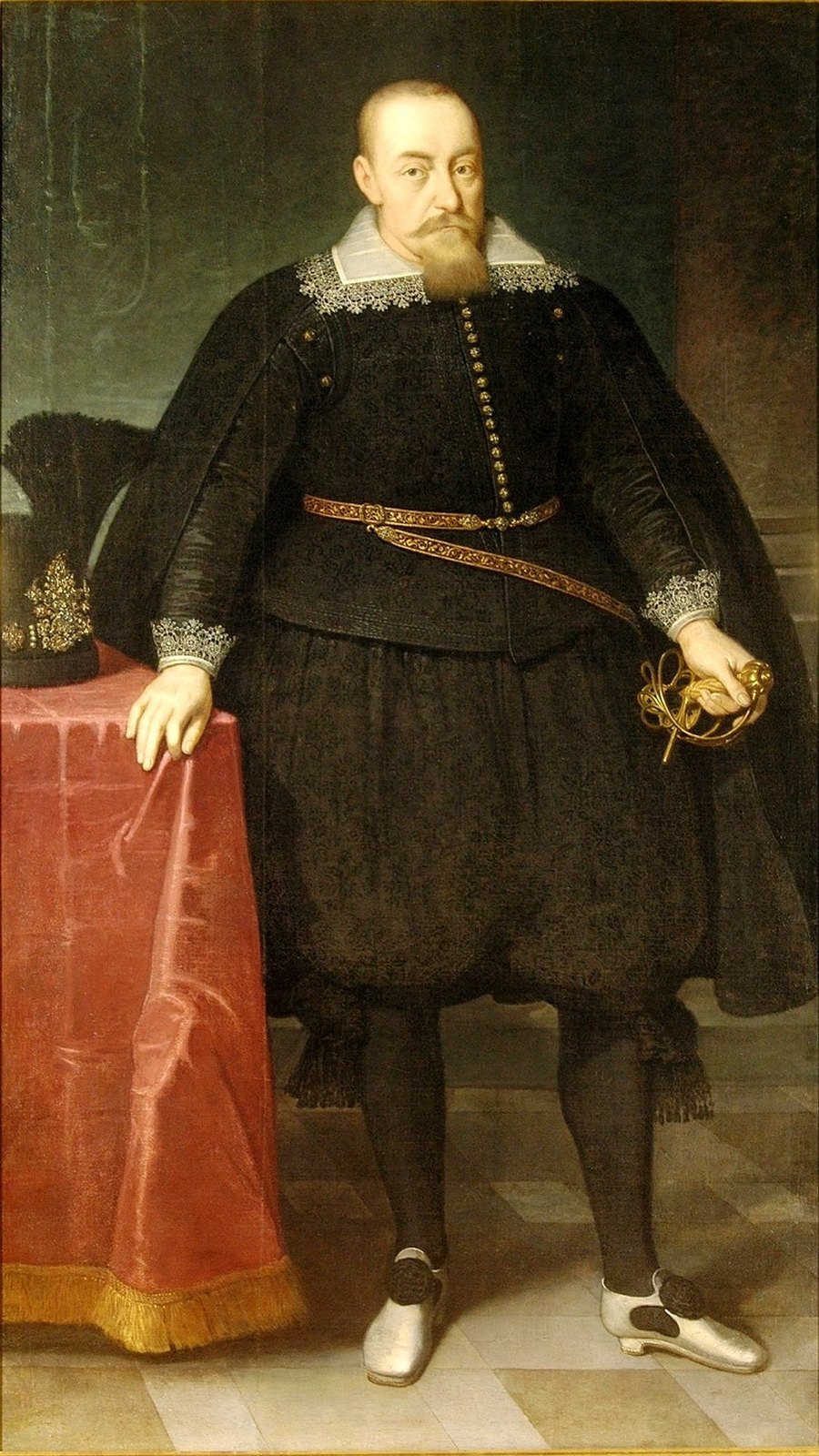
A town founded by a noble family
Tarnobrzeg was chartered in 1593 on land belonging to the Tarnowski family, whose residence at nearby Dzików became the center of a large landed estate. It was therefore a private town: unlike a royal city governed directly under the crown, the town existed within the jurisdiction and economic interests of a noble proprietor. The Tarnowskis influenced who could settle, how markets operated, what revenues could be leased and how the town related to the surrounding estate villages.
For the owners of a private town, population was an economic asset. A successful market town collected tolls and rents, sold the products of the estate, supplied nearby villages and attracted traders from a wider region. Jews were often particularly valuable in this system because Jewish commercial networks connected small towns to larger markets, while Jewish leaseholders could manage taverns, mills, customs, tax farms or other revenue-producing rights. Credit, brokerage and retail trade also helped bridge the gap between a largely agricultural countryside and a cash economy.1
Why Jews settled in towns like Tarnobrzeg
Jewish migration into the Polish lands had begun centuries before Tarnobrzeg was founded. By the sixteenth and seventeenth centuries, the Commonwealth contained one of the largest Jewish populations in Europe. The attraction was not a single royal invitation or one moment of migration. Rather, successive rulers and noble landowners offered combinations of residence rights, communal autonomy and economic opportunity at a time when Jews faced exclusion or expulsion in parts of western and central Europe.
In a town such as Tarnobrzeg, Jewish families could occupy niches that the estate and market economy needed: buying grain, livestock and other rural products; selling cloth, tools, salt and household goods; extending small-scale credit; leasing estate income; operating inns and taverns; and moving merchandise between villages, towns and regional fairs. These roles did not make Jews outsiders to the local economy. They made them one of the mechanisms through which the estate economy functioned.2
Tarnobrzeg, Dzików, and the borderland
The Jewish history of Tarnobrzeg cannot be separated neatly from Dzików. Tarnobrzeg was the chartered town and market center; Dzików was the Tarnowski seat and later the name of the Hasidic dynasty. Jewish sources frequently used “Dzików” for a community whose homes, shops and institutions lay in or around Tarnobrzeg.
The town also belonged to a larger river and road network. The Vistula linked the region north and south, while Sandomierz and other neighboring towns connected local commerce to broader Polish markets. Long before Tarnobrzeg became an imperial frontier town after 1772, its residents lived in a zone where trade, political authority and cultural influence moved across regional boundaries.
The first Jews of Tarnobrzeg and Dzików
The memorial-book tradition reports that a Jew named Menashe Grofnikel was in Dzików in 1556, decades before Tarnobrzeg received its town charter. That claim appears to derive from material once preserved in the Tarnowski archive, but the underlying document has not yet been independently identified. It is best treated as the earliest reported reference rather than a securely verified beginning date.3
By the eighteenth century the evidence is much firmer. Jewish residents appear as a settled population with a synagogue, cemetery, and communal organization. Documents cited in the memorial book describe loans and obligations connected with the synagogue and community in the early eighteenth century, while later tax, population and leasing records show Jews embedded in the town's economy. The 1772 population material, although its precise original record type still needs verification, confirms that a substantial Jewish community existed on the eve of the First Partition.
Community institutions
An established Jewish community required more than households and shops. It needed a synagogue or prayer house, burial ground, religious officials, charity, education, and a framework for collecting communal taxes and representing Jews before outside authorities. The kahal, or organized Jewish community, carried many of these responsibilities. Its authority rested partly on Jewish law and custom and partly on recognition by the surrounding political system.
This autonomy was never complete. Jewish residents remained subject to the Tarnowski proprietors, municipal regulations and the laws of the Commonwealth. The resulting system was layered rather than simple: a Jewish family could be governed simultaneously by Jewish communal rules, estate obligations, town regulations, and royal law.
Security was never guaranteed
Economic usefulness and noble protection did not eliminate vulnerability. The region suffered military destruction in the seventeenth century, and religious hostility could become lethal. The most dramatic local example was the 1757 ritual-murder accusation in Dzików, in which Jewish defendants were tortured and executed. The episode belongs within this larger world of private jurisdiction, confessional tension, and uncertain legal protection rather than as a separate historical era.
1772: the political world changes
The First Partition of Poland placed Tarnobrzeg under Habsburg rule. The Tarnowski estate remained, the market remained and many local relationships continued. What changed was the state above them. Vienna brought a bureaucracy determined to count land, classify inhabitants, regulate marriage, impose surnames, supervise education and conscript Jewish men. The old private-town world did not vanish in 1772, but it was now enclosed within a very different imperial system.
Sources cited on this page
- Gershon David Hundert, Jews in Poland-Lithuania in the Eighteenth Century; Moshe Rosman, The Lords’ Jews.
- Hundert and Rosman on Jewish economic roles in noble towns and estate systems; Jan Słomka, Memoirs of a Peasant, used as supporting evidence for the later Dzików estate economy.
- Yaakov Yehoshua Fleisher, ed., Kehilat Tarnobrzeg-Dzikow (1973), pp. 26–29, 37–38; archival references cited there remain to be matched to exact originals.
- Jadwiga Muszyńska, Żydzi w miastach województwa sandomierskiego i lubelskiego w XVIII wieku (1998).