History
History of Jewish Tarnobrzeg / Dzików
A chronological overview of more than three centuries of Jewish life in Tarnobrzeg and Dzików, with deeper pages for each major political era.
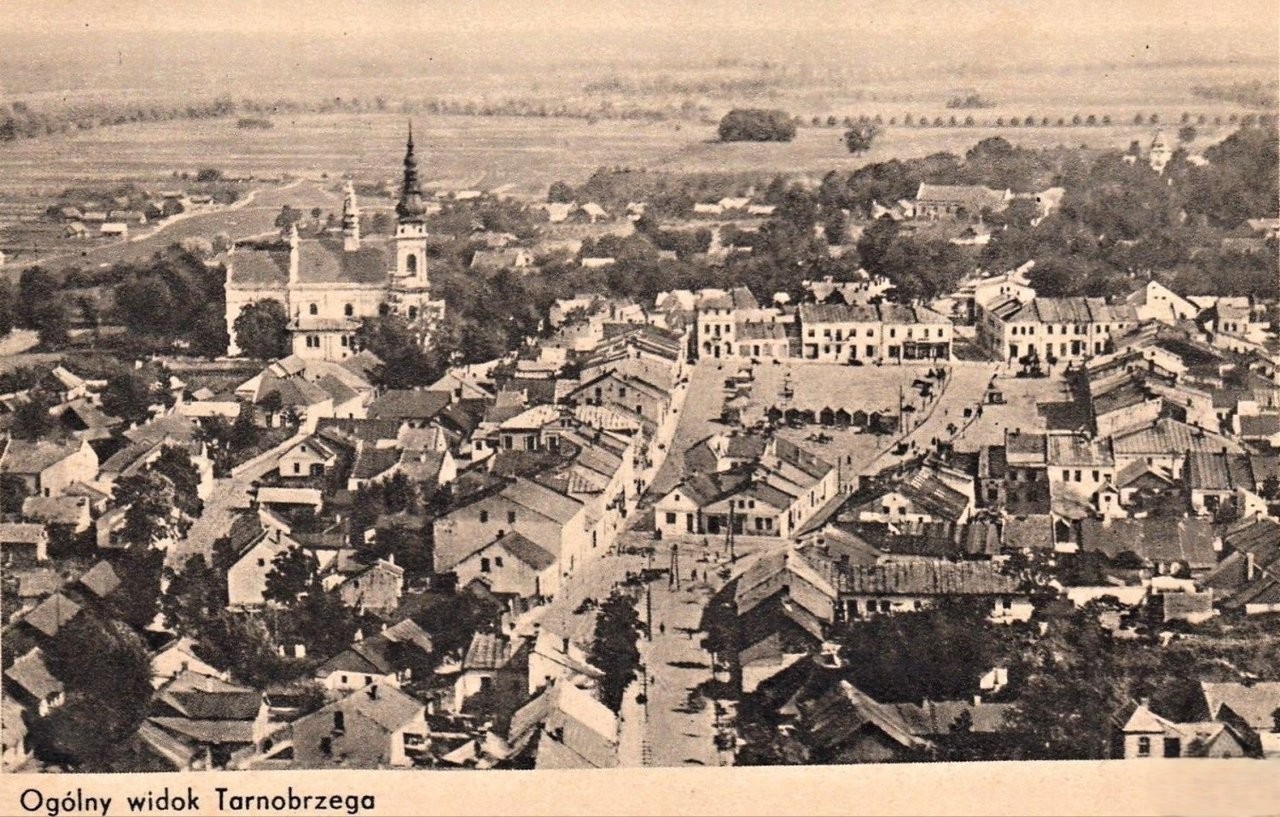
Jewish Tarnobrzeg through changing states
Tarnobrzeg was founded in 1593 as a private town of the Tarnowski family beside their estate at Dzików. Jewish residents lived successively under the Polish–Lithuanian Commonwealth, the Habsburg monarchy, the restored Polish Republic, and German occupation. Each political order changed the rules governing residence, property, trade, marriage, schooling, military service, citizenship, and communal authority.
The timeline below gives the broad story. Each period links to a fuller account, but the overview is intended to stand on its own.
Chronological overview
| Period | Political setting and Jewish experience | Deeper history |
|---|---|---|
| 1593–1772 | Private Town, Borderland, & Early Jewish Settlement. Tarnobrzeg was a privately owned town within the Polish–Lithuanian Commonwealth, closely tied to the Tarnowski estate at Dzików. Noble owners sought settlers who could make markets productive, lease revenues, extend credit, move goods, and connect the estate to regional trade. Jewish merchants, leaseholders, artisans, and communal institutions became part of that system. By the eighteenth century an organized Jewish community was firmly established. Case study: the 1757 Dzików blood libel → | Explore 1593–1772 → |
| 1772–1848 | Early Austrian Galicia. The First Partition placed Tarnobrzeg inside the Habsburg crownland of Galicia. The Tarnowski estate remained important, but imperial officials introduced a more intrusive administrative state: new taxes, cadastral surveys, registration, military obligations, state-directed schooling, and fixed surnames. Joseph II's reforms mixed limited openings with coercive efforts to reshape Jewish communal and family life. | Explore 1772–1848 → |
| 1848–1867 | Revolution & Emancipation. The revolutions of 1848 ended serfdom and briefly opened a wider constitutional debate over equal citizenship. Jewish rights advanced unevenly during the following two decades. In Tarnobrzeg, the 1853 cadastral survey and the rebuilding that followed the great fire of 1862 capture a town being physically and administratively remade. Full civil equality came with the constitutional settlement of 1867. | Explore 1848–1867 → |
| 1867–1914 | Late Habsburg Galicia. Jewish men now possessed formal civil equality and could participate more fully in property ownership, professions, education, and politics. Tarnobrzeg became a heavily Jewish market town linked by rail and migration to larger Galician cities, Vienna, and overseas destinations. Dzików Hasidism made the town a religious center known far beyond the district, while Zionist, Orthodox, and other political currents appeared beside older communal institutions. | Explore 1867–1914 → |
| 1914–1921 | World War I & Imperial Collapse. Tarnobrzeg's location near the Russian frontier brought invasion, requisition, displacement, and economic disruption. The Habsburg monarchy collapsed in 1918, followed by political instability, the short-lived Tarnobrzeg Republic, anti-Jewish violence, and Jewish self-defense. The community emerged into a new Polish state after years of war and uncertainty. | Explore 1914–1921 → |
| 1921–1939 | The Interwar Jewish Community. Jewish Tarnobrzeg rebuilt a dense network of synagogues, study houses, schools, charities, businesses, banks, youth organizations, and political movements. Hasidic and Orthodox life remained powerful while Zionist organizations and new educational choices attracted many younger people. Economic pressure and antisemitism worsened in the 1930s, even as communal life remained vigorous. | Explore 1921–1939 → |
| 1939–1945 | Occupation, Expulsion, & Destruction. German occupation began in September 1939. Within weeks Jews were subjected to violence, robbery, forced labor, and humiliation, and in October most of the community was expelled from Tarnobrzeg. Families scattered across German- and Soviet-controlled territory. Some survived in Soviet exile; many others were later caught in ghettos, camps, forced labor, and mass murder. A smaller Jewish presence remained in Tarnobrzeg until its destruction. | Explore 1939–1945 → |
| After 1945 | Survivors, Diaspora, & Memory. The Jewish community was not re-established in Tarnobrzeg. Survivors and descendants rebuilt elsewhere, while landsmanshaftn, memorial books, testimony, cemeteries and family archives preserved the town's Jewish memory. Dzików Hasidism also survived outside Dzików, carrying the town's name into new communities in Israel and the wider diaspora. | Explore after 1945 → |