Jewish Life
Education: Heder, School, & Youth
A child could begin with a melamed and end up in a Hebrew school, a teachers’ seminary, a Zionist youth group or a bicycle shop. Education shows a town negotiating tradition and modernity one child at a time.
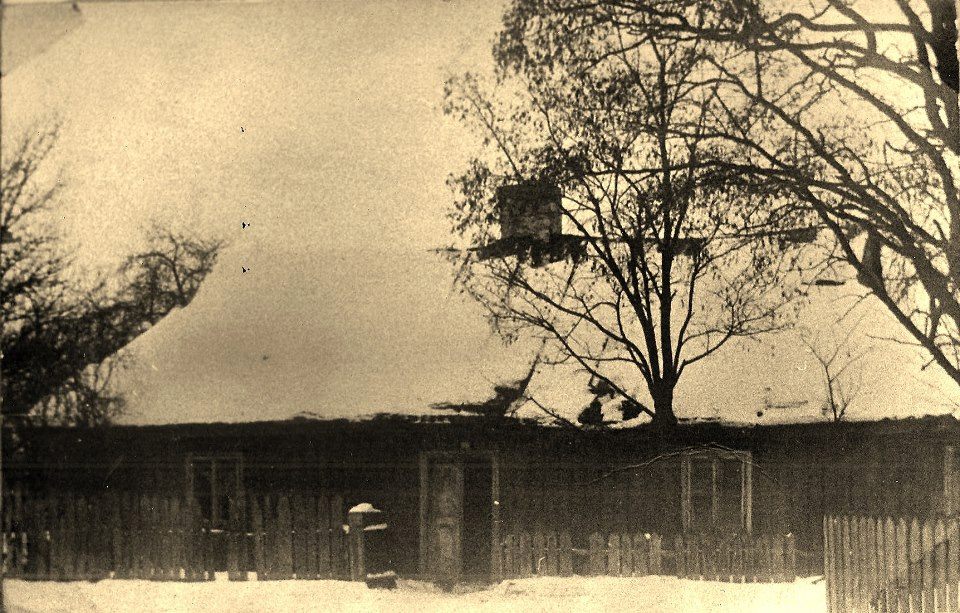
A mother brings a three-year-old to cheder
Yitzchak Gutwein’s 1948 Yiddish memoir begins his discussion of traditional schooling with a scene rather than a curriculum. When boys reached about three years old, their mothers brought them to the cheder, the traditional elementary religious school, of R. Yankl Nahum. [1]
The teacher was a melamed, the traditional instructor responsible for teaching boys Hebrew reading, prayer, and religious texts. The first day of cheder therefore marked a family transition: a small child left the world of home for a male educational world that could eventually lead toward independent study in the beit midrash.
The melamed over the cemetery
The memorial tradition remembers Yehoshua Meir Malamud as an exceptionally severe melamed whose cheder looked toward the old Jewish cemetery. [2]
Even before every classroom anecdote is recovered from the original-language text, the portrait matters. Former pupils did not remember “the cheder system”; they remembered particular teachers—their tempers, voices, expectations, and reputations. Education was personal authority experienced at very close range.
A nineteen-year-old Hebrew teacher arrives
By 1910, Tarnobrzeg also had a modern Hebrew school. Its first teacher, Menachem Hochman, was remembered as only nineteen when he arrived, a young Hasid from eastern Galicia who later married the daughter of the local shochet Israel Eder. [2]
Hochman embodied the transitional world himself: Hasidic background, modern Hebrew instruction, and a marriage into a traditional religious household. A local joke played on his surname, which suggested height even though he was notably short. The joke survived because pupils and neighbors remembered the teacher as a person, not just as the founder of a school.

“Why do we need a school? Don’t we have Brucha?”
Girls’ education became another arena of change. When Agudat Yisrael promoted a Bais Yaakov school—a network of formal religious schools for Jewish girls—some townspeople questioned why an institution was necessary when Brucha Fleisher already taught girls what families believed they needed. [2]
The argument captures a generational shift. Informal instruction centered on a known woman was giving way to an organized school with a curriculum, ideological purpose, and trained teachers. The debate was not whether girls learned anything; it was who should teach them, what they should learn and what kind of Jewish women they should become.
The Schwartz sisters pay their own way
One family shows what those new opportunities demanded. Three of the Schwartz daughters became Bais Yaakov teachers. Two attended the respected teachers’ seminary in Kraków, and the memorial book remembers the sisters financing their education partly by selling embroidery and needlework they had produced since childhood. [2]
Their story joins household economy to women’s education. Needlework was not merely a domestic accomplishment: it became a route out of poverty and into professional religious teaching.
A melamed sends two boys to spy on Zionists
Educational conflict could become comic. At a memorial meeting for Theodor Herzl, the founder of modern political Zionism, the traditional teacher Moshe Eliezer Krep worried that his own son might attend. He sent two pupils to the Zionist meeting to spy and report back. One of those boys later remembered the episode. [2]
That small act contains an entire ideological struggle. A melamed wanted to protect the loyalties of his household; his pupils were curious enough to enter the rival world; Zionism was no longer an abstract movement somewhere else but something a teacher feared might capture his own son.
From the beit midrash to a bicycle shop
Not every promising boy remained in religious study. Avraham Levine was remembered among young men connected with the beit midrash, but he eventually left study to work for his uncle selling and repairing bicycles. [2]
The bicycle is almost too perfect a symbol. A young man trained in the old study house enters a trade built around a new machine that expands physical mobility. By the early twentieth century, Tarnobrzeg education could lead toward rabbinic learning, modern Hebrew culture, teaching, commerce, migration, or politics. Growing up Jewish no longer pointed toward one future.
Heder was only one layer of traditional education
The 1973 memorial book also devotes attention to the town's Talmud Torah, a communal institution distinct from a private heder and from advanced study in the beit midrash. [2] Together these institutions formed an educational ladder: a child might learn basic Hebrew reading with a melamed, receive more organized communal instruction, and later join the adult world of study and prayer.
This distinction also reveals the charitable side of education. Schooling was not simply a private purchase by parents; communal institutions could help provide religious instruction for children whose families had fewer resources.
Youth movements created new classrooms
By the 1930s, some of the most important lessons young Jews encountered were taught outside school. The memorial book describes local branches of Akiva, Hashomer Hadati, Hashomer Hatzair, and Orthodox youth associated with Agudat Yisrael. [2] These groups needed rooms, books, leaders, meetings, and activities. They offered competing answers to questions that older institutions did not pose in quite the same way: What language should Jewish youth speak? What future should they imagine? How should religious observance relate to Zionism, Polish civic life, or modern politics?
The result was not a simple replacement of tradition by modernity. A young person could come from a Hasidic or observant household and still participate in a modern political youth movement. Tarnobrzeg's interwar generation grew up amid overlapping educational worlds rather than a single path.
Sources cited on this page
- Yitzchak Gutwein, A Zacher Fun Mein Shtetl Dzikow (Paris, 1948), Yiddish memoir, section on melamdim and cheders; complete scan consulted.
- Ḳehilat Ṭarnobz’eg-Dziḳov (1973), especially sections on the Hebrew school, Bais Yaakov, melamdim, Talmud Torah, Zionism and friends from the beit midrash. JewishGen partial translation/synopsis.
- Tarnobrzeg school records, class lists, and photographs, for surviving pupils and teachers in the later period.