
The Jewish Files of Rădăuți, 1941–1946
Documents from the “Jewish Files of Rădăuți” in the Romanian National Archives (Suceava County Branch) – a microcosm of the persecution, deportation and extermination of the Jews of Romania.
In the autumn of 1941 more than 10,000 Jews – men, women and children – were deported from Rădăuți to Transnistria, the area between the Dniester and the Southern Bug that the Romanian regime turned into a vast concentration camp. Two out of three of them perished. Edgar Hauster photographed these files in June 2009 and translated a selection into English; copies were requested by Yad Vashem and the United States Holocaust Memorial Museum. Select a document to open the photograph.
-
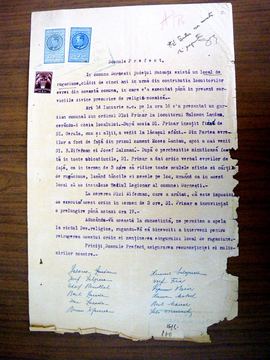
Jewish Properties January–March 1941
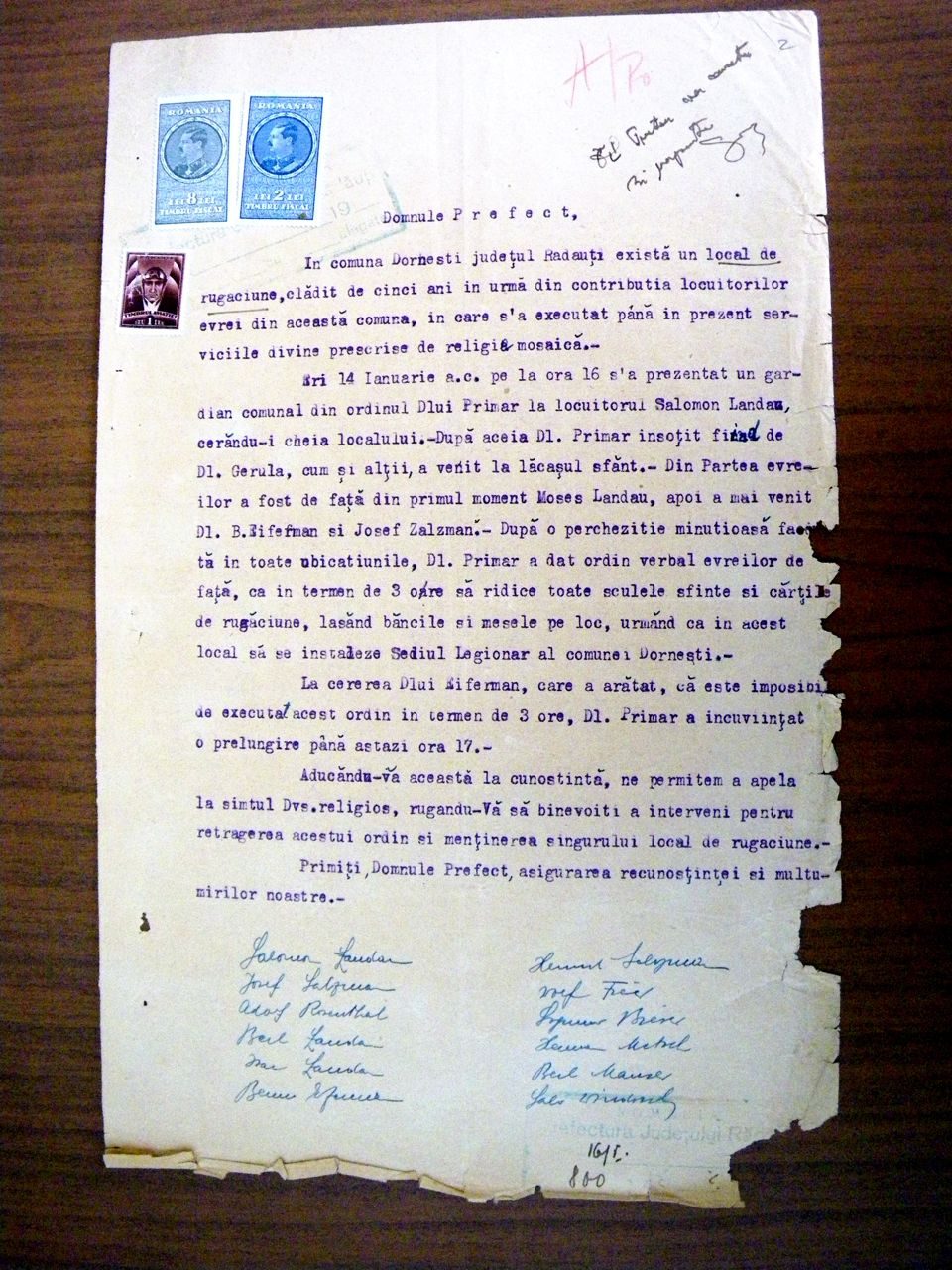
The mayor of Dornești closed the village prayer house, built five years earlier by its Jewish inhabitants, to install the local Legionnaire headquarters. Twelve members of the community protested to the prefect; the inquiry found that the mayor had abused his power, and the prefect ordered the keys returned. In April the Ministry of the Interior asked for a list of Jewish shops taken by force.
Read the documents in translation (Edgar Hauster’s blog)
-
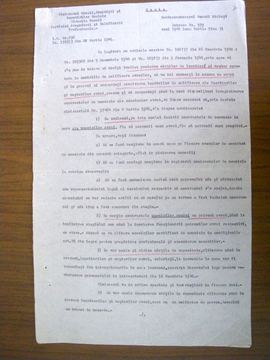
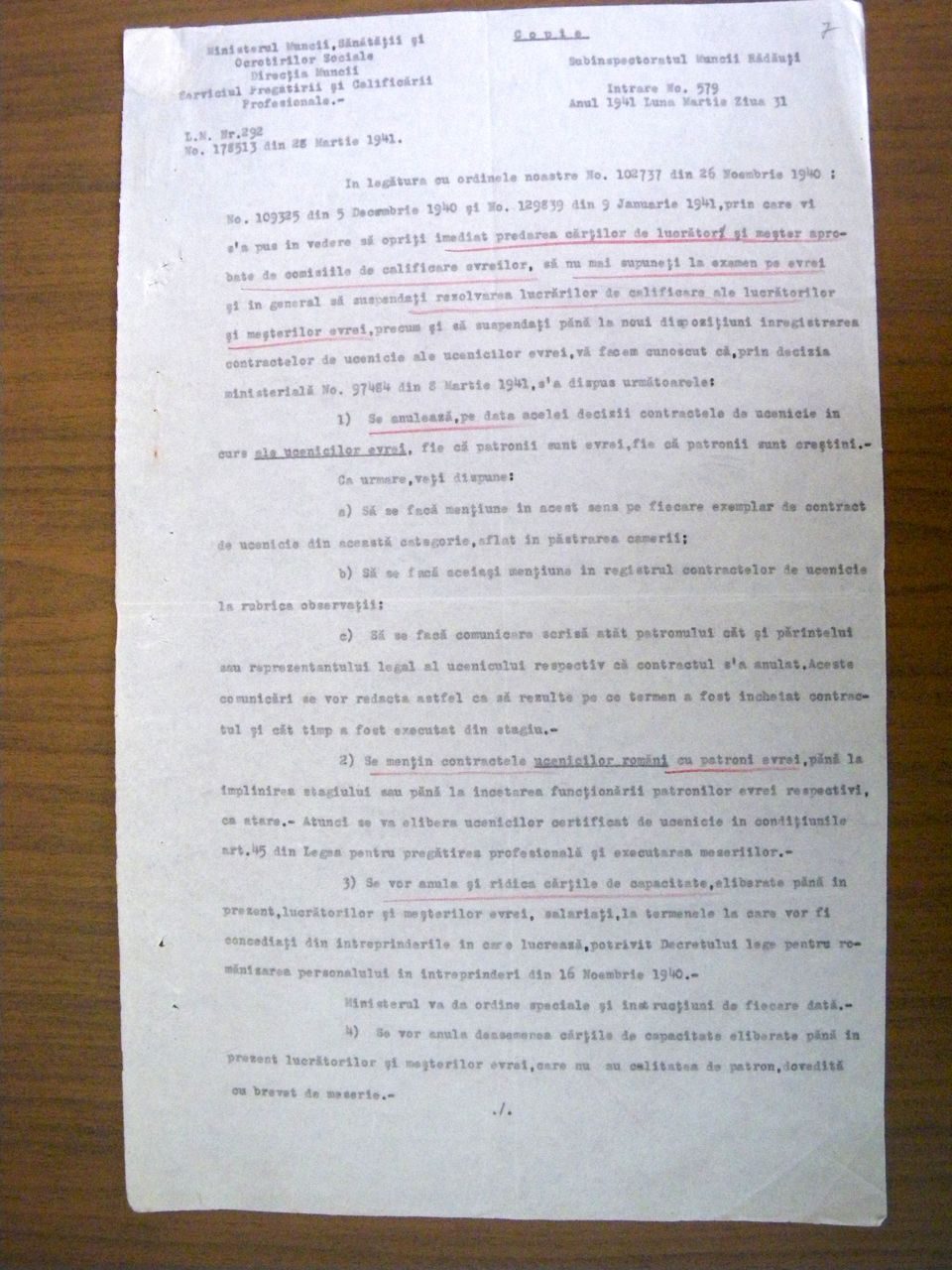
Apprentices and Foremen March 1941
A decree of the Ministry of Labour cancelled the contracts of all Jewish apprentices, banned the registration of new ones, and ordered the qualification papers of Jewish workers and foremen to be cancelled and confiscated under the “Romanization” law.
Read the documents in translation (Edgar Hauster’s blog)
-
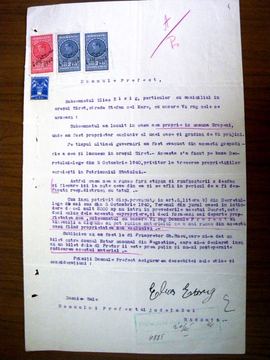
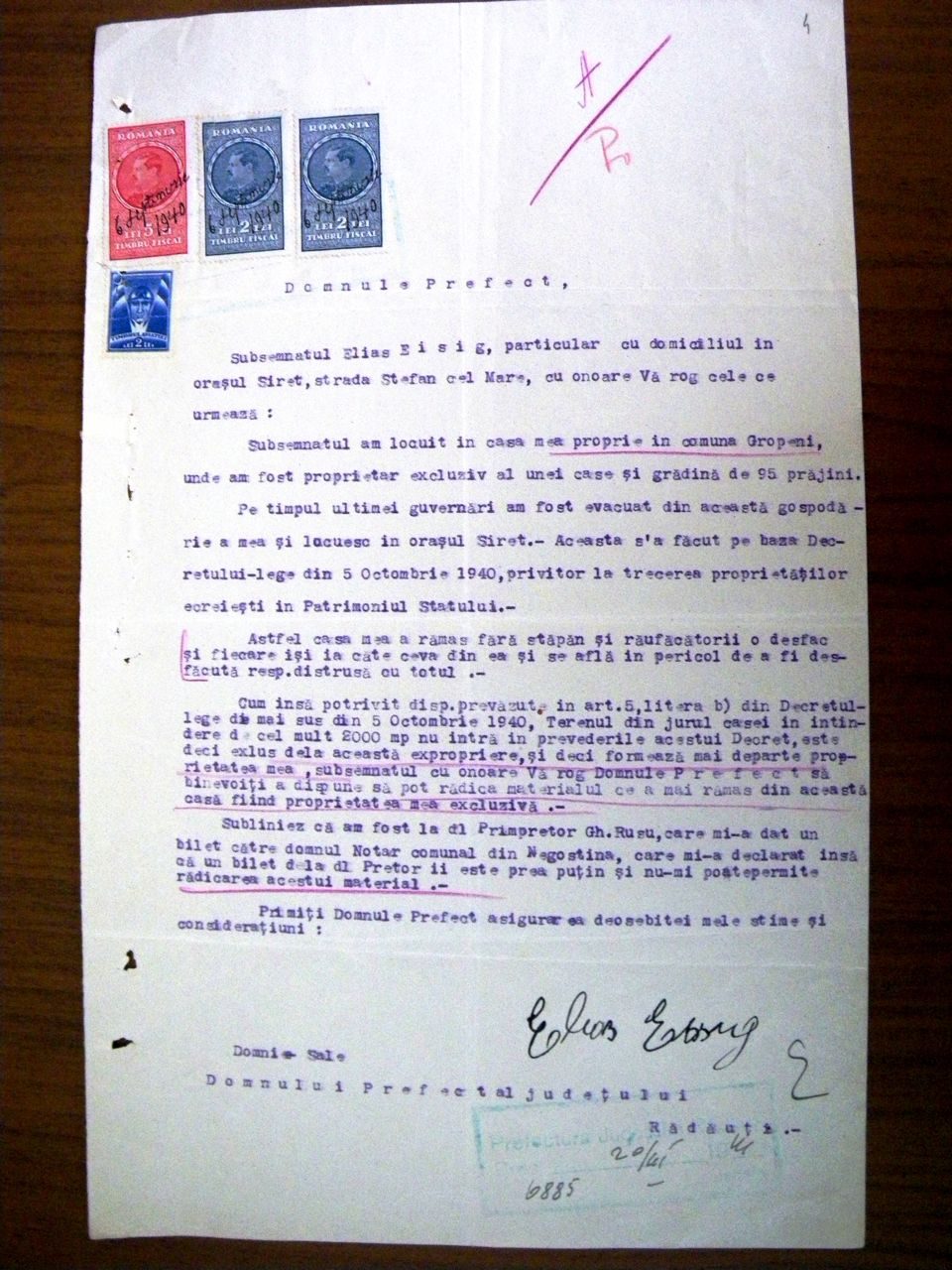
The Elias Eisig Case March–May 1941
Elias Eisig of Siret, expelled from his house in Gropeni under the 1940 law on Jewish rural property, asked to recover his belongings and then his house, which the mayor had handed to a villager. The gendarmes’ report on the case accuses the Jews returning to the villages of “spreading alarming ideas”.
Read the documents in translation (Edgar Hauster’s blog)
-
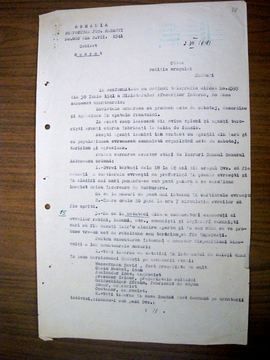
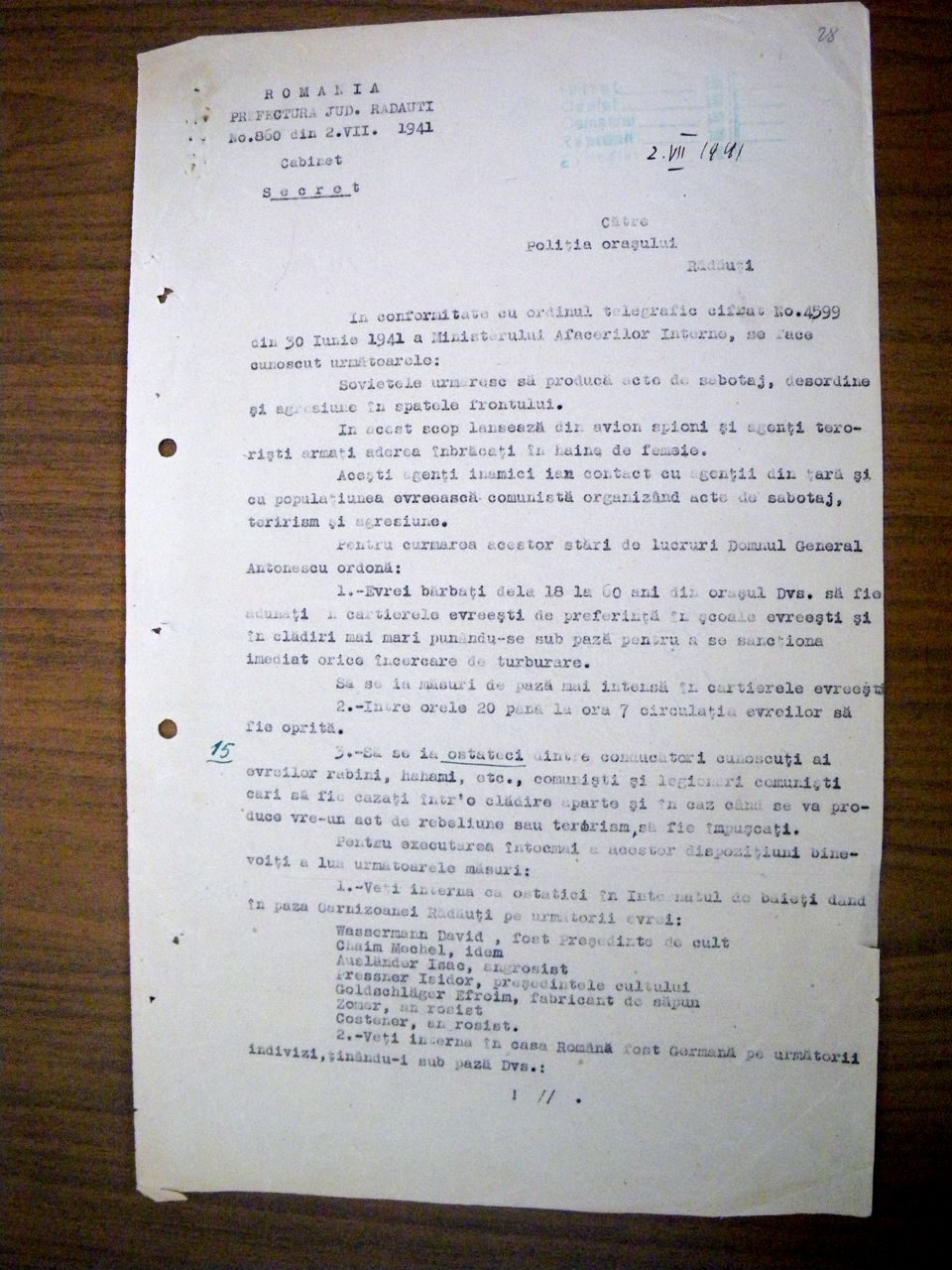
Ghetto and Hostages July 1941
On General Antonescu’s orders, the Jewish men of Rădăuți aged 18 to 60 were confined to the Jewish quarter under a night curfew, and community leaders – among them the president and a former president of the community – were held as hostages, to be shot in case of “rebellion”.
Read the documents in translation (Edgar Hauster’s blog)
-
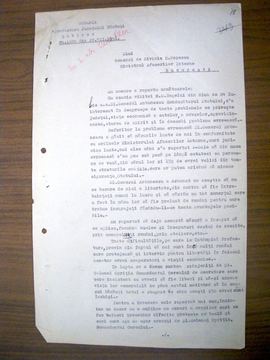
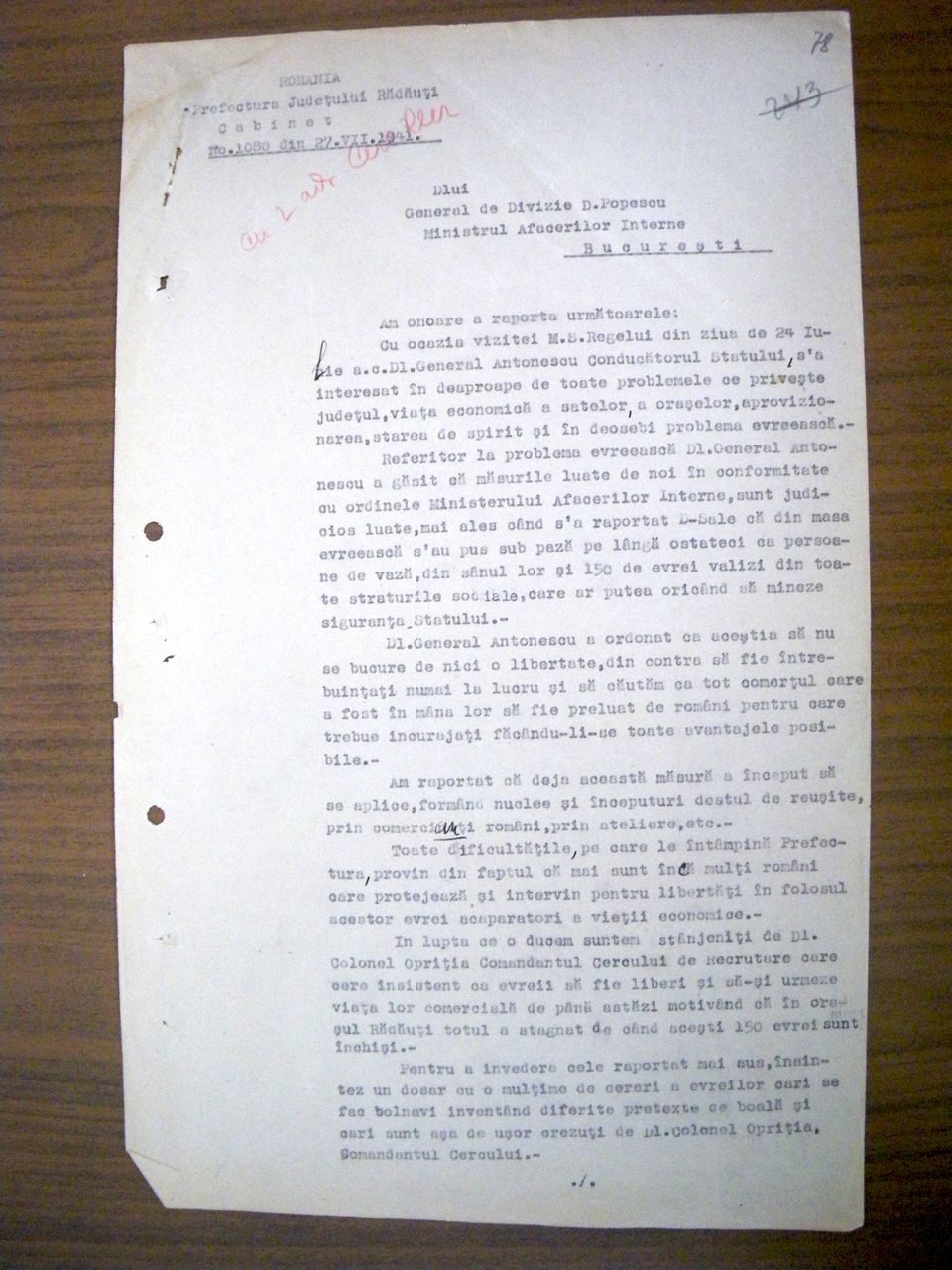
The King, Antonescu and the Jews July 1941
The prefect reports on the visit of King Michael and General Antonescu on 24 July 1941: Antonescu approved the taking of hostages and the confinement of 150 Jews, ordered that they be used for hard labour and that their businesses be handed over to Romanians. The prefect complains of an officer who intervened for the Jews.
Read the documents in translation (Edgar Hauster’s blog)
-
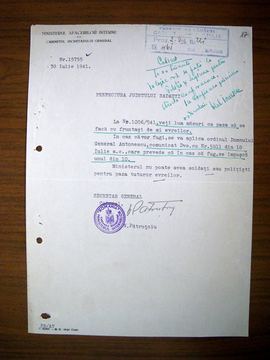
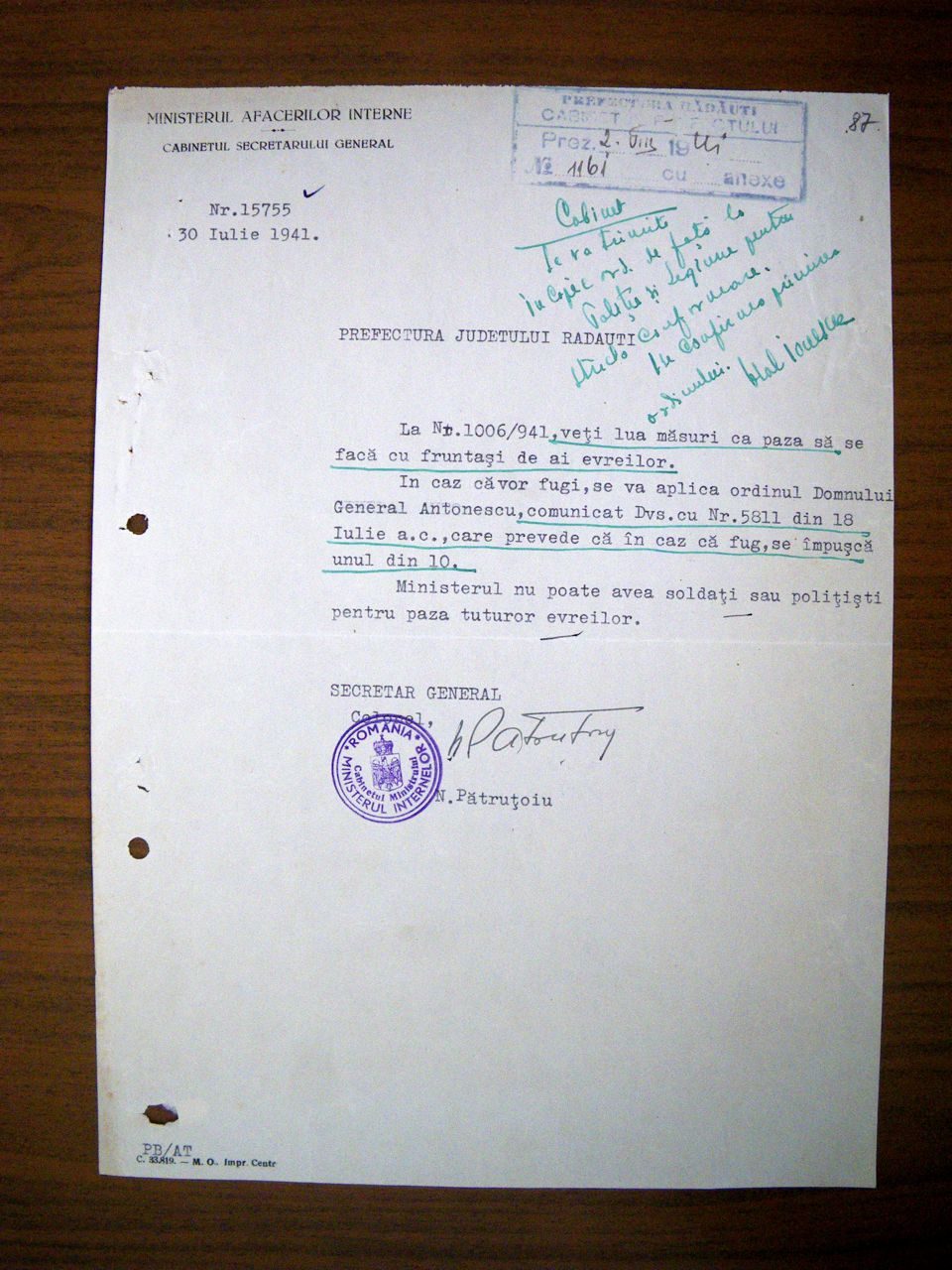
The Firing Order July 1941
The Ministry of the Interior reminded the prefect of Antonescu’s order: if any of the Jewish leaders under surveillance escaped, one in ten would be shot.
Read the documents in translation (Edgar Hauster’s blog)
-
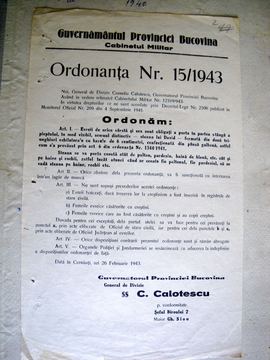
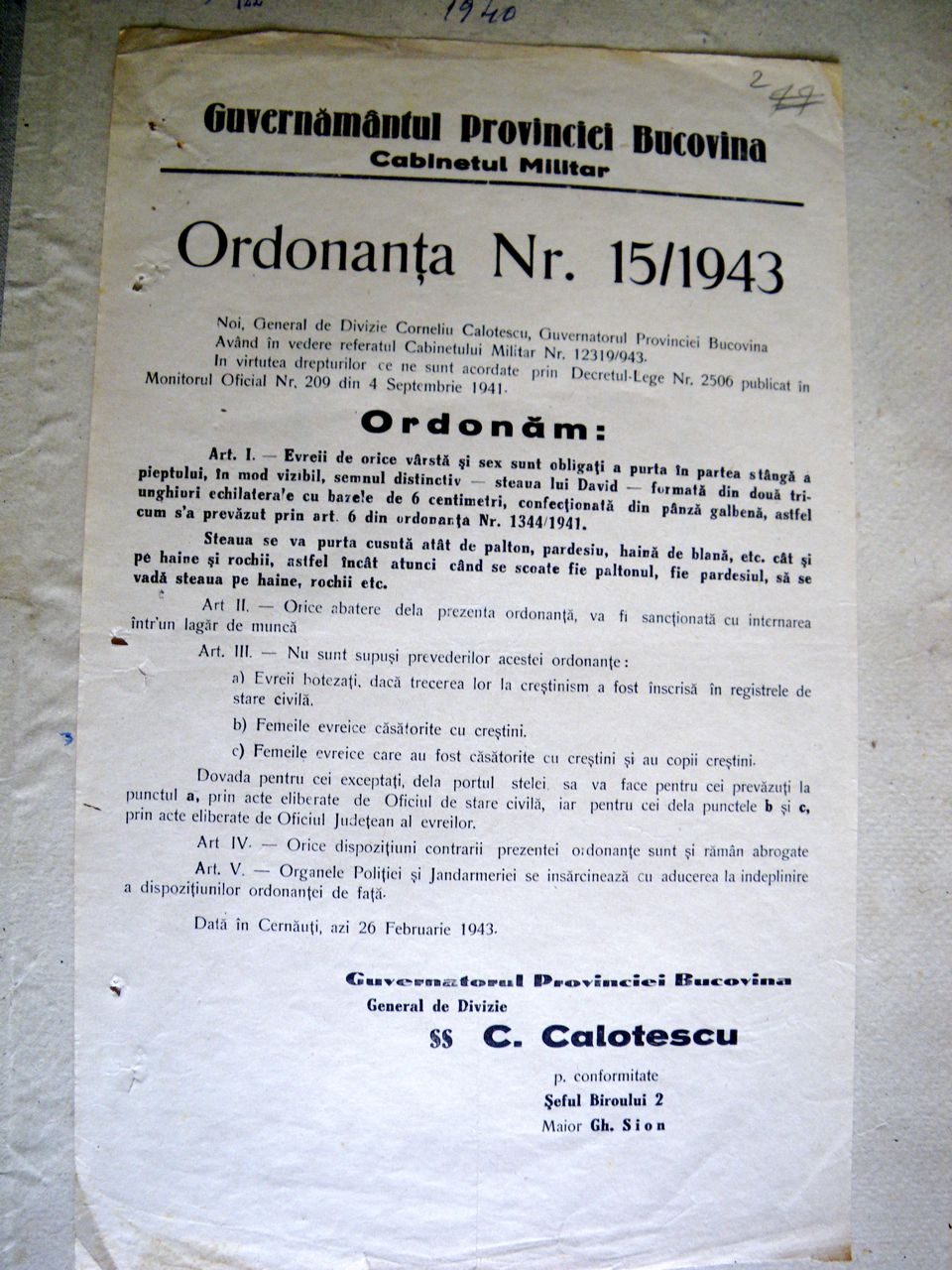
Star or No Star 1941–1943
Orders on the Jewish badge: in September 1941 all Jews of the county, men, women and children, were ordered to wear a Star of David on the chest; a 1943 ordinance of the governor of Bukovina, General Corneliu Calotescu, prescribed a yellow star and listed who was exempt.
Read the documents in translation (Edgar Hauster’s blog)
-
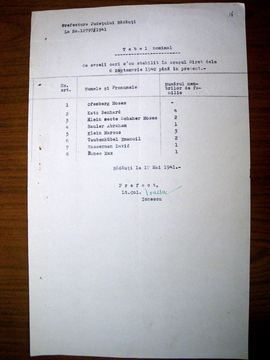
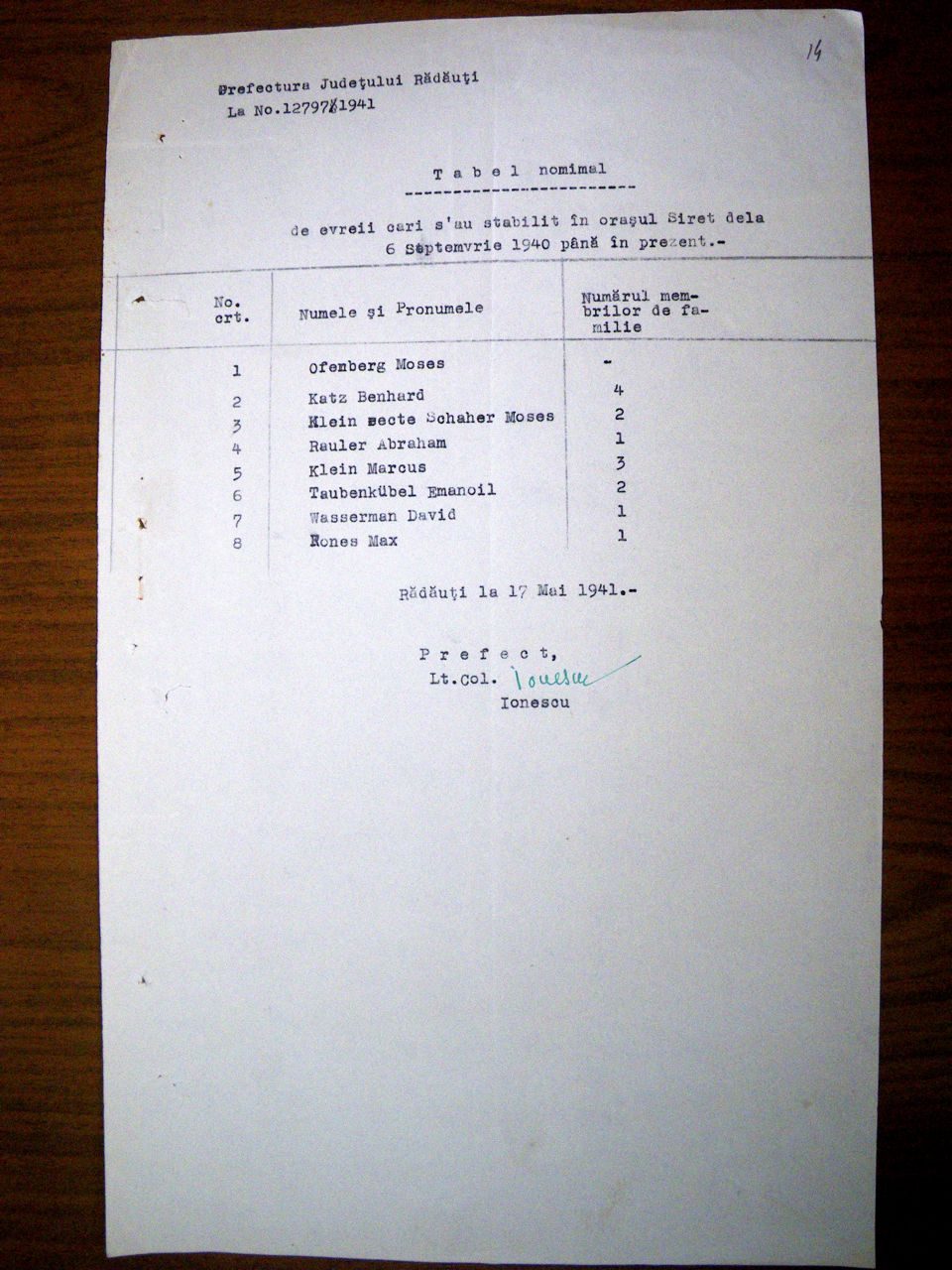
The Story of the Siret Jews May–October 1941
The Jews of Siret, evacuated before the fighting of June 1941, were not allowed to return while the Christian population did. The community’s vice-president, Simon L. Kraft, asked the prefect to let them go home; the answer was “until further orders” only an inventory of their goods could be made. The file includes a list of 398 Siret Jews.
Read the documents in translation (Edgar Hauster’s blog)
-
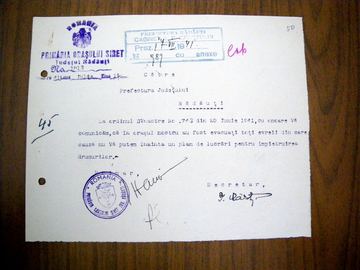
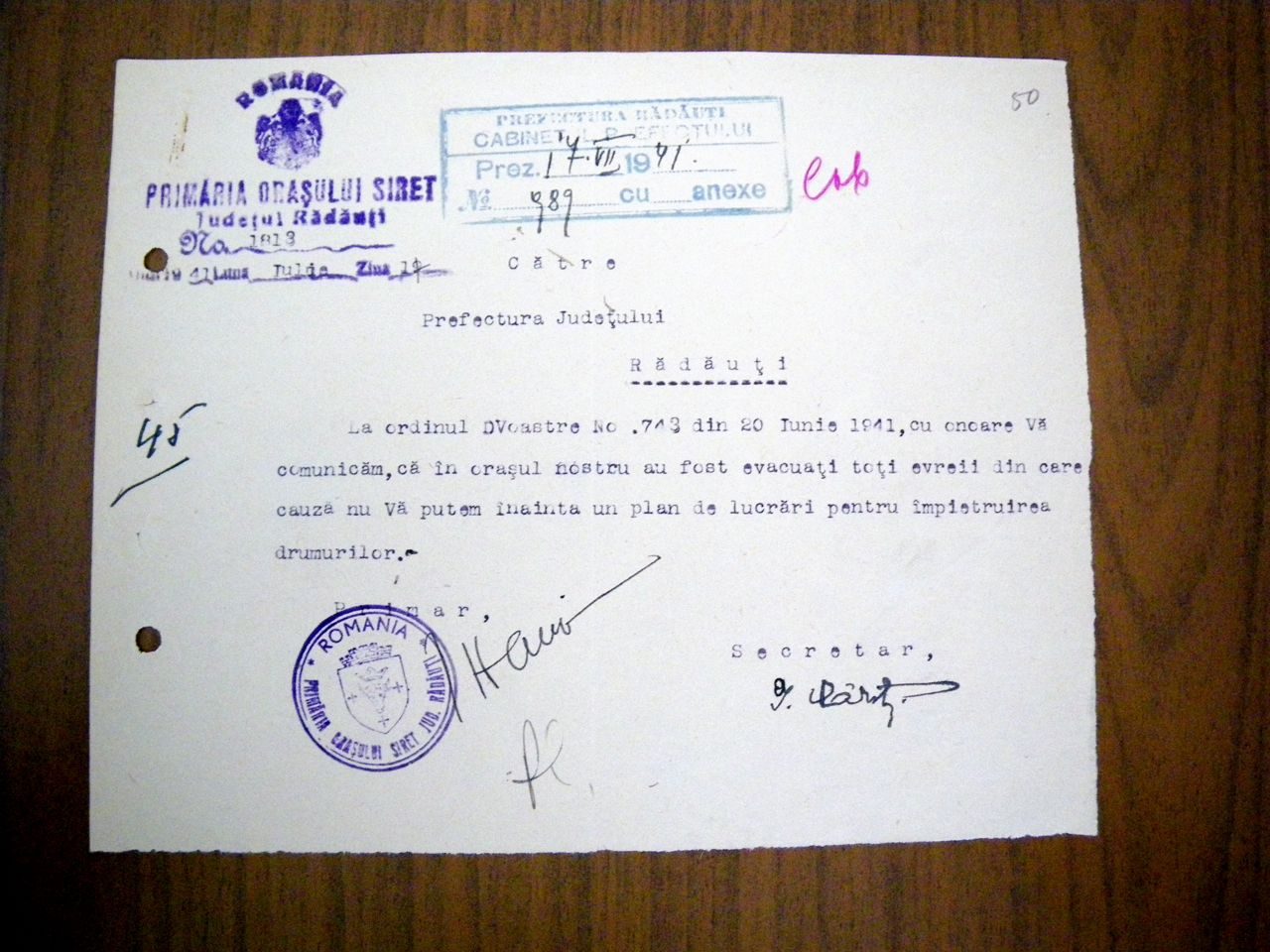
The Consequences of Deportation July–November 1941
Siret could not plan its road paving because “all Jews were evacuated”. Other documents record the few Jews exempted from deportation to keep factories working for the army, among them the staff of the S. Rudich brewery in Rădăuți.
Read the documents in translation (Edgar Hauster’s blog)
-
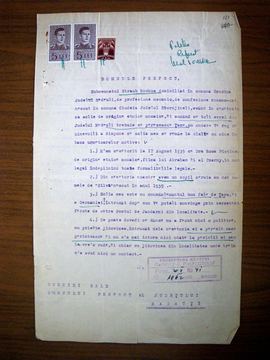
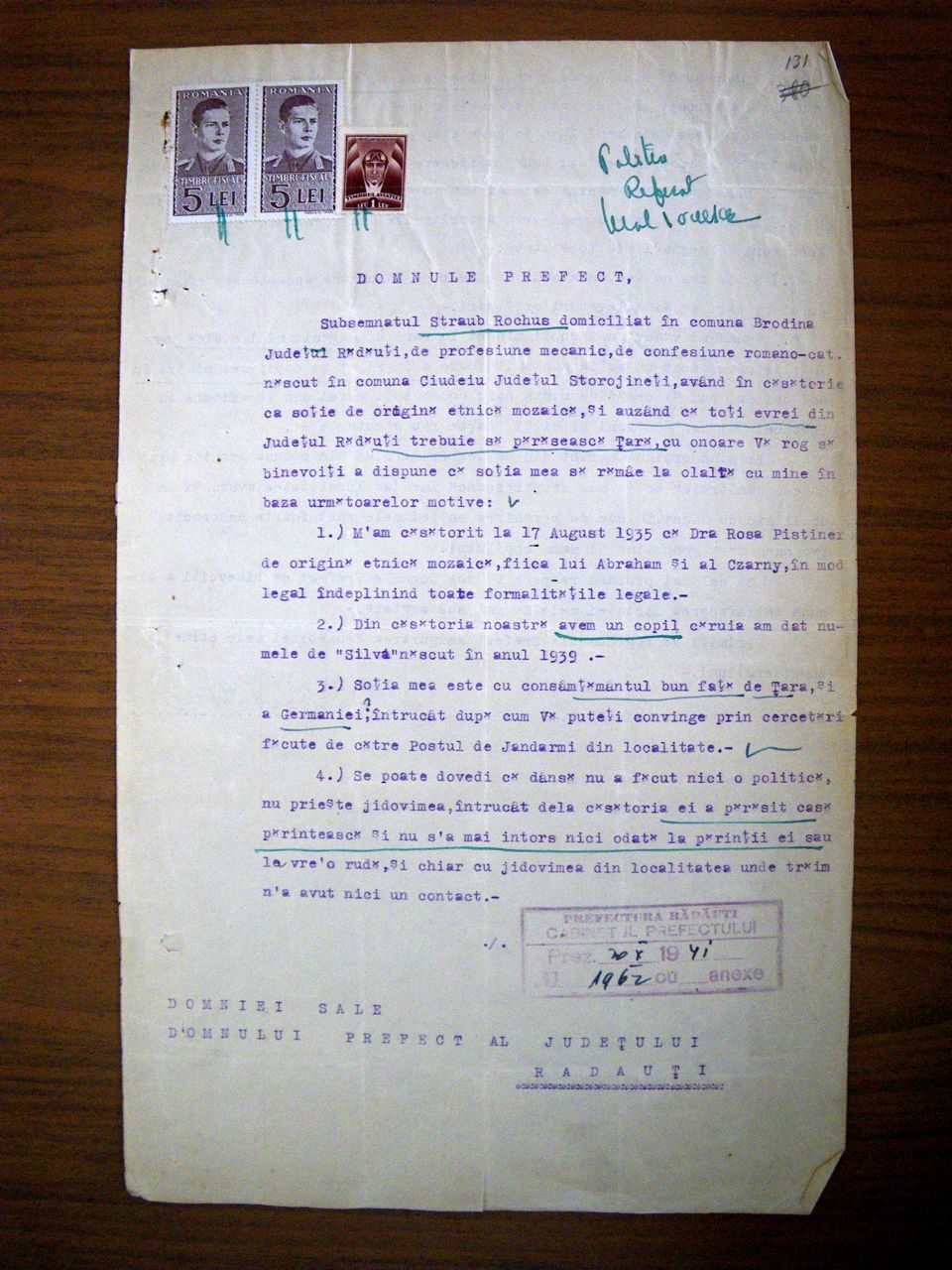
Inter-Ethnic Marriage October 1941
Rochus Straub, a Catholic mechanic of German origin in Brodina, petitioned that his Jewish wife, Rosa née Pistiner, mother of their small daughter, be allowed to stay with him instead of being deported. The local police chief’s note on the file demands that she be removed with the other Jews.
Read the documents in translation (Edgar Hauster’s blog)
-
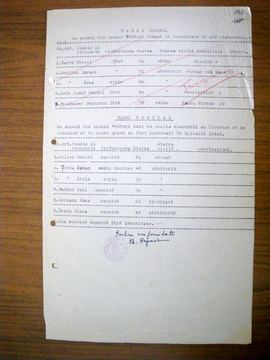
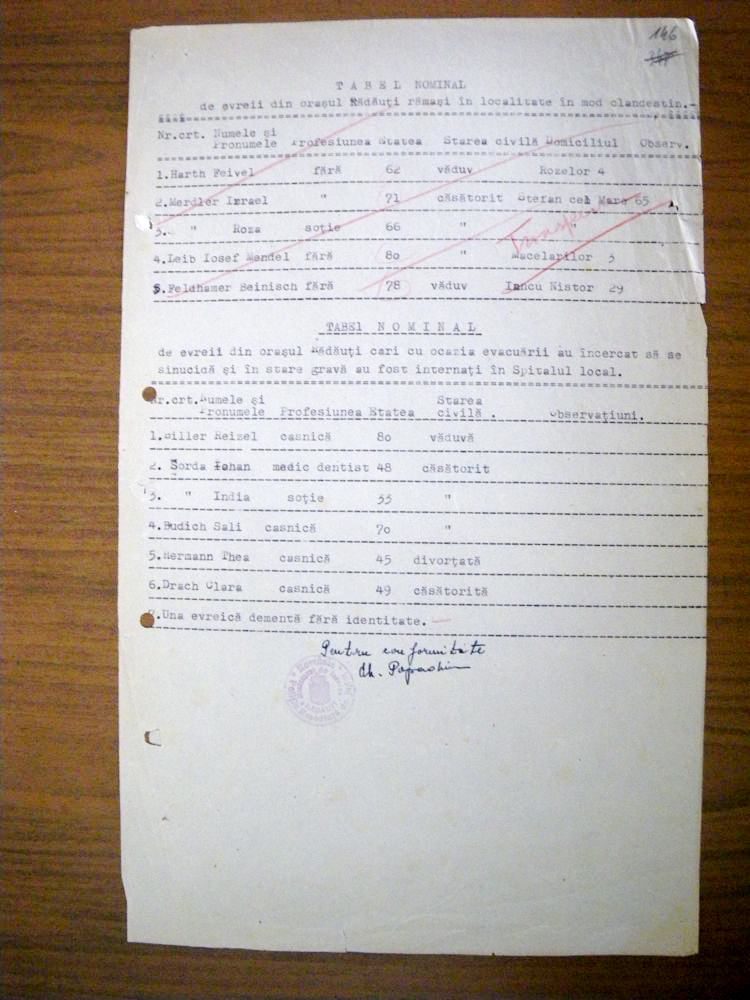
Deportation and Suicide November 1941
A police list of the Jews of Rădăuți hospitalised in serious condition after trying to take their own lives because of the deportation: six named people, aged 33 to 80, and one unidentified woman.
Read the documents in translation (Edgar Hauster’s blog)
-
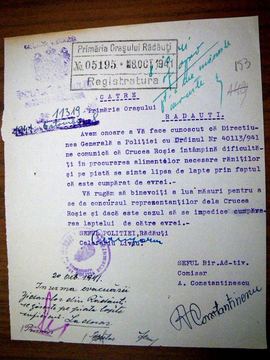
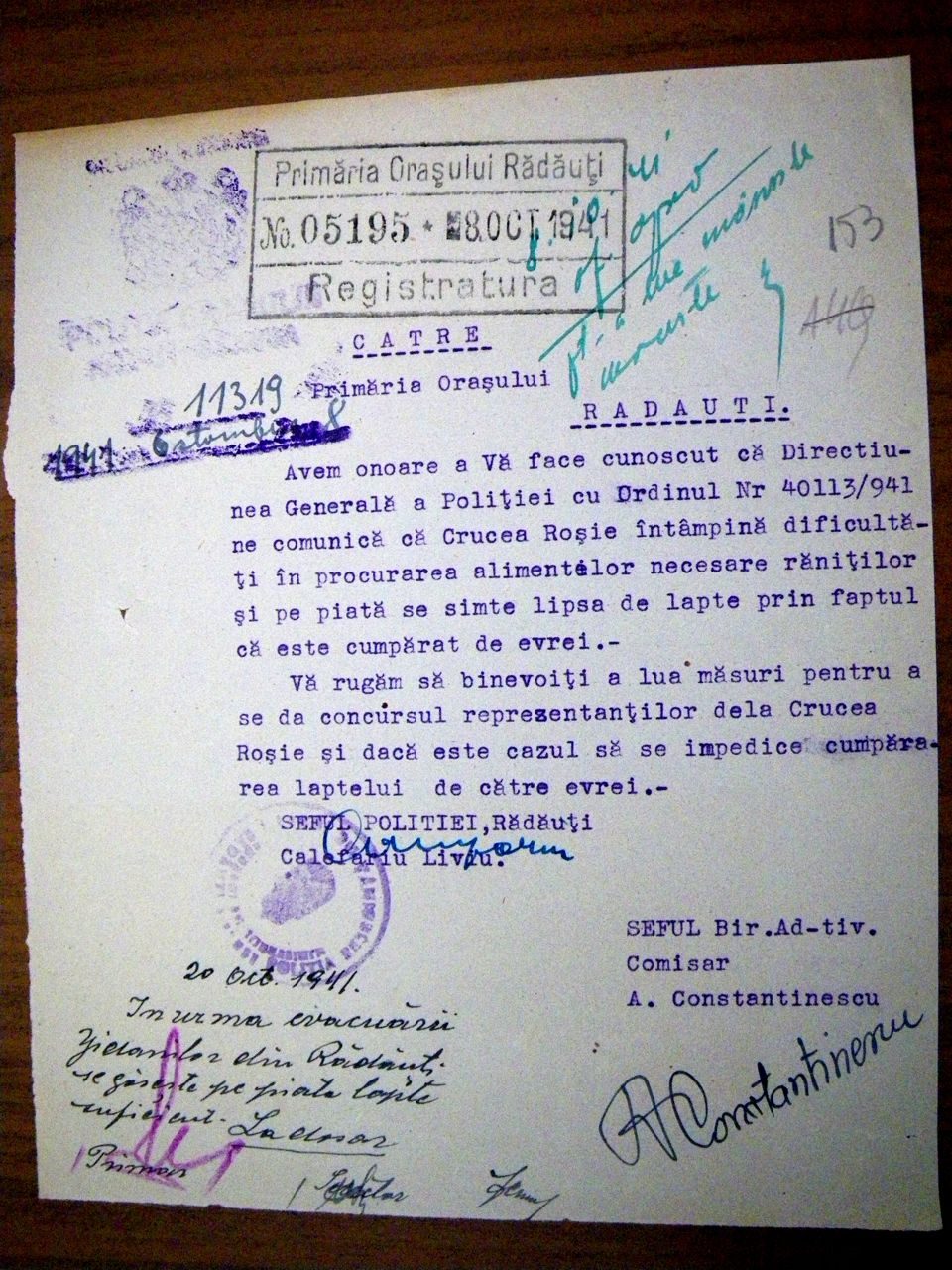
The Milk, the Mayor and the Jews November 1941
Asked by the police to restrict the purchase of milk by Jews because of a shortage, the mayor noted on 20 November 1941: “Following the evacuation of the kikes from Rădăuți, the market now has sufficient milk supply.”
Read the documents in translation (Edgar Hauster’s blog)
-
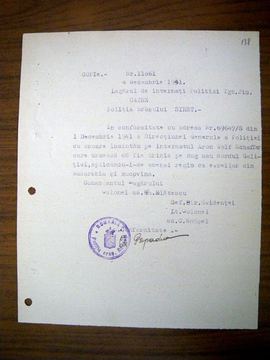
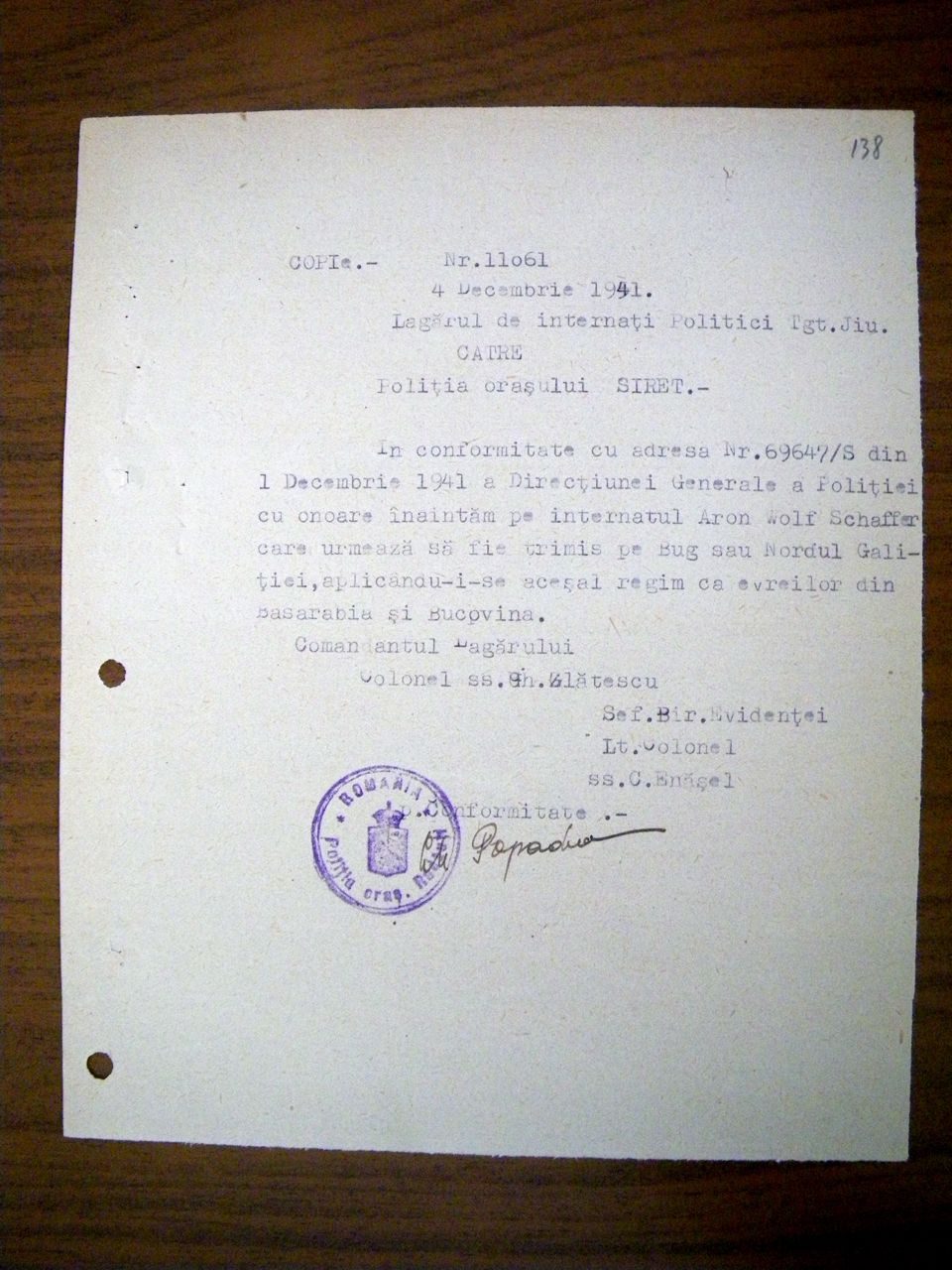
The Aron Wolf Schaffer Case December 1941
Aron Wolf Schaffer, a merchant of Siret held at the Târgu Jiu camp since June 1941, was sent back to be deported “to the Bug or Northern Galicia”; the prefect ordered his removal within 24 hours. His own petition asks for the money from the sale of the corn taken from his warehouse.
Read the documents in translation (Edgar Hauster’s blog)
-
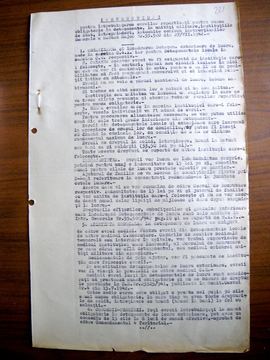
How to Use Jews 1941–1942
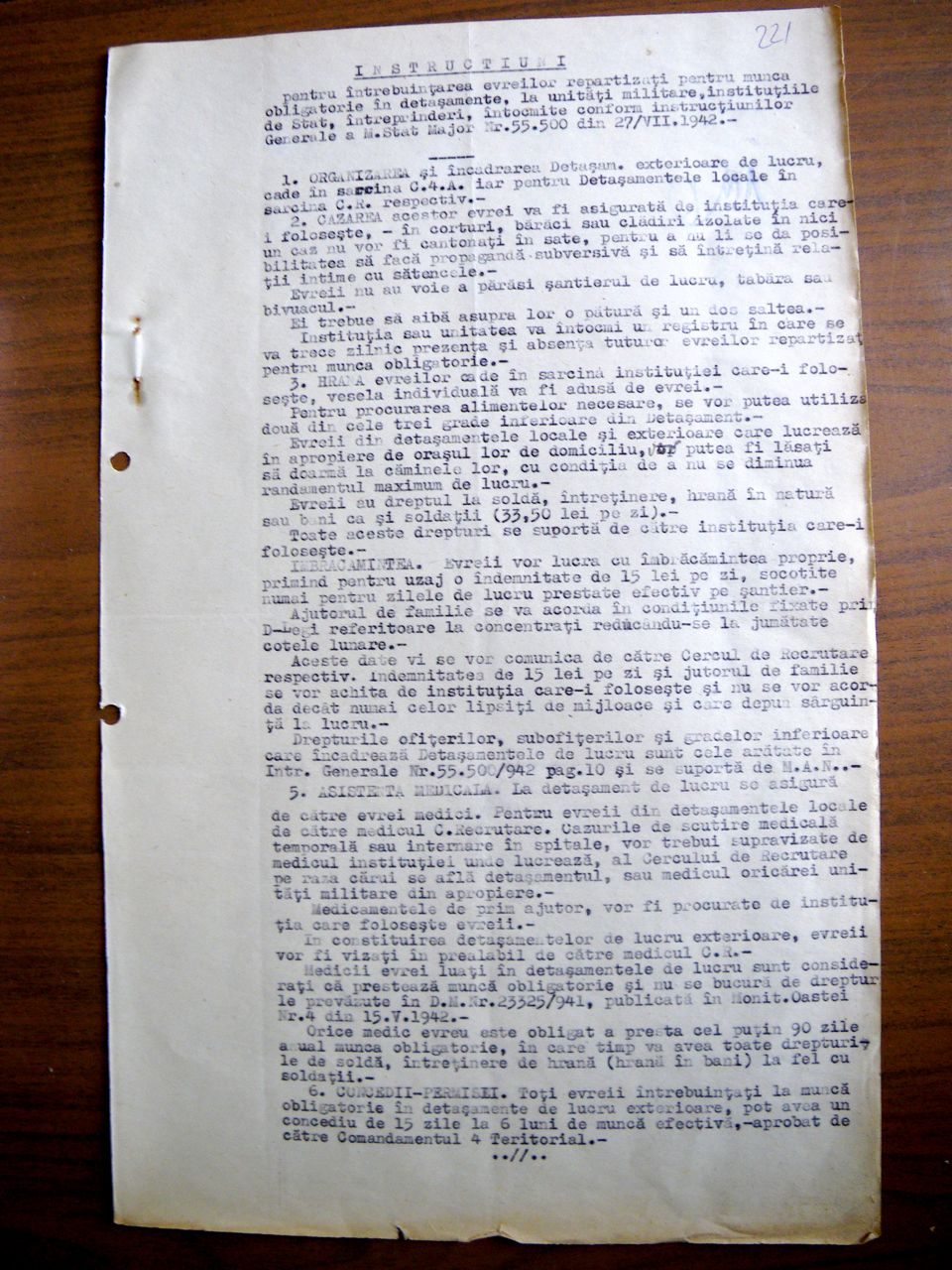
Army directions for Jews assigned to forced labour: housed apart from the villages, forbidden to leave the work site, with rules for their food, clothing and pay.
Read the documents in translation (Edgar Hauster’s blog)
-
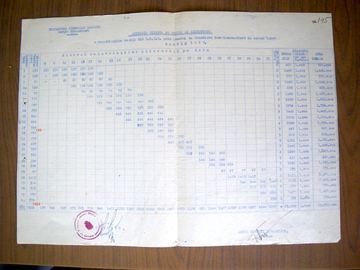
Repatriates at the USSR/Romanian Border March–April 1946
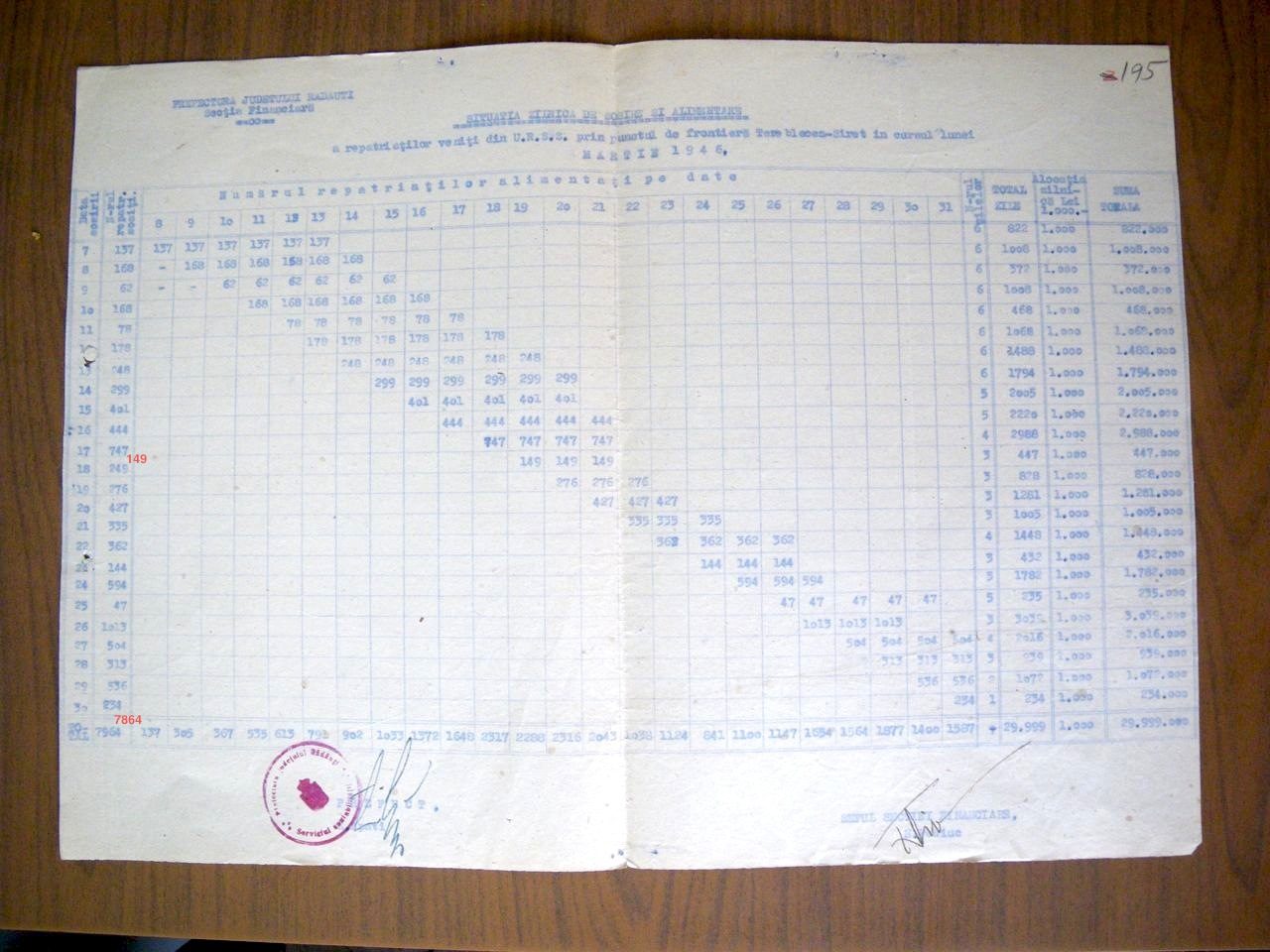
10,673 people, mainly Jews from Northern Bukovina who had survived Transnistria, crossed back into Romania at Siret. Their names are on this site as a searchable list.
More cases, and the full translations, are on Edgar Hauster’s blog The Jewish Files of Rădăuți.