Kedainiai, Lithuania




500 Years



Pages 68-71
Keidan occupied the place of honour among the towns and shtetlach of the former Jewish Lithuania. It was one of the oldest and most renowned Jewish communities in Lithuania.
The fact that Keidan was associated with the names of two great historical personalities: The Vilner Gaon and Moshe Leib Lilienblum, would place Keidan in an exceptionally prominent position in the annals of the Jewish history of Lithuania, and also in the general history of Eastern European Jewry.
Jews were already living in Keidan in the fifteenth century. The history of the Jews of Keidan goes back nigh on 500 years.
As soon as the Jews arrived, when they had not yet settled in their new home, there was a decree by the Grand Duke Aleksander, that all Jews should leave Lithuania. The new Jewish community in Keidan was ruined. Most of them resettled in Poland on the Lithuanian border.
In 1503, the Jews were permitted to return to Lithuania, but only a small number of the expelled Jews of Keidan returned there.
In the 16th century, Keidan was the domicile of the Grand Dukes Radzivill. The Radzivills were Calvinists, and fought against Catholicism. Christopher Radzivill wanted to enlarge the Jewish population in Keidan in order to increase trade. He therefore permitted the Jews all civil rights and also guaranteed that no one would lose ownership of property if he translocated to another town.
However, Radzivill wanted to allow only people with good character references and assurances of honesty. Consequently the Jews who came, were predominantly from Germany and were specially selected educated people and from the privileged class.
There is an assumption, that many of the Jews who came to Keidan at that time, were those who had been banished from Scotland among whom were a great number of weavers. That is why such a wonderful weaving industry developed in Keidan. At the beginning of the 19th century, the weaving industry was exclusively in the hands of the Jews.
The Grand Duke Radzivill welcomed the new immigrants very warmly and set aside a special part of the town for them. The immigrants developed different styles of handicrafts and Radzivill was very proud of them.
Many very religiously educated Jews came in from Germany and the Jewish community in Keidan became a centre of Torah and religious observance.
The Jews in Lithuania and Zamut decided to establish a separate “Committee of the Main Lithuanian States”, which had representation on the “Committee of the Four States” and Keidaner Jews were represented on the “Va’ad d”Lita” just a few years after its establishment.
Page 71 contd
The Grand Duke Janosh Radzivill was also friendly towards the Jews and continued to allow them all the same privileges and civil rights that his father, Christopher, had given them.
The Jews were then a most esteemed and important element in civil and economic life in Keidan. They were engaged in the wine trade and in brewing, money lending, export and import, agriculture and various trades
The Jewish artisans were organised into various guilds, which bore the same duties as the non-Jewish guilds. Jews were represented on the Town Council, where they used to determine levies and taxes. They also oversaw the fair subdivision of tax monies among the Jews, as among the Christians.
Every year, the Jews had to undergo military training exercises under the supervision of an official from the Magistrate.
The streets where the Jews lived were: The Old Market Street, Smilger Street, The Jewish Lane and The Crooked Lane.
Page 70
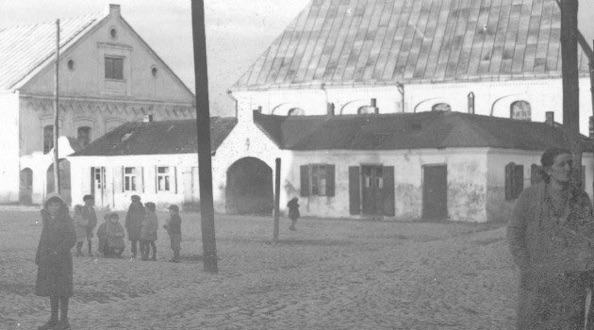
{Picture : Column 1 : A view of the shtetl from the bridge to “The other side across the water”}
In April 1652, Radzivill issued a decree, that all Jewish butchers and ritual butchers of Kosher meat, and all those who handled beef cattle for butchering, should organise themselves into a guild.
The bloody historical events of the years 1608 and 1609 (“T’ach V’t’at”) did not touch Keidan. The Keidaner Community sent support for the affected suffering Jews.
In the middle of the 17th century, the Jewish community suffered a great deal from the victorious Polish armies, which conquered Karl Gustav, who was supported by Yanosh Radzivill. The Poles regarded the Jews as traitors and supporters of the Calvinist Radzivills.
Bagoslav Radzivill, the successor to Yanosh, confirmed all the civil rights of the Jews in Keidan. On 11th June 1662, the “Starosta Avorski” reported to Arch Duke Radzivill that notwithstanding the command of Arch Duke Bagoslavus not to annul Jewish rights, the Catholic Bishop wished to announce that it was now forbidden for Keidaner Jews to work for Christians.
This stemmed from the accusation of a certain Stefan Balshetis against the Keidaner Jews, to the Commisar of Radzivill’s Palace, in 1686, stating that they did not observe the law to close their businesses on Sundays and that they had spread themselves over the whole town ignoring the limits on the quarters that had been set aside for their occupation. He also said that the Jews had become more powerful and richer in Keidan and that they had overstepped the limits which were incumbent on them.
Because of the great tribulations and persecutions of the Jews in the various countries of Europe, Reb Yossel Kobrinerin, a great scholar in Keidan, promulgated a “S’lichah” – a prayer begging G-d for forgiveness in 1698, which was added to the liturgy in all congregations of Lithuania and Zamut.
The Russo–Swedish War in 1704, also had severe repercussions on the Jewish community in Keidan, which had become so impoverished that they were forced to borrow money from the landowners, to cover the congregational expenses. It is told, that a certain landowner, named Gurski, to whom the community in Keidan was indebted for a few thousand zlotys, locked the Shul on Shabbat while the Jews were ‘davening' and imprisoned them there. They managed to defer until after Shabbat when they managed to arrange the payments.
In 1721, Keidan was the 3rd most important among the significant communities in Lithuania/Zamut. At that time the whole personal tax in Lithuania was worth 60 thousand zlotys.
The following were the contributions: Brisk: 5150 zlotys, Grodno: 4500, Keidan: 4300, Pinsk: 3730, Minsk: 1300, Vilna: 1100.
In 1727, The “Brisker Rov” Rav Avrohom Katzenellenbogen, a son of the “Keidaner Rov” Rav Dovid Katzenellenbogen, came to Vilna. Vilna at that time could not stop singing the praises of the “Wunderkind”, Eliyahu, the son of the Vilner scholar, Rabbi Sh’lomo Zalman. When Reb Avrohom heard the six year old genius, he could not but be amazed at him, and begged his father, Reb Dovid, to allow the child to accompany him (Reb Avrohom) to Keidan, where his father, Reb Dovid, should study with him. The subsequent Vilner Gaon, Reb Eliyahu, studied and was nurtured in Keidan throughout his whole youth. He married the daughter of a wealthy Keidaner, Reb Yehuda.
At the end of the 18th century The Jewish way of life in Keidan was the same as that of all the Jewish communities in Lithuania. The main “role-players” (communal leaders) led the community together with the elected heads. “Torah was the best merchandise”. The Beit Din in Keidan was always one of the greatest of the generation. The Yeshiva and the chedorim were always full. They studied day and night in the Batei Medrash. The whole environment was filled with Torah and religious observance.
In 1784 the Keidaner congregation built the Big shul together with the new Beit Medrash. They employed the best craftsmen to create a carved Aron Kodesh (Holy Ark for the Torah Scrolls) and to decorate the vault and the ceiling of the shul. The Aron Kodesh which occupied a whole third part of the “Eastern Wall” was composed of artistic engravings of flowers, animals and birds, painted and gilded. It also contained an “Eternal Hebrew calendar”.
In one of the carved columns of the Aron Kodesh, under a glass cover, inscribed on parchment, was the name of the Prime Motivator, the person who did the most, who was instrumental in the building of the shul and the Beit Medrash, Reb Avrohom Evli, and the year of completion of the work, 1807.
There was a very large sun dial, with Hebrew letters, on the stone gateway of the shul yard.
In 1795, after the Third Partition of Poland, Keidan and the whole of Lithuania, were transferred to Russia. In 1804, Aleksander the First, decreed the expulsion of the Jews from the villages. A large number of impoverished settlers , who had been chased out of the shtetlach, arrived in Keidan.
This increased the number of saloon keepers, but mainly, it created a large number of gardeners and orchard keepers. The Keidaner green vegetables, particularly cucumbers, were renowned throughout the whole of Zamut.
Page 69
The Napoleonic/Russian War in 1812, caused a great deal of damage in Keidan. Most of the Lithuanian Jews, as also the Keidaner, sided with Russia, and rejoiced in the downfall of Napoleon’s armies. Particularly because the Catholic Poles and their clergy strongly supported the French, they were infuriated with the Jews.
The great struggle, which was taking place in other parts of Lithuania, between the Chassidim and the MItnagdim, did not affect Keidan. The community was very religiously observant and led by leaders who closely guarded against any religious innovations being instituted.
The notebooks of the artisans paint an interesting picture of the life and times of the Keidaner community.
On the first day of Rosh Hashannah, a tailor appeared in the shul, wearing a silk skull cap (yarmulkah). This enraged the elite community leaders, the privileged who sat at the “Eastern Wall”, and who contended that only they were entitled to wear such yarmulkahs. So enraged were they, that they sent the beadle to the offending tailor immediately after the service to bring him to the committee room and fined him. He had to contribute ten pounds of candles to the shul and relinquish the yarmulkah.
This punishment was hugely insulting to all the artisans of Keidan, who were united in their guilds from ancient times. So, on the first day of Sukkot, there entered the shul, not only tailors, but also shoemakers, furriers, hatters and other tradespeople, all wearing new silk yarmulkahs, fur edged Chassidic hats, satin robes, tied with long belts, dressed up in fancy garb, exactly like the upper class citizens who sat at the Eastern Wall, and probably attired even more gloriously. This is how they appeared on Sukkot, to the disgust of the elite gentlemen, who sat at the Eastern Wall.
This however, cost the Keidaner artisans dearly.
On the first day, of the intermediate days of Sukkot, Graf Tshafskis Haidukas, took all the artisans into the central warehouse yard and caned them all. This particular type of humiliation united all the tradesmen in a “Holy War” against the communal leaders. This struggle was even transferred into the judicial administration of the Russian government. However, the committee had the means to “grease” their palms and the power of such graft nullified all the efforts of the artisans. This struggle endured for years and cost both sides thousands of Roubles.
Subsequently, the tradesmen saw that they couldn’t achieve anything against the communal leaders so they undertook a new path of action. When they encountered representatives of the leaders in the forest, or the countryside, they taught them a good lesson by giving them a smart beating. The communal leaders then decided to make peace with the artisans. They sent a Shamash to negotiate. The tradespeople set the following conditions :
Firstly : That the silk yarmulkah ,and the satin gown and long belt, could be freely worn by any Jew.
Secondly, if there was an arbitration in the Beit Din between an artisan and a rich homeowner, there should be a judge (Dayan) stating the case for the worker, also that the tradespeople should have representation in the communal chamber.
Page 69 contd.
The communal leaders consented to these negotiations and thus, peace was concluded between the “Eastern Wall” and the “Western Wall”.
As a result of this struggle, a small shul, called “Chayei Adam” was established for the workers, where they had their own “Eastern Wall”, and their own Dayan. He used to study a page of Talmud with them between the Afternoon and Evening prayer Services. Also on Friday at twilight, after the meal and on Shabbat after the service, he would expound on the Biblical Portion of the Week.
A few score years later, the richest tailor in Keidan, Eliyahu Vilner, permitted them to build a little shul, where the artisans and the butchers could pray together.
The Polish revolution of 1831 did not miss Keidan out. There was a very heavy exchange of fire between the retreating Poles and the pursuing Russian armies.
One summer Shabbat evening, when the Shul was full of worshippers, a cannon ball was shot by the Russians, into the Eastern Wall of the Shul, through the ceiling and over the Aron Kodesh The missile flew over the heads of the Jews and exited the Shul, not having injured even one of those praying.
This was considered to be a miracle and the hole in the Eastern Wall was left unrepaired as a sign of the miracle for future generations.
The Jews of Keidan experienced the same tribulations, as did all the other communities under the tyrannical rule of Nicholas the First. The kidnapping of Jewish children to fill the annual quota of army numbers for which Keidan was liable, began at this time.
Page 68
The Haskallah Movement (The Enlightenment Movement) infiltrated Keidan, that stronghold of Torah and Jewish Observance, and enticed whoever they could of the youth, to the distress of their parents.
In 1843, Reb Hirsheh Bender, a poor man but a very learned scholar, fathered a son, Moshe Leib. This only son, who his father began teaching at a very early age, grew up to be a genius. The father was studying a religious book with the congregation, in Eliyahu Vilner’s little shul and the very young child, Moshe Leib already founded a group to study the same “Ein Ya’akov”. This child grew up to be the famously enlightened leader of the “Chovevei Tzion” movement and the eminent Hebrew writer, Moshe Leib Lilienblum.
In 1846, Pesach Smilg fathered a son, who later became one of the most eminent of Jewish scholars, Dr Yosef Smilg.
In 1857, the Keidaner congregation engraved the name of Graf Marian Tshafski, on a marble tablet in the shul, as a token of their appreciation for his friendship towards the Jews, as he had donated the bricks for the building of the new Beit Medrash. They also presented him with a silver goblet, and the official, Shlomo Berenshtain, presented him with an illuminated address in Hebrew, German and French.
In the eighties, when the pogroms against the Jews spread over Russia a great exodus of Russian Jews began. Many Keidaner emigrated to America, England and South Africa., where great numbers of landsleit gathered together.
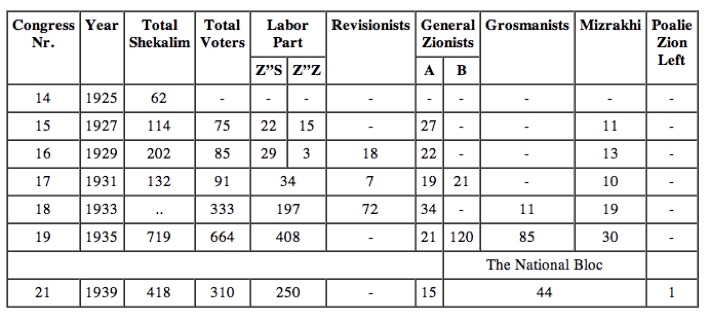
Political Zionism, which came into existence at the end of the 19th century, also the Socialist Bund, found enthusiastic supporters in Keidan. The persecutions and pogroms against the Jews by the Tzarists caused more Jews to emigrate and the Jewish community in Keidan was greatly reduced before the First World War. The dire economic situation was also a contributing factor.
During the first winter of the war, in 1914, many Jews from the surrounding shtetlach, fled to Keidan. In March of 1915, the Russian Regime began expelling Jews from Lithuania, chasing them deep into Russia.
In Keidan, the command was given, on May 16th, that every Jew without exception was to leave the town, and be gone by midnight on 18th May. Any Jew found there after this time would be hanged.
The Jewish community in Keidan was immediately uprooted. Most of them arrived in Vilna, others fled into deepest Russia and Zogor in Siberia.
The Christian population soon apportioned all the Jewish belongings and possessions among themselves.
When the Germans entered Vilna, the Keidaner Jews who were there, received permission to return to Keidan, and they began once more to rebuild the ravaged Jewish property.
After the War, many exiled Keidan Jews returned from Russia and began to rebuild their lives.
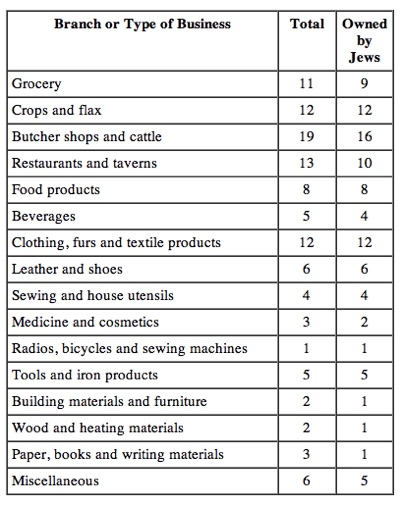
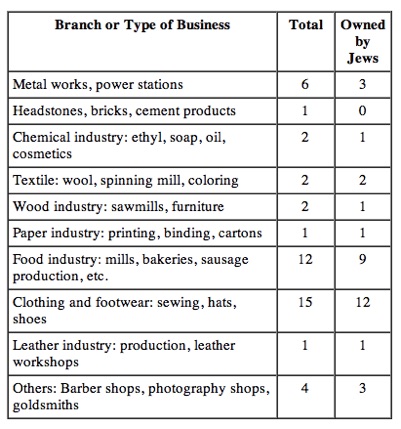
With the rebuilding of an independent Lithuania, Keidan became a main hub and began to develop very fast. The Jewish community rebuilt with renewed vigour. Industries were revived. Outstanding leather workshops, also Mills and brickworks, Hebrew and Yiddish Folkshuls and kindergartens were all established and also a Hebrew Pro-Gymnasia, a large library with Hebrew and Yiddish books, Parties and Cultural Organisations – on the right and on the left of politics and a Yiddish Folksbank which supported Jewish artisans and shopkeepers.
Keidan played an outstanding role in the period of Jewish autonomy, as one of the most important communities in Lithuania.
In 1939, after the outbreak of the war between Germany and Poland, the Jewish refugees found a warm welcome in Keidan. A yeshiva consisting of 150 Yeshiva students, from the famous Mir Yeshiva, was established; also a kibbutz of refugees from the youth movement HaShomer HaTza’ir. The Keidan community helped them settle in. At the outbreak of War Keidan numbered 3000 souls, in a general population of ten thousand.
The outbreak of the Soviet/Nazi war, led to the terrible tragedy of total destruction and annihilation of the Jewish community in Keidan which took place in the middle of the 20th century.
The material in this overview has been taken from the anthology “KEIDAN” published by the Keidaner Society in New York edited by B Ch Kassel and Dr Ch Y Epshtain.

FIVE HUNDRED YEARS OF JEWISH KEIDAN
THE HISTORY OF THE KEIDANER JEWISH COMMUNITY
The Keidaner Sick Benefit and Benevolent Society 1950 Souvenir Programme
Compiled by David Sandler
