Jewish Life
Work, Trades, & Commerce
Jewish work connected farmhouse, workshop, market square, river, and imperial border. The stories of tailors, furriers, brokers, tavernkeepers, and craftsmen show an economy built on constant exchange with the surrounding countryside.
Siaja carries his trade into other people’s houses
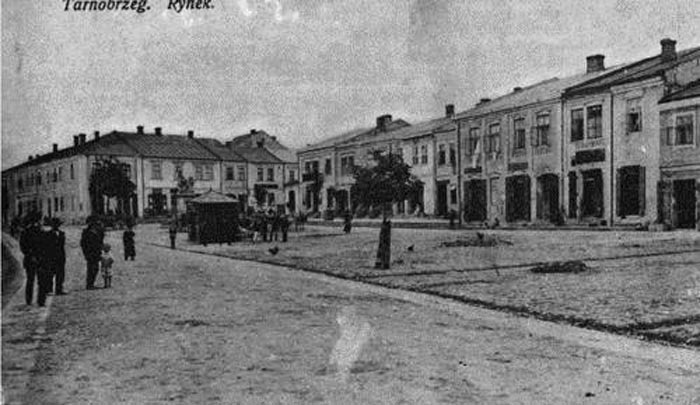
In the later nineteenth century, Słomka remembered tailoring in the Tarnobrzeg area as largely Jewish. One tailor, Siaja, traveled into Christian farmhouses and sewed there, bringing his craft directly to the customer. Because he observed kashrut, the Jewish dietary laws, he ate simple foods such as bread, potatoes and milk while working in homes whose kitchens he could not treat as kosher. [1]
Słomka also remembered Siaja being searched for scraps of cloth and responding with a joke that he had “a little tar on my hands, and everything sticks to me.” His sons followed him into tailoring. The episode shows skill, suspicion, humor, and a trade passed between generations.
The furrier bargains over a coat full of lice
Jewish furriers bought old sheepskin coats from peasants, repaired them during summer, and sold them again before winter. The coats had often been worn and slept in until they were filthy. Słomka remembered a bargaining exchange in which a Jewish buyer shook one out and demanded to know what the farmer wanted for “this pile of lice.” The farmer refused to lower the price: the buyer had plenty of time to get rid of them. [1]
It is comic, but it is also economic history. Poor households extracted value from worn clothing, Jewish craftsmen repaired and recirculated it, and bargaining itself became a familiar form of social contact.
Bercia’s oil press runs on the Christian calendar
Słomka singled out Bercia, a Jewish man from Tarnobrzeg who operated an especially good oil-pressing workshop. Two Christian peasants from Dzików had steady employment there. Demand rose around Advent and Lent, when Catholic fasting practices increased the need for vegetable oil. [1]
A Jewish employer, Christian workers, and a business cycle driven partly by the Catholic religious calendar make a simple point: the local economy crossed confessional boundaries every day.
Josek, Naftula—and the chicken that might get you onto a raft
The Vistula created another kind of work. Josek and Naftula acted as Tarnobrzeg middlemen recruiting men for river rafting. Prospective workers sometimes brought eggs or poultry when they wanted the brokers to place them quickly on a raft. [1]
Behind the chicken or basket of eggs lay a much larger commercial system. Rafts carried lumber, grain, and other goods toward Warsaw and Gdańsk. A face-to-face favor in Tarnobrzeg connected a laborer to a long-distance transport network.
Berek’s tavern at the border
Near Podłęże, on the edge of Dzików by the Vistula and the Russian imperial border, a Tarnobrzeg tavernkeeper established an outlying tavern and put Berek in charge. Liquor came legally by cart during the day and could move illegally across the border at night. Russian guards themselves began crossing the river to drink, sometimes carrying liquor back with them. [1]
Słomka remembered nights when drunken customers lay around the tavern “packed like sardines.” The little border economy ended almost theatrically: lightning struck a nearby tree, the chimney collapsed, Berek fled, and the building was eventually dismantled. Geography had created the business; a storm helped erase it.
Lejzor Wahl rises through trade
Słomka remembered Lejzor Wahl as a man who rose from modest tavernkeeping into liquor leasing and timber commerce during the nineteenth century. [1] The propinacja system—the estate-controlled right to produce and sell alcoholic drink—made taverns and liquor leases part of the economic relationship between the Tarnowski estate and Jewish entrepreneurs.
Lejzor’s remembered rise shows how one local trade could lead into another: tavernkeeping, leases, credit, timber, and transport were connected opportunities rather than isolated occupations.
A shoemaker enters politics
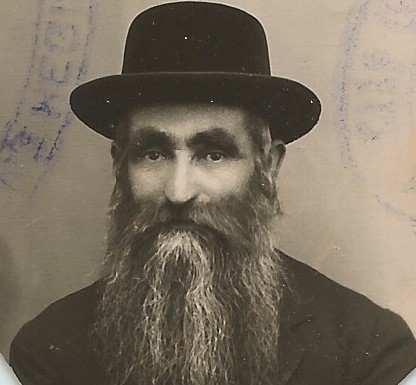
By the interwar period, work could become the foundation of political identity. Herschel Weingil was remembered as a shoemaker who worked beside his sons and became a fiery workers’ representative and municipal councillor. [3]
The route from shoemaker’s bench to council chamber closes the circle. Jewish economic life did not simply sustain households; trades and class identities helped shape the arguments over who should speak for the community.
Rich and poor in a small market town
The 1973 memorial book does not remember the Jewish population as economically uniform. Its portraits distinguish prosperous merchants and influential householders from craftsmen, small shopkeepers, workers, and families living close to poverty. [3] Religious standing and wealth did not necessarily coincide: an artisan of modest means might be respected for learning, while a successful merchant might exercise influence through charity, communal office, or credit.
This social range matters because the phrase “Jewish merchant” can hide as much as it reveals. Tarnobrzeg's economy contained people with capital, people selling their labor, family workshops, itinerant trades, small retail, and households whose security could turn on one illness, debt, or bad season.
Bank Ludowy: credit becomes an institution
Interwar economic life also produced formal Jewish financial institutions. The memorial book devotes a separate account to Bank Ludowy, the People's Bank, remembering its growth, lending, deposits, and communal management. [3]
The bank belongs in the same story as shops and workshops. A market economy required more than buying and selling: merchants and householders needed access to credit, savings, and trusted intermediaries. Bank Ludowy shows Jewish economic self-organization adapting older networks of personal credit to the institutional world of the twentieth century.
Sources cited on this page
- Jan Słomka, Memoirs of a Peasant, trans. William F. Hoffman (PGSA, 2020), especially pp. 70–83 and Chapter Five for Siaja, furriers, Bercia, Josek and Naftula, Berek, Lejzor Wahl and the surrounding market economy. Polish text.
- 1880 Tarnobrzeg census, JRI-Poland Tarnobrzeg PSA index and site census materials. JRI-Poland Tarnobrzeg.
- Ḳehilat Ṭarnobz’eg-Dziḳov (1973), interwar character and communal sketches, including Herschel Weingil. Partial translation/synopsis.