Perth, Australia



by Yannai Goldberg

The Jewish Tree of Life
By Yannai Goldberg
Life in today’s world is arguably the polar opposite of life in our ancestors’ worlds. Our continuums are separated by decades of societal advancement and retrogression. Much has improved during this time, with the invention of computers, the internet and smartphones gracing our existence. On the other hand, much has regressed during this time, with the consequences of modern society’s environment-eroding behaviours.
Living in the high speed of today’s world, it is not easy to make the time to pursue our family history. However, despite the difficulty in connecting to our roots, it is a vital part of helping us understand who we are, and this in turn, helps us navigate life in modern society.
It is easy to only see the external tree of your life; the bit that grows out of the ground. But if you look deeper, under the surrounding soil, it is possible to discover your roots. Our roots may not be visible, but they are very much there, holding us tall and strong. We are who we are because of this system of roots that underpins our lives. Without the sacrifices and hardships our ancestors endured, our trees would not stand half as tall, or strong, or fruitful.
This essay explores the roots of my father’s family and connects them to my life today. This essay discusses not only the physical events of their lives, but also the emotional story of my roots.
The story of my modern ancestry begins in Rangoon, the former capital of Burma (now Myanmar). My grandmother, Rebecca Meyer, was born on 4 July, 1950 to her parents Nissim and Sarah. Nissim was a tall, stubborn Iraqi Jew who fought in the Second World War with over two and a half million other volunteer soldiers. This took place during the British colonisation of India, a time both prosperous and devastating for the nation.
After the war ended, Nissim moved to Rangoon where he met and fell in love with a beautiful young Burmese maiden named Sarah. The two got married and started a family.
Nissim later met a Burmese lady by the name of Sally. Her parents had been killed by the Japanese bombings. After obtaining permission from Sarah, Nissim took Sally as his second wife, a practice that was acceptable in Judaism in those days. Sally gave birth to eight of Nissim’s children, and Sarah to nine more. Of their 17 children, two never lived past childhood. This demonstrates the fragility of life during this time. One of the surviving children was Rebecca, my grandmother.
On the other side of the world in Poland at much the same time, young Leon Goldberg was born, just before the Second World War. He was a boy when the German army invaded during the Third Reich, under the control of Adolf Hitler. When the Jews were required to register themselves, Leon pleaded with his parents not do it. Leon had a sixth sense and saw the writing on the wall; something his parents did not see, and he was unable to convince them. He was more and more troubled by the developing events, and one day, on his return from running an errand for his mother, he saw his father being packed into a German trailer by the Nazi soldiers as he turned the corner to get home. His father caught his eye and silently motioned with his finger to his lips for Leon to be quiet and stay away. His mother was next to be shoved in. Then the trailer was locked and driven away. Leon was forced to watch, helpless. He knew in that moment, pulse racing in his head, that he would never see his parents again.
Leon fled the Nazis for the whole war, somehow surviving life in the forest, the danger of the towns and villages, and the seasons turning. He then joined the UN and was sent to a base in Germany. There he met a young Jewish-German nurse named Ruth. They fell in love with and were married under the chuppah. On 24 October, 1947 their first child was born – my grandfather, Yaakov (Jack) Goldberg. They lived in Germany until Jack was one year old, waiting for a place on a boat bound for Israel.
Also at the age of one, my grandmother Rebecca, and her family moved to Calcutta, India. There she studied at the Jewish Girls School until grade 8. She loved her life in India, and her family was very prosperous. Her favourite day of the week was Sunday, when the family would go to the horse races, or boating on the river, or flying kites in the gardens. Anti-Semitism was rare in India. Calcutta boasted five synagogues and a significant Jewish community. Nissim owned a rolling shutter factory and employed over 300 workers.
However, her father Nissim was a Zionist and dreamt of Israel. He was prepared to give up their life in India to move his family to Israel, so they could live in the land of his ancestors, surrounded by other Jews and to give his children a Jewish life. Nissim made the decision to send three of his eldest children ahead of the family, while he tidied his affairs in India. David (18), my grandmother Rebecca (14) and Jonathan (14) made aliyah to Israel, funded by the Jewish Agency.
They began their journey by train to Bombay, followed by a plane trip to Iran where they would stay for three days before continuing to Israel. This was possible because of Iran’s close relationship at the time with Israel (Iran was the first country after Turkey to recognise Israel as an ally). Rebecca encountered no problems in Iran before taking her final flight to Tel-Aviv.
Upon arrival, the siblings were separated. David was sent to the religious Kibbutz Lavi, and Rebecca and Jonathan were placed in a religious Jewish school in Haifa. Here they studied until the arrival of the arrival of the rest of the family, five years later in 1969. Rebecca describes the first year away from her family as “very difficult, because the whole situation was unexpected”. Additionally, she couldn’t speak Hebrew, which created a language barrier between her and other Israelis. Rebecca overcame these incredible challenges because of her dedication to the land of Israel, an idea which is relatable through all generations of Zionists.
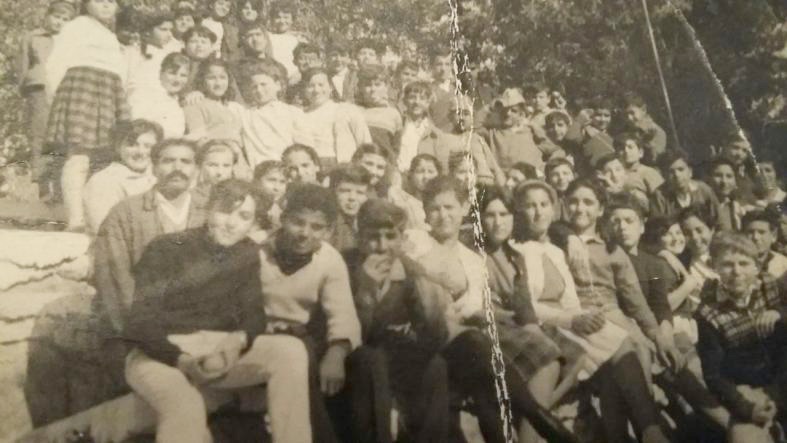
My grandmother, Rebecca, stands in the fourth row, and is the second student from the left. She is situated between two blonde girls. This photo was taken at a point in her life when she had been separated from her family for an extended period of time. Her smile demonstrates her native optimism and ability to take any situation and enhance it.
They decided to move to Kibbutz Menarah, an English-speaking village which suited immigrants who had lived in Europe and spoke English. On the journey to the kibbutz, Leon met a man and they talked. He told the man about his dream and how he wanted to create something new. The man told him that if he walked down the hill they were standing on, he would see a new settlement that was just being built. Leon decided to go and see for himself. This settlement was Moshav Dishon. Leon knew immediately that he had found the place to build the dream he had for his family. My grandfather Jack was seven years old.
Jack was mischievous and popular among his peers. He loved music and drama, and was a talented actor. At the age of 15 he was taken of school to help his parents work the land. He did not have the opportunity to finish his education or develop his talents as an actor, musician and performer. The situation at home was difficult. Money was scarce and Jack worked in the tobacco fields. They built the moshav from the ground up with their hands. There were no roads or transportation to the moshav, so they travelled by donkey. Jack was never bitter about his lost opportunities. He always says that “everyone in my generation sacrificed a lot for Israel. I am not special or different to everyone in Israel at that time”.
At the age of 18, Jack was conscripted to the Israel Defence Force (IDF). From 1966-1969 he fought as a paratrooper. His army career included the notable Six-Day War where he fought in Gaza. He later spent time in Jordan fighting Palestinian terrorists. There were no peace agreements between Jordan and Israel, so Jack and his unit entered Jordan in the cover of night and returned to Israel before the sun rose.
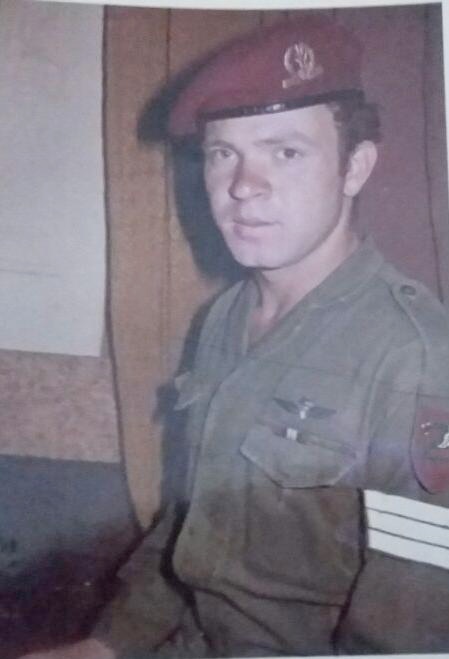
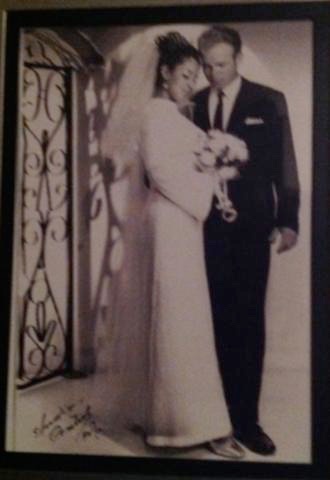
My grandmother Rebecca finished school at the age of 18. She was exempt from enforced army service because of her attendance at a religious school. Rebecca was invited to her friend Yisraeda’s house for the weekend. During her stay they went to the Kineret. That same weekend, Jack had a free weekend from the army. Down by the lake, in 1970, my grandparents Jack and Rebecca met and fell in love.
They got married that year and moved to Moshav Dishon. They started their life and a family. The moshav provided them with a house and 20 acres of fields to cultivate. They worked the land and grew apple, pear, peach and plum trees. They later obtained a commercial chicken coop, which they quickly filled with thousands of chickens.
Jack wanted to return to combat as a border
policeman. He was deployed to the Lebanese
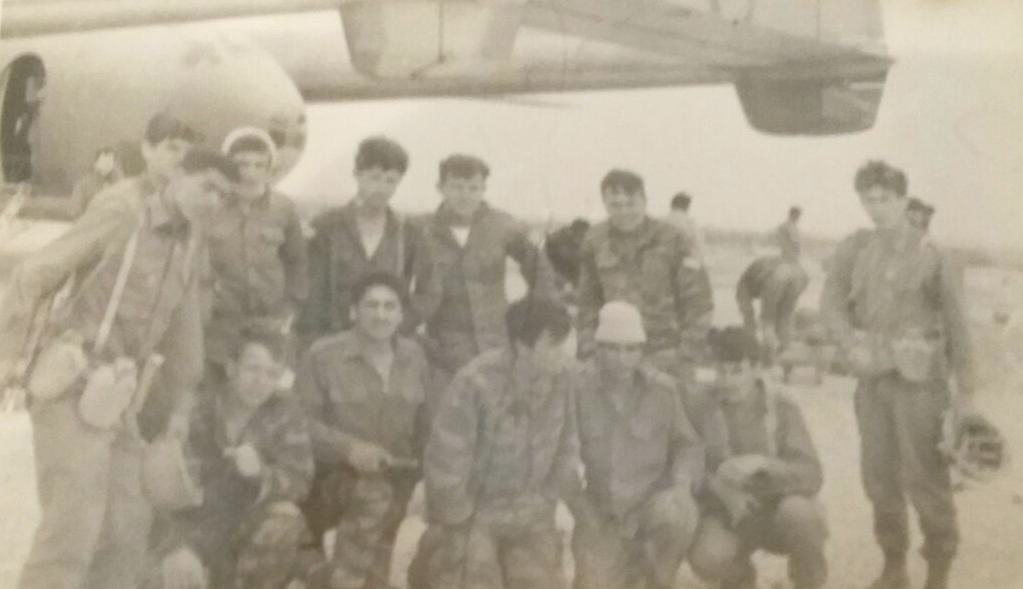
border in Israel’s north for 10 years where he fought during the First Lebanon War and took part in many missions in Sidon. The Israeli border police played a vital role in protecting the Christian citizens of Lebanon. After this, he continued his service as a border policeman for another 19 years. His total service in the border police was 29 years. During this time he was placed in Jerusalem, Afula and many other places throughout Israel.
Jack’s brave service was motivated primarily by his Zionist passion for the Land of Israel. He wanted to serve his country as best he could. This took a toll on Rebecca who held the responsibility of raising their family and looking after their land.
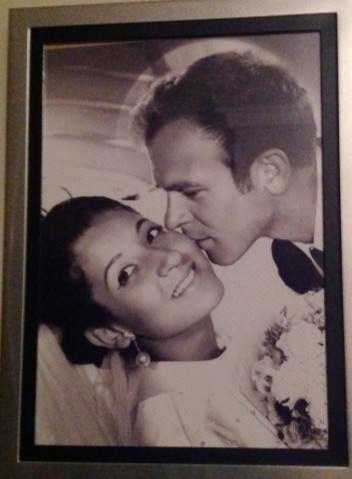
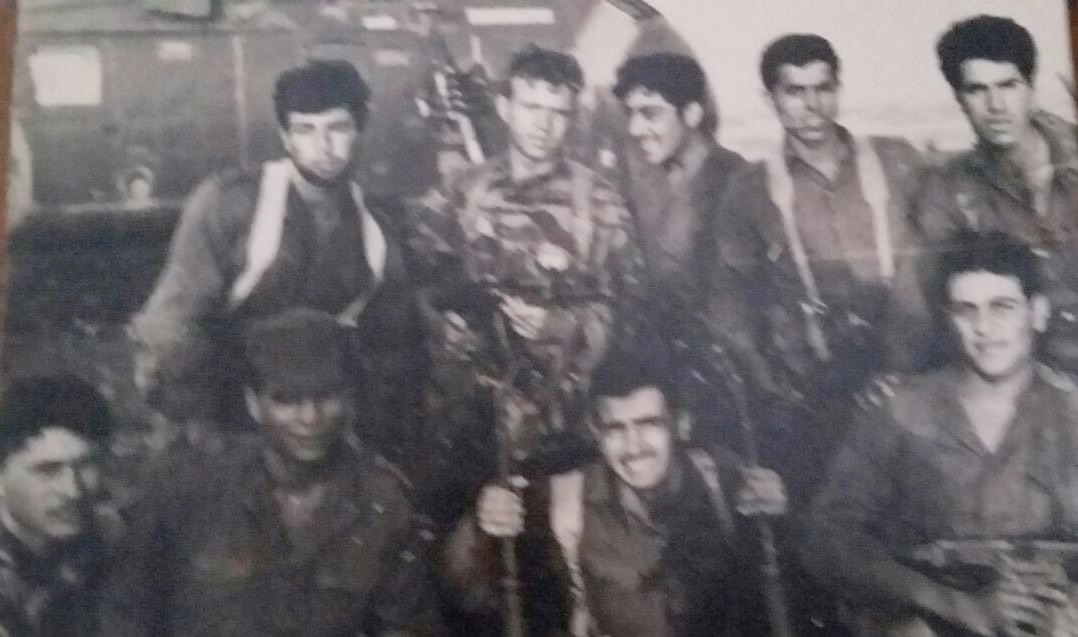
Jack stands second from the left, in the top row. During his service with the border police he made many close friends. Sadly, many border police were killed during combat against terrorist organisations.
On 29 June 1973, my father, Doron Goldberg was born to Jack and Rebecca in Moshav Dishon, the third of four children. As a child he enjoyed the vibrant nature of the moshav and explored the surrounding areas with his friends.
At 18, my father was conscripted to the IDF. He joined a special unit in the Golani Brigade and carried out missions behind enemy lines in Lebanon and faced the threats posed to Israel by various terrorist organisations such as Hezbollah. After the army he worked and travelled abroad.
While overseas he met my mother, Pauline Margeot. After they married, they moved to South Africa where my sister Kessem was born. A few years later they moved to Israel, where I was born. A few years after that, my family moved to New Zealand where my remaining siblings were born, making four of us.
The story of my ancestors is one of bravery, courage, strength and determination. They survived the hardships of life with tenacity but never complained. Life today presents me with a different set of struggles. I think of my family before me and it makes me feel stronger.
I like to think I have a little bit of all my ancestors in me; little bits that are tangible and that connect me to them. I was born on my grandfather, Jack’s birthday. I love music and performing like his father, my great-grandfather, Leon. I can relate emotionally to what my grandmother, Rebecca went through when she moved to Israel and had to start a new life, having gone through a similar process when I moved to Australia at the age of 12. I like to think that my tree is not made up of just me, and that my roots are not just those of my family. My tree is my ancestry and my roots are the Jewish people.
I feel the deep Zionism and passion my ancestors felt towards Israel. It is more than just knowing their stories. I can feel what has been passed down generation after generation for over 2000 years.
References
1982 Lebanon War. (2016). Wikipedia. Retrieved 11 August 2016, from https://en.wikipedia.org/wiki/1982_Lebanon_War
Aliyah from India. (2016). The Jewish Agency. Retrieved 11 August 2016, from http://www.jewishagency.org/blog/1/article/33961
Background & Overview - Six-Day War | Jewish Virtual Library.
(2016). Jewishvirtuallibrary.org. Retrieved 11 August 2016, from http://www.jewishvirtuallibrary.org/jsource/History/67_War.html
Dishon. (2016). Wikipedia. Retrieved 11 August 2016, from https://en.wikipedia.org/wiki/Dishon
History of the Jews in Myanmar. (2016). Wikipedia. Retrieved 11 August 2016, from https://en.wikipedia.org/wiki/History_of_the_Jews_in_Myanmar
Israel–Jordan relations. (2016). Wikipedia. Retrieved 11 August 2016, from https://en.wikipedia.org/wiki/Israel%E2%80%93Jordan_relations
Lavi. (2016). Wikipedia. Retrieved 11 August 2016, from https://en.wikipedia.org/wiki/Lavi
Manara, Israel. (2016). Wikipedia. Retrieved 11 August 2016, from https://en.wikipedia.org/wiki/Manara,_Israel
Smith, J. (2016). When Iran and Israel were friendly. Salon. Retrieved 11 August 2016, from
http://www.salon.com/2012/02/15/when_iran_and_israel_were_friendly/
The destruction of the Belgian Jews The German Occupation of Europe http://www.HolocaustResearchProject.org.
(2016). Holocaustresearchproject.org. Retrieved 11 August 2016, from http://www.holocaustresearchproject.org/nazioccupation/beligiumjews.html
The Holocaust in Belgium. (2016). Wikipedia. Retrieved 11 August 2016, from https://en.wikipedia.org/wiki/The_Holocaust_in_Belgium
The Jewish Tree of Life