Lyubcha, Belarus



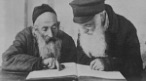

The memorial book is dedicated to the Jews who lived in the towns of Lubtch and Delatitch (as they were pronounced in Yiddish) - two small towns on the Neiman River in present-day Belarus. Both towns were rebuilt on their ruins in the first years after the First World War. Delatitch, the smaller town, was in fact, joined to the Lubtch community, and used their religious services. Most of the chapters relate to the town of Lubtch but the life of the inhabitants would have been very similar.
Lubtch - a town in the district of Minsk, on the Neiman River, is located 6 miles from Novogrudek. The first reference to Jewish settlement is from the 17th century. By 1897 there were 2463 Jews living in the town (73% of the population). Delatitch was about 3 miles away. They were remote towns, in an area of poverty-stricken villages.
In the 19th and early 20th century the Jewish population was involved in wholesale commerce in trade such as flax; others were craftsmen: tailors, shoemakers, carpenters, painters and rope makers. Some owned shops in the towns, while others peddled their wares in the surrounding villages. The Neiman River flowing by the towns served for transportation of rafts loaded with logs from the forests. The Jews were the main suppliers of food and clothing to the rafters and lumberjacks. There was meager farming and no industry.
During the First World War, inhabitants of the towns were expelled and fled to other places including South Africa and the USA.
After the First World War, when the Jews returned to the Lubtch, a network of chederim developed, where children were taught the Talmud, Hebrew language and a few secular studies. Under Polish rule in the 1920's, the chederim were abolished and the Tarbut school was established. The language of teaching was Hebrew and the youth received a general basic education. Many well-known Rabbis were born in Lubtch and led the congregations faithfully, or moved to the larger towns. The synagogue area was always bustling with worshippers on Shabbat and Holy Days. In Lubtch there were a number of institutions for mutual help, among them Linat Hatzedek (Overnight charity), and the Chevra Kadisha (Burial Society).The cultural life in the town developed, with a library, a drama circle, and an orchestra. The fire-brigade was organized.
Four Zionist organizations were active in the town: HeChalutz; Poeley Tzion; HaShomer Hatza'ir and Beitar and the young people were educated towards the fulfillment of their dream to go on aliya to Eretz-Israel. This became the solution for many of the youth who were unemployed and whose families were impoverished following the economic crisis affecting Poland in 1932-1935.
With the outbreak of the Second World War on September 1 1939, and the invasion of the Red Army, many youth were drawn to the idyllic life painted by the Soviet leaders.
On April 1, 1940, Lubtch became the administrative and political center of the region. Offices and bureaus sprung up and hundreds of people found employment. In September 1940, of the 2,115 people living in Lubtch, approximately 1,500 were Jews. In general, the Jews of Lubtch breathed more freely, economically speaking, and anti-Semitism lessened. A new Jewish generation was growing up which believed that the new regime opened wider horizons.
However, on June 22, 1941 the Germans attacked the USSR. The Soviet people and their families began fleeing towards Minsk. The Jews were terrified of the approaching enemy. The Germans captured 51 men who were taken out of the town and shot. This was followed by a decree for all Jews to move into the Lubtch ghetto. The entire Jewish community was squeezed into 27-30 houses. Every couple of days the Germans would come with the police and take out 40-50 people to “work”, and they would disappear. In April 1942 five hundred people from the Lubtch ghetto were taken to Vorobievitch and herded into a nearby barn which was then set on fire. Those who managed to save themselves from the flames were shot while escaping. On August 7, 1942 (24th Av 5702), the Germans carried out a mass slaughter. Thousands of Jews were killed that day including men, women and children from Lubtch, Delatitch, Neyshtot (Niegnievitch), Karelitch (Korelitz), Ivenietz, Zhetel, Derevna, Zholodok, Novoyelnia and Novogrudek.
Only a few managed to escape and join the partisans in the nearby forests. At the end of 1943, the German forces attempted to completely liquidate the partisan movement in western White Russia. The hunt for the partisans lasted three days, without much success. The Russians retaliated and the partisans cut off the roads taken by the retreating Germans, sowing death and destruction among them. At the beginning of January 1944, the Red Army liberated the area.
The partisans and those who had succeeded in hiding were once again “free” people. Some returned for a short time to their hometowns, but did not wish to remain. Destruction was widespread. The Jewish communities were obliterated, and not a trace remained of the once flourishing and spiritually rich Jewish life. The survivors set out on the difficult paths of emigration to the USA, Canada and other countries, including clandestine immigration to Palestine.
Short History of Lyubcha and Delyatichi
By Ann Belinsky