 ← Return to Leova home page
The Testimony of Yevdokiya Lipovich
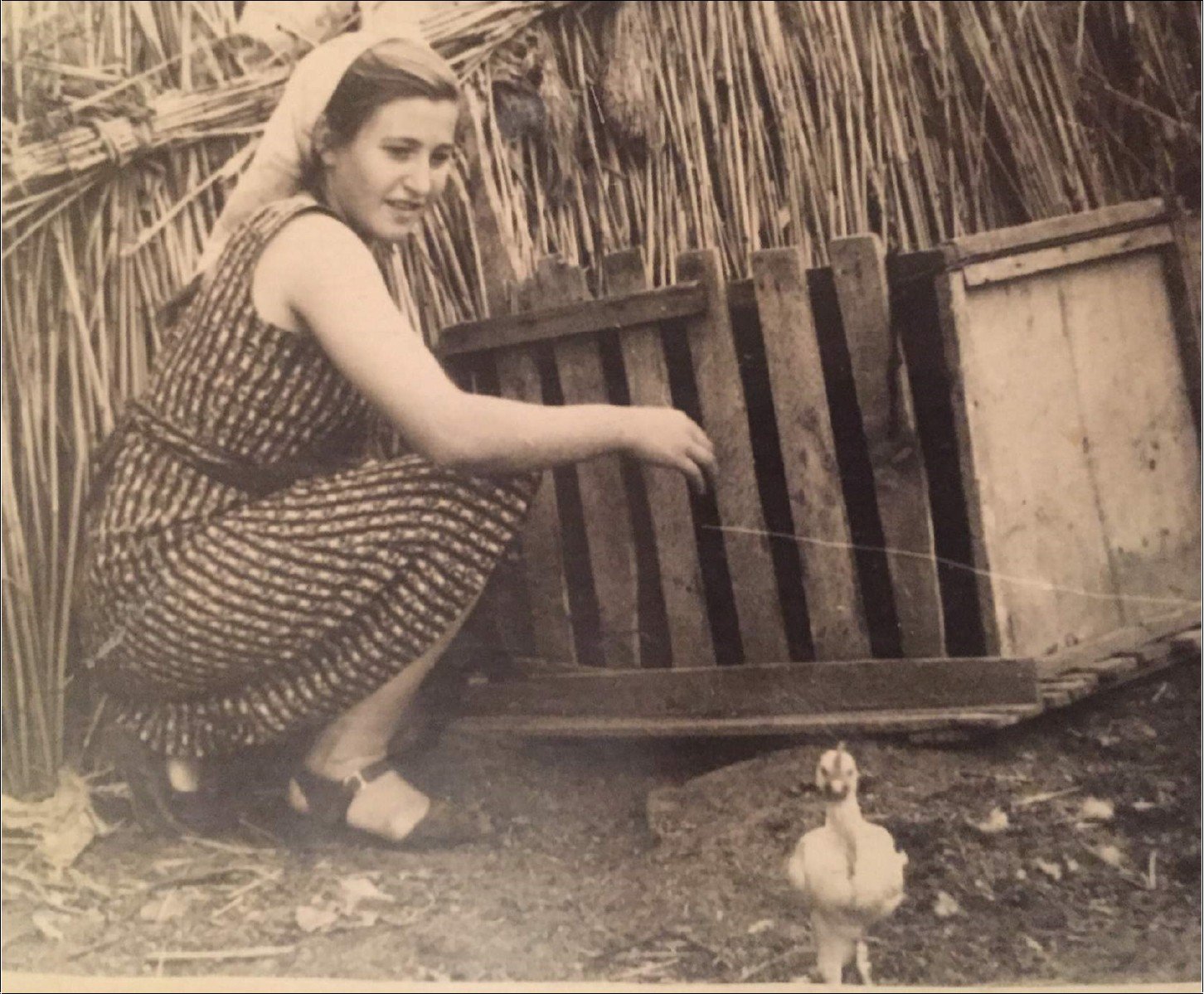
Yevdokiya Savelievna Lipovich was born Shifra Barash in Leova in 1933. In the summer of 1941, when she was eight, her father was taken away with the other men of the family and never seen again. She, her mother and her four brothers and sisters were held with other Jews captured in Cahul county in a transit camp in Leova, which the Romanian authorities called Cahul camp. From there they were driven on a death march of several hundred kilometres through Tiraspol and Odessa. By the winter, when the column reached Berezovka in the Odessa region, her mother and the two youngest children had died. Only Shifra, her sister Mina and her brother Lyova were left. Two local women, Vera Fedorovna Visokos and her sister Lidiya Fedorovna Babienko, took the two girls out of the camp. Lyova, who had begged them to save his sisters, stayed behind and did not survive.
In December 1994, living in Cahul, she wrote two letters in Russian to Katya Gusareva of Yad Vashem in Jerusalem. Both are held in the Yad Vashem Archives. The first, dated 2 December, is her nomination of the two women who saved her and her sister as Righteous Among the Nations. The second, dated 23 December, is her testimony about Cahul camp and the death march. Either can be read on its own; choose one below.
Despite its name, Cahul camp was not in the town of Cahul. The Romanian authorities named it after Cahul county, where its prisoners had been captured, and staged it in Leova, a town in that county, as the starting point of the death march. Lipovich never uses the name, but she describes the camp in both letters: the “big horse yard” in Leova where the women and children were gathered (Letter 1), and the yard full of people where gendarmes brought them in the middle of the night, and from which the march set out at sunrise (Letter 2). The Romanian police list of the camp, dated 22 July 1941, records her as “Sifra Barasch,” age 9, together with her brother Leon and the younger children Menucha, Motea and Riva (see the list of Jews from Leova interned in Cahul camp). She and Mina are the only two known survivors of the Leova group held there, so her second letter is the only known survivor’s account of the camp and of what happened to its prisoners.
- Original
- Both letters in Russian (3.0 MB)
- Translation
- Both letters in English (1.4 MB)
CHOOSE A LETTER
LETTER 2Testimony about Cahul camp and the deportation
- From
- Yevdokiya Savelievna Lipovich (Shifra Barash), Cahul, Moldova
- To
- Katya Gusareva, Yad Vashem, Jerusalem; carried to Israel by a relative of friends
- Date
- 23 December 1994; certified by Shandrovskaya, Chairman of the Society of Jewish Culture, Cahul
- Source
- Yad Vashem Archives, Record Group O.33 (Testimonies, Diaries and Memoirs Collection), file 4127
- Pages
- 20 (handwritten in Russian), with English translation
- Names
- Srul Barash, Sheindl (Zhenya) Barash, Lyova, Mina, Motya and Khona-Rivka Barash; grandfather Shaiya; Etsyk, Yankel, Eezya, Motes, Reeva and Basya Barash; Aunt Sima; cousin Roza; Fira Yalkonovich, Raya Goldenstein, Lyonya Barash; Mariyka; the Karasev family. Witnesses named: the Barash, Yalkonovich, Goldenstein, Levinzon, Benderskiy, Tsatskin and Boyanzhu families
LETTER 1Nomination of her rescuers as Righteous Among the Nations
- From
- Yevdokiya Savelievna Lipovich (Shifra Barash), Cahul, Moldova
- To
- Katya Gusareva, Yad Vashem, Jerusalem
- Date
- 2 December 1994; certified by Shandrovskaya, Chairman of the Society of Jewish Culture, Cahul
- Source
- Yad Vashem Archives, Record Group O.33 (Testimonies, Diaries and Memoirs Collection), file 4127
- Pages
- 13 (handwritten in Russian), with English translation
- Rescuers
- Vera Fedorovna Visokos and her sister Lidiya Fedorovna Babienko, of the Nepomnyashikh family, Berezovka
- Names
- Srul and Sheindl Barash, Lyova Barash, Mina (Nina) Barash, Uncle Etsyk, Aunt Basia, Uncle Yankel, Fira, Raya and Lyonya; Saveliy, Volodya and Victor; Yevdokiya Fedorovna; Roman Leybovich Lipovich, Vyacheslav and Anatoliy Lipovich; Galya; Liza Ovcharik; Balzan; Pilate
NOTES ON NAMES AND TERMS
Names are given as they appear in the English translation. The Yiddish or Hebrew forms most often behind them are given for searching other records. Ages from the Cahul list are those recorded on 22 July 1941.
- Yevdokiya Savelievna Lipovich
- Born Shifra Barash; called Chika at home. The priest’s baptismal certificate made her Yevdokiya Savelievna Visokos, after Vera Fedorovna’s elder sister Yevdokiya and her husband Saveliy, and Vera called her Dusya, a pet form of Yevdokiya. Lipovich is her married name. On the Cahul list: Sifra Barasch, 9.
- Mina (Nina) Barash
- Her younger sister, renamed Nina from the day of the rescue and baptised Nina Porfirievna Babienko. The Cahul list gives the next child after Shifra as Menucha Barasch, 6. In 1994 she lived in Mariupol.
- Lyova Barash
- Her elder brother, a Russian pet form of Lev (Leib). On the Cahul list: Leon Barasch, 10. He stayed in the camp at Berezovka and did not survive.
- Motya and Khona-Rivka
- Her younger brother and baby sister. On the Cahul list: Motea Barasch, 3, and Riva Barasch, 7 months. Khona-Rivka died at Tiraspol and Motya later in the march.
- Srul Barash
- Her father, a laborer, lame from birth. Srul is the Russian and Romanian form of Yisroel. He was taken away with the other men when the family was captured on the road from Borogani in 1941.
- Sheindl (Zhenya) Barash
- Her mother, from Husi in Romania, where her only sister also lived. She died in late autumn 1941 during the march.
- Shaiya Barash
- Her grandfather (Shaye, Yeshaya), who died at Tiraspol. The Cahul list includes a Saie Barasch, 76, a butcher from Hancesti; whether this is the same man is not known.
- Etsyk and Sima
- Her father’s brother (Itzik, Yitzchak) and his wife. Etsyk and his 17-year-old son were taken away with her father. Sima and the rest of their family of nine, including Shifra’s cousin Roza, disappeared during the march.
- Father’s brothers and sisters
- Etsyk, Yankel, Eezya, Motes, Reeva and Basya. Only Basia, who lived in Leova after the war, and Yankel, who lived in Iargara, survived. Yankel’s children Fira Yalkonovich, Raya Goldenstein and Lyonya Barash later moved to Israel.
- Vera Fedorovna Visokos
- The woman who took Shifra into her home in Berezovka. Her husband Saveliy was killed at the front; her sons were Volodya and Victor. She moved to Donetsk in 1945.
- Lidiya Fedorovna Babienko
- Vera’s sister, who took Mina. The sisters belonged to the Nepomnyashikh family.
- Galya
- A Jewish girl from Odessa saved at Berezovka by another local woman. She was living in Berezovka about 1989.
- Katya Gusareva
- The Yad Vashem staff member to whom both letters are addressed.
- Cahul camp
- The name the Romanian authorities gave to the transit camp in Leova where Jews captured in Cahul county were held in July 1941, before the death march east. Leova was then in Cahul county; the camp was named for the county, not the town of Cahul.
- Berezovka
- Town in the Odessa region of Ukraine (Ukrainian Berezivka), then in Transnistria, the territory between the Dniester and the Bug under Romanian rule. Viktorovka is a nearby village.
- Borogani
- Village near Leova where the family went when the war began, and from where they tried to flee on foot.
- Siguranța
- The Romanian secret police.
- Versta
- Old Russian measure of distance, about two-thirds of a mile.
- Marianovka orphanage
- Children’s home in Starobeshevskiy district, Donetsk region, where Shifra lived until 1950. Her Soviet documents give her birthplace as Marianovka and her birth date as 21 May 1933.
- Nash Golos
- “Our Voice,” a Jewish newspaper published in Chisinau.
- Dates
- The letters are dated in the Russian style with Roman numerals for the month: 2/XII-1994 is 2 December 1994.