Jewish Life
Synagogue & Religious Life
Religious life in Tarnobrzeg was not confined to one building. It organized the week, filled the beit midrash with study, placed ritual specialists inside ordinary family life and followed people home to the Sabbath table.
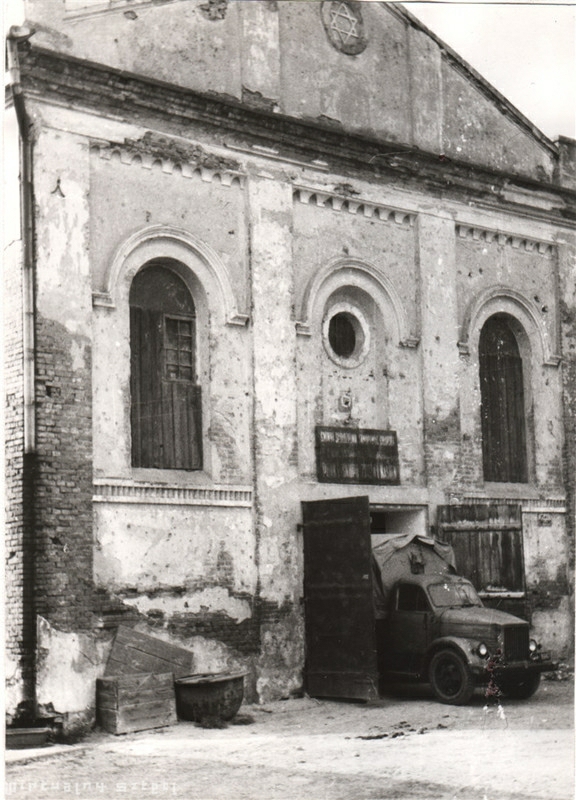
The week turns toward Shabbes
On Friday afternoon work gave way to Shabbes, the Yiddish word for the Sabbath. Food was prepared before sundown, shops closed, travel stopped and households shifted from the market week toward prayer and the evening meal. This was sacred time created collectively: one family lighting candles was private devotion; a whole Jewish neighborhood doing it together changed the sound and pace of the town.
Men might pray in the synagogue, in a smaller prayer room or in a beit midrash, Hebrew for “house of study,” a place used for both learning and prayer. Women and children entered the Sabbath through household preparations, blessings, meals and synagogue attendance according to local custom. The result was not one ritual but a weekly pattern linking home, street, and congregation.
The building was quieter than the study house
Yitzchak Gutwein, writing in Yiddish in 1948 about the Dzików he remembered, devoted separate sections to the Great Synagogue and the beit midrash. The 1973 memorial book similarly remembers the main synagogue as fuller on holidays while the beit midrash was busy day and night. [1] [2]
The distinction matters. The synagogue was a formal communal space; the beit midrash was also a daily room of study, argument, and sociability. Avraham Elia Kastenbaum was remembered for studying while standing for hours. A detail like that tells us what people noticed and admired: persistence in learning became part of a man’s public character.
R. Yoski: the shochet remembered as a martyr
David Schlissel’s Hebrew rabbinic work Bet David, published in 1911, preserves a family tradition about R. Yoski of Dzików, a shochet—a trained ritual slaughterer who prepared meat according to Jewish law. In the story, Yoski and three other Jews were accused after a Christian wagon driver disappeared. They were imprisoned and pressured to convert; Yoski refused, even when non-kosher meat was offered during their confinement. [3]
The tradition culminates in Yoski’s death while reciting the Shema, the central Jewish declaration beginning “Hear, O Israel.” Then the supposedly murdered wagon driver returns alive. Whether every dramatic detail can be read as literal chronology is less important here than what the family chose to remember: steadfastness, wrongful accusation, and a local martyr whose name still carried religious honor generations later.
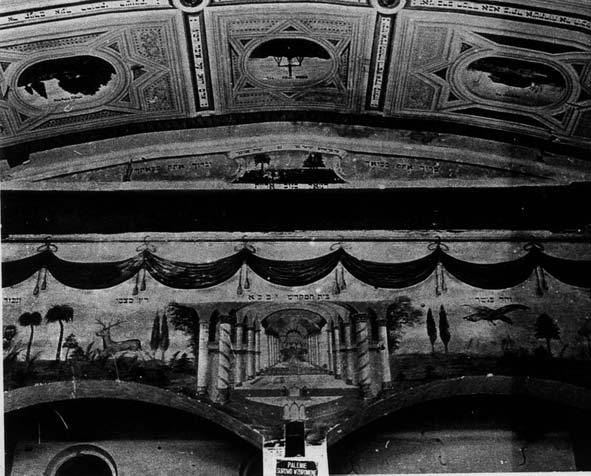
A shochet, a dayan, and a hazzan in one family
The Yoski tradition continues through his daughter Hannah. Her sons were known locally through her: Leibish “Hannah’s” served as a dayan, a rabbinic judge, and Zisl “Hannah’s” as a hazzan, the cantor or prayer leader. [3]
In one remembered family we therefore meet three roles that made religious life possible. The shochet made kosher meat available; the dayan helped resolve questions of Jewish law; the hazzan gave public prayer its voice. None was simply an abstract “institution.” Each was a neighbor whose skill affected other households.
Mendel Schlussel rehearses his Polish
The synagogue could also become a civic stage. In the interwar years, communal leader Mendel Schlussel sometimes had to deliver a Polish speech during official ceremonies. The memorial book remembers him rehearsing carefully because his Polish was not fluent. The cantor knew still less Polish and, according to the anecdote, more or less hummed his way through the national anthem. [1]
The humor makes the point better than a description of “acculturation.” These men were Jewish communal figures performing Polish civic loyalty in a language that did not always sit comfortably in their mouths.
Religion continued at the table and on the road
Religious life followed people out of the synagogue. Słomka remembered Jewish travelers arranging journeys so that the Sabbath would not catch them on the road. He also described the tailor Siaja eating bread, potatoes and milk while working in Christian homes because food preparation mattered to his observance of kashrut, the Jewish dietary laws. [4]
At home, stories could become religious practice too. The memorial book recalls men gathering after the Sabbath meal in Shmuel’s house to tell stories about great rabbis. Prayer, food, law, memory and companionship therefore belonged to the same religious world. The synagogue was one center of that world, but never its boundary.
Study belonged to working men, too
The 1973 memorial book repeatedly remembers ba'alei batim—ordinary householders—whose serious Torah learning continued alongside work and family responsibilities. Some learned before the workday, some returned to the beit midrash in the evening, and some became locally respected scholars without holding a rabbinic office. [1]
That matters because the intellectual life of Tarnobrzeg was not confined to rabbis. A merchant, artisan, or shopkeeper might also be known for Mishnah, Talmud, or a regular study circle. The beit midrash joined the economic day to the religious one.
Prayer had recognizable voices
Former residents remembered particular men not only for what they taught but for how prayer sounded in their mouths. Pinye Kirshenbaum appears in both Gutwein's memoir and the 1973 memorial book as a memorable cantor or prayer leader, while Nissin Youst is associated with the transmission of Dzików melodies and custom. [1] [2]
Those recollections make sound part of the historical record. The synagogue and beit midrash were heard as well as seen: chant, congregational response, study spoken aloud, and melodies attached to particular prayers helped give Dzików religious life its local character. The related Dzików Hasidism page links to later recordings that preserve parts of this musical tradition.
Sources cited on this page
- Ḳehilat Ṭarnobz’eg-Dziḳov (1973), pp. 37–45 and later religious-life recollections in the JewishGen partial translation/synopsis. Partial translation.
- Yitzchak Gutwein, A Zacher Fun Mein Shtetl Dzikow (Paris, 1948), Yiddish memoir; complete scan consulted, including sections on the beit midrash and Great Synagogue.
- David Schlissel, Bet David / בית דוד (Vác/Waitzen, 1911), Hebrew; family tradition concerning R. Yoski, Hannah, and her descendants. HebrewBooks scan.
- Jan Słomka, Memoirs of a Peasant, trans. William F. Hoffman (2020), Jewish trades, kashrut, and Sabbath travel. Polish text.