Jewish Life
Customs, Language, & Culture
Jewish culture was experienced through time: the rush before Shabbes, a baker holding cholent overnight, Passover whitewash, Yom Kippur silence, holiday music, jokes and stories told after a meal.
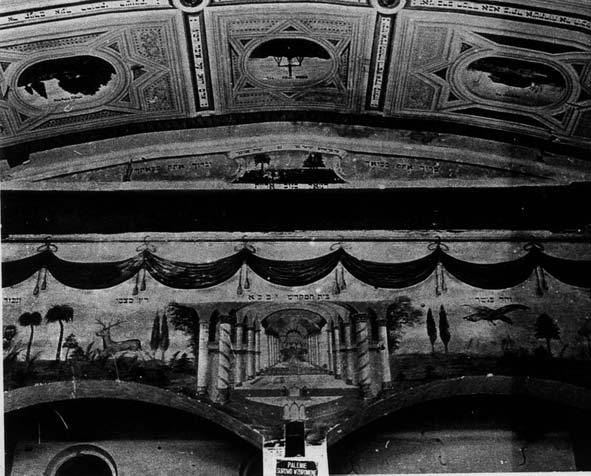
Friday afternoon: preparing for Shabbes
Shabbes, the Yiddish word for the Sabbath, began at sundown Friday and imposed its own timetable. Shopping had to finish, travel had to be planned, food cooked in advance, and household work brought to a stopping point. Słomka noticed Jewish merchants and travelers arranging business around that weekly boundary. [2]
One emblematic food was cholent, a slow-cooked Sabbath stew prepared before Friday night and kept warm so no cooking was required on Saturday. In towns across the region, families could leave pots with a baker whose oven retained heat overnight. A later Tarnobrzeg crime story depended on that predictable routine.
The Sabbath banquet murder
The memorial book begins one Shabbat memory peacefully: political concerns receded, Sabbath hymns came from houses, and families sat at their meals. Then someone shouted that Yisroel “Kamilover” Noybiert, a used-metal dealer, had been murdered in his home. [1]
The eventual account held that the robber knew the household’s Sabbath routine. He waited until Noybiert’s wife went to the baker to collect the cholent, entered expecting an empty house and was surprised by Noybiert. Police later pursued and killed the attacker. The memoirist also remembered hearing people in the crowd lament that the young murderer had died “because of a Jew.”
The episode is dark, but it makes several parts of Jewish life visible at once: Sabbath food, the neighborhood baker, a wife’s routine, the suspension of business—and the antisemitism that could surface immediately after violence.
Motl and the potato peelings
The same remembered town could be comic. Motl Shteinengar and his family illegally made hand-rolled cigarettes at home. When police surprised them during production, Motl grabbed a pot of potato peelings and ran. The police chased him through town. [1]
Once he judged that his family had had enough time to hide the cigarettes, Motl stopped and allowed the officers to catch him. Their prize was a pot of peelings. The story survived because it celebrated quick thinking and the pleasure of outsmarting authority.
Passover comes to the Rulkis
Spring brought Pesach, the Hebrew name for Passover. In the poor Rulkis neighborhood, the approach of the holiday was visible before it was ceremonial. Houses were cleaned and whitewashed; Laibush Salzman and other whitewashers found work throughout the alleys. [1]
Passover preparation centered on removing hametz, leavened or fermented grain foods forbidden during the holiday, and readying the household for the Seder, the ritual meal at which the Exodus story is retold. A religious festival therefore changed walls, kitchens, work schedules and neighborhood traffic.
The Days of Awe
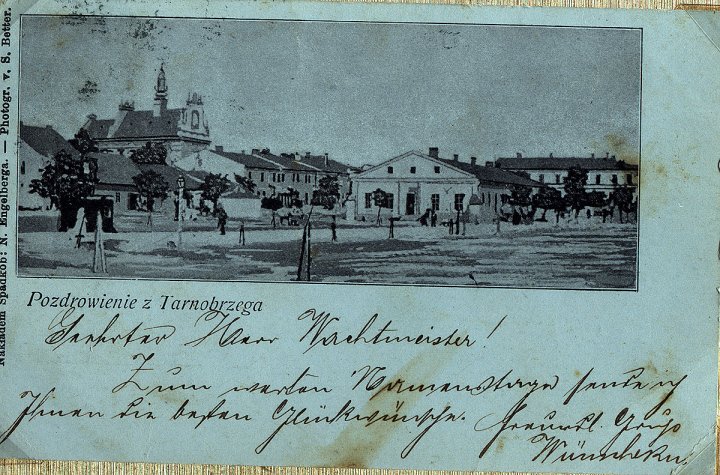
Autumn brought Rosh Hashanah, the Jewish New Year, followed ten days later by Yom Kippur, the Day of Atonement. Together they are often called the High Holidays or Days of Awe. Prayer lengthened, synagogues filled, and the shofar—a ram’s horn—was sounded on Rosh Hashanah.
Yaakov Fleisher devoted a memorial-book chapter to the atmosphere of Yom Kippur in Dzików. Even Doctor Levi, remembered as distant from synagogue and deeply integrated into Polish society, closed his house and saw no patients that day. [1] Yom Kippur could therefore mark Jewish time even for someone who rejected much of organized Jewish life.
Sukkot, Hanukkah, and Purim
The Jewish year kept changing the use of home and street. At Sukkot, families ate in a temporary outdoor booth called a sukkah, recalling the wilderness journey after the Exodus. Simchat Torah followed at the end of the festival season with singing and celebration around completion of the annual Torah—the Five Books of Moses—reading cycle.
In winter, Hanukkah brought lamps kindled over eight nights. In early spring, Purim commemorated the Book of Esther through public reading, gifts of food, charity, drink, and humor. These holidays gave children and adults recurring ways to experience the same streets and rooms differently.
Stories after the Sabbath meal
The memorial book remembers men gathering in Shmuel’s home after a Sabbath meal to tell stories about famous rabbis. Storytelling was therefore not just retrospective material used by historians. It was one of the cultural practices through which religious values and local reputations were transmitted.
Dzików’s famous jokes and Hasidic anecdotes belong to the same world. A story about a rebbe, a miser, a teacher or an unlucky merchant could entertain a room while teaching listeners what kinds of wisdom, foolishness, generosity or pretension their community recognized.
Language changed with the room
Jewish Tarnobrzeg was multilingual. Yiddish was the everyday Jewish vernacular for many families; Hebrew belonged to prayer, sacred texts and, increasingly in the twentieth century, modern Jewish education; Polish was essential in civic, school and much commercial life. German also retained importance under Austrian rule and in older administrative culture.
A person could therefore move between languages during a single day: Yiddish at home, Hebrew or Aramaic text in the beit midrash, the Jewish house of study and prayer, Polish at a municipal office or with a customer. Mendel Schlussel rehearsing a Polish civic speech and the cantor humming through the anthem turns that multilingual reality into comedy.
Hear the melodies that survived
Music lets us approach the Dzików world through sound. Gutwein devoted part of his 1948 memoir to music, and later recordings catalogued by the National Library of Israel preserve melodies associated with the Dzików Hasidic tradition. [3] [5]
Among them are Sabbath melodies, prayer pieces, marches and nigunim—devotional melodies, often sung without words. They are later transmissions rather than recordings made in prewar Tarnobrzeg, but they carry forward a sound-world that otherwise survives only in written memory.
What Tarnobrzeg read
The memorial book remembers a substantial Jewish library that developed after the First World War and eventually held about 5,800 volumes: approximately 3,700 in Yiddish, 1,500 in Polish, and 600 in Hebrew. [1] The proportions are revealing. Yiddish remained the largest reading culture, Polish connected Jewish readers to the broader society around them, and Hebrew carried religious and increasingly Zionist meanings.
Books therefore belonged to the changing soundscape of the town just as much as spoken Yiddish, Polish, or Hebrew. The library made private reading into a communal resource and helped create a shared cultural world beyond the synagogue and schoolroom.
Theatre, football, and a changing idea of leisure
The same memorial account links the library with an amateur dramatic circle and Jewish sports organizations. By the interwar years, young people could rehearse plays, attend performances, join athletic clubs, or follow football teams. Maccabi and other sports groups turned recreation into organized Jewish public culture. [1]
This was a genuine change in everyday life. Leisure that had once been organized mainly through home, street, synagogue, or informal play increasingly acquired clubs, officers, uniforms, schedules, and audiences. These activities did not erase older customs; they existed beside holiday observance, Hasidic melodies, and family ritual in the same small town.
Sources cited on this page
- Ḳehilat Ṭarnobz’eg-Dziḳov (1973), especially Passover in the Rulkis, the Sabbath murder, Motl Shteinengar, Doctor Levi and local character sketches. JewishGen partial translation/synopsis.
- Jan Słomka, Memoirs of a Peasant, trans. William F. Hoffman (2020), Sabbath travel and everyday Jewish-Christian encounters. Polish text.
- Yitzchak Gutwein, A Zacher Fun Mein Shtetl Dzikow (Paris, 1948), Yiddish memoir and musical/everyday-life sections; complete scan consulted.
- David Schlissel, Bet David / בית דוד (1911), Hebrew local/family tradition. HebrewBooks scan.
- National Library of Israel, later recordings/catalog records associated with Dzików Hasidic music. NLI.