
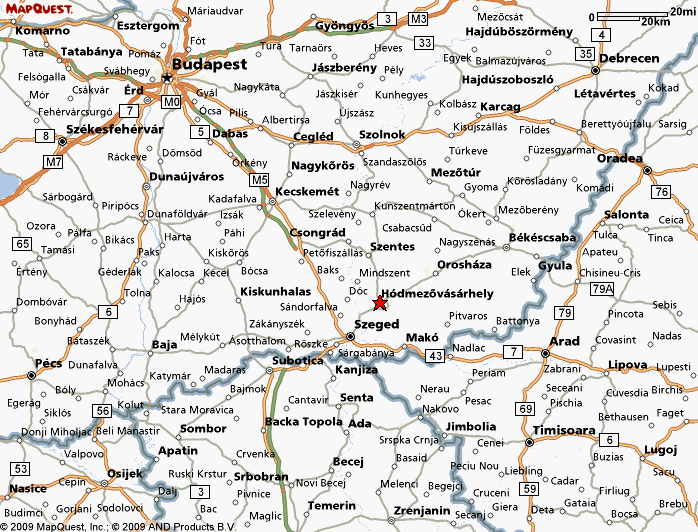
Hódmezõvásárhely, Hungary
Other names: Hóldmezõvásárhely [Hun], Ioneşti [Rom], Vašarelj [Croa]
| 46° 25' N 20° 20' E |
 |
 |
| maps
courtesy of Mapquest and Wikipedia |
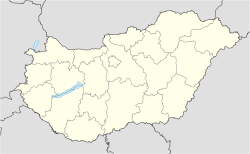
Location: Hódmezõvásárhely is located in Csongrád megye in south eastern Hungary, 22 km/14 mi NE of Szeged,
35 km/21 mi SSE of Csongrád
Population: currently about 50,000
In the 1890s, Hódmezõvásárhely was the 4th largest town in Hungary.
Jewish population:
1783: 5 families
1809: 14 families
1834: 34 families
1840: 56 individuals
1843: 200 individuals
1869: 1,312
1880: 1,685
1930: 1,151
1941: 1,501 (2.4% of the total population); a further 189 Christians of Jewish descent who were classified as Jews.
1944: 831 (in 428 families)
1955: 259
1969: 80
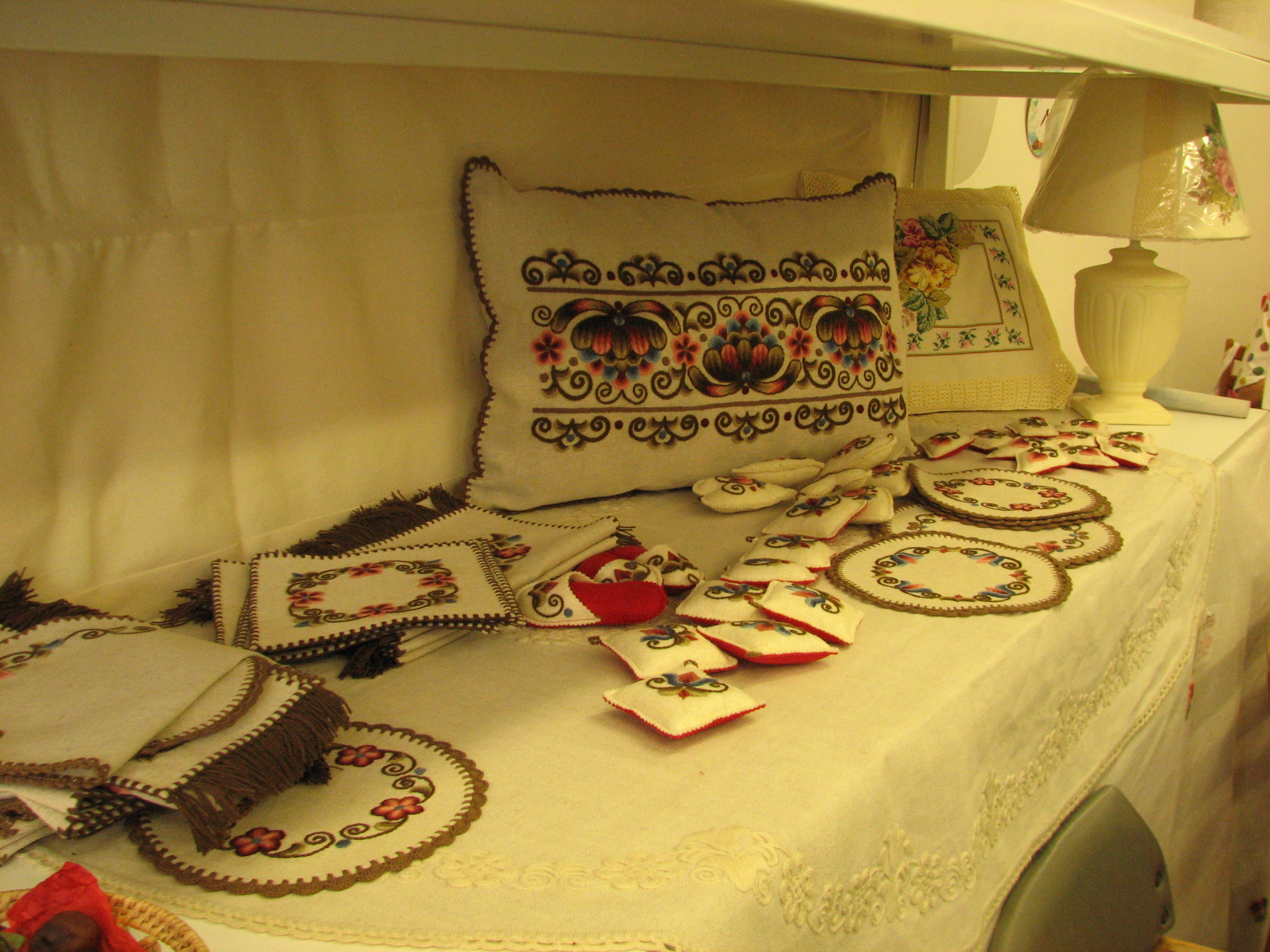
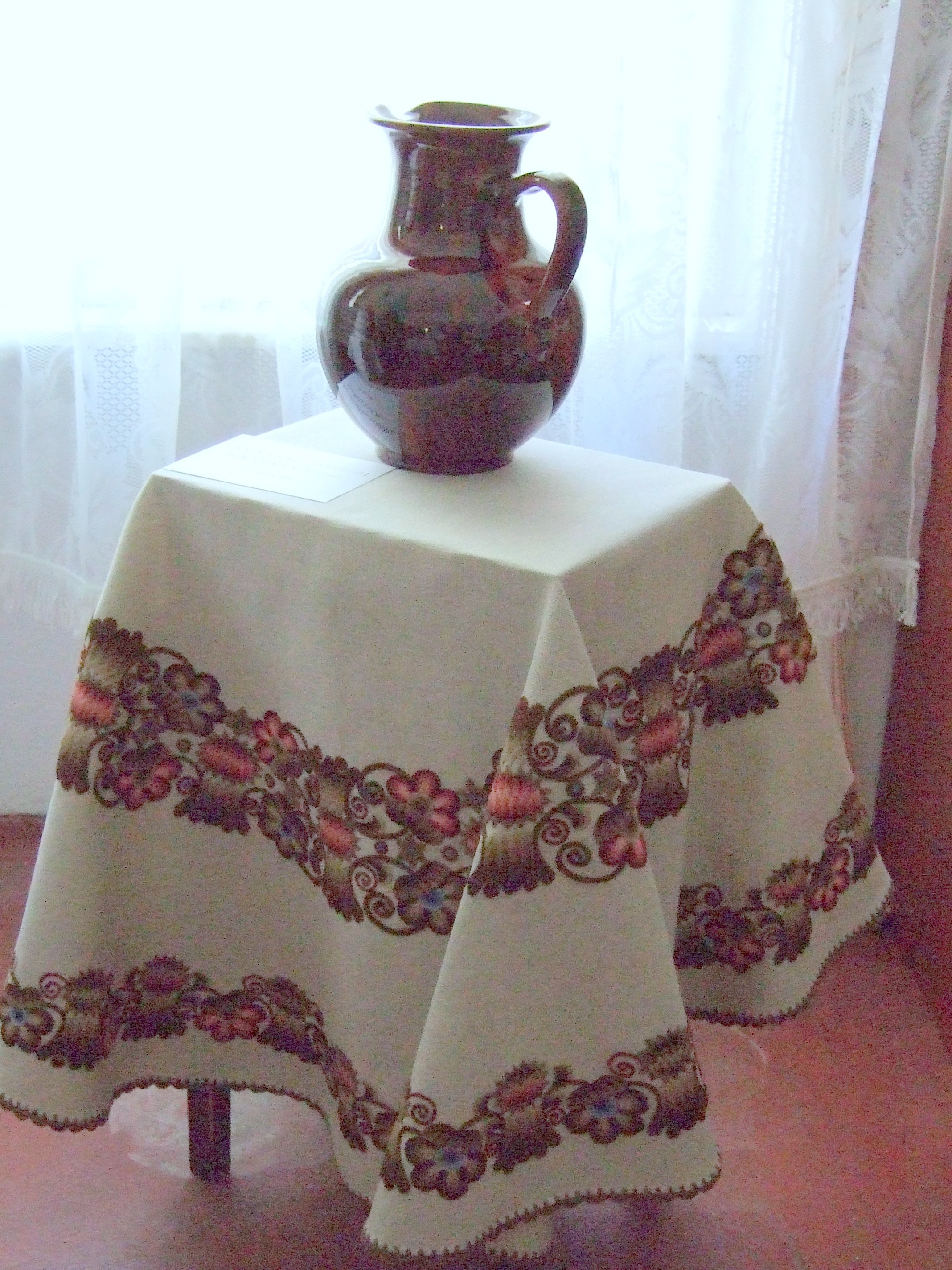
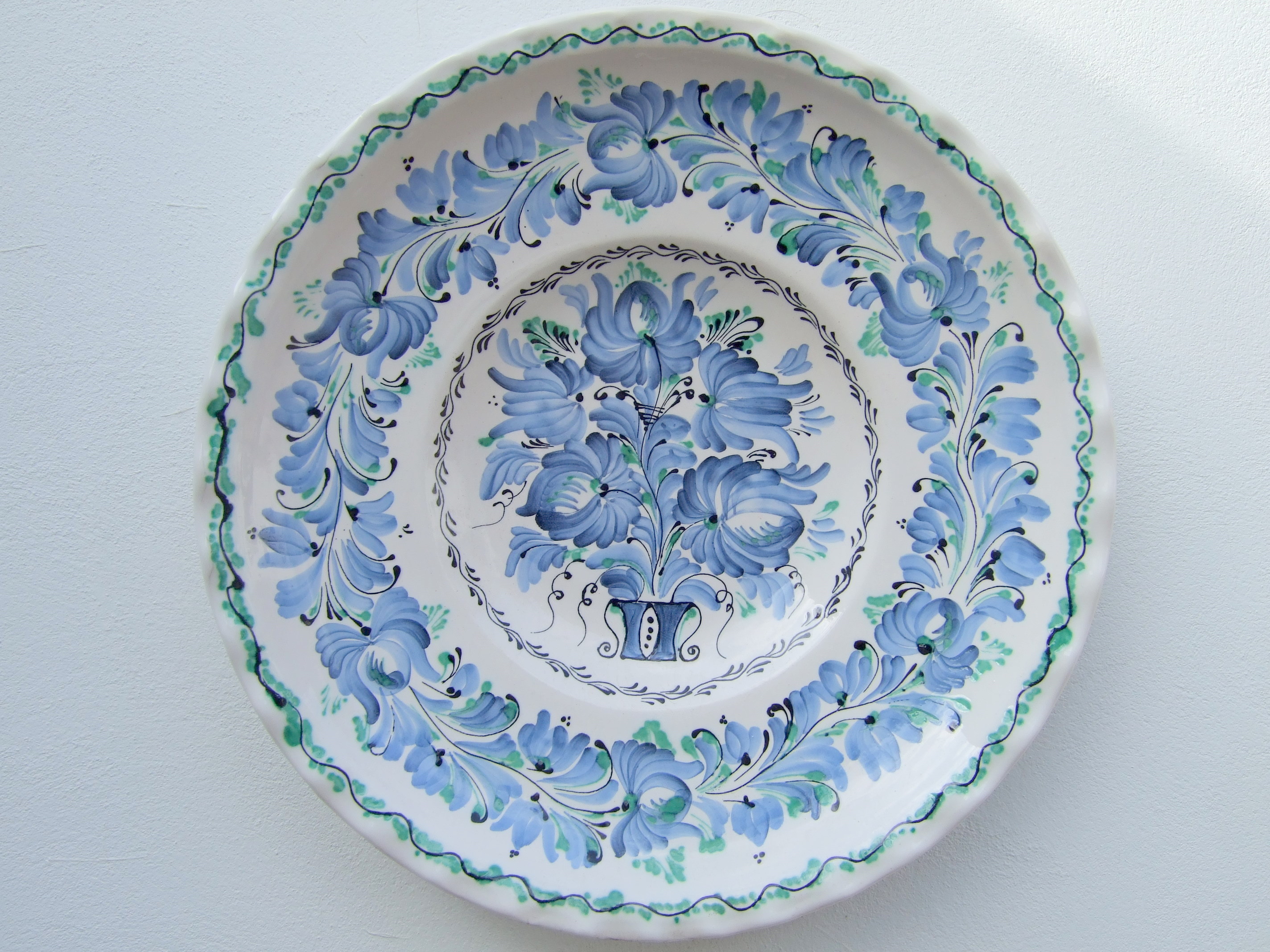
Description and History: Hódmezõvásárhely is one of the oldest settlements in Hungary and is located in the middle of the Great Hungarian Plain. There is evidence of human habitation in the area dating back approximately 6,000 years. The town is named after the beavers (hód) that once lived in Lake Hód. The lake has dried up due to regulation of the river and its bed is now a recreation park south of town. The literal translation of the town's name is "beaver-field-market-place". The present town developed in the 15th century, when the small villages of Hód, Vásárhely, Tarján and Ábrány joined and established a market town. In 1437 the town was called Hódvásárhely. In the Middle Ages markets and livestock trade fueled the town's growth. Starting in 1552, the region was occupied by the Turks, and most of the residents fled or were killed. Residents began returning in 1699. After the War of Independence (1703-1711), the town was under the control of several counts and generals. From 1722 on the Karolyi family possessed the town. This lasted until 1818, when landowner jurisdiction was abolished. Hódmezõvásárhely was a pottery town in the mid 19th century, with over 400 potters working there. After the great flood of 1879 in nearby Szeged, an earthen dike was built around the town. In addition, a stone wall following the former banks of Lake Hód was built. Though the town was characterized by agriculture until the mid 1870s, by 1890 with increasing urbanization, the town became the 4th largest in the country. The early 20th century was characterized by a great deal of construction, though 70% of the population continued to engage in farming and livestock trades, especially horse breeding. Today, the town is a tourist destination and is still renowned for its artisans, including embroidery and pottery. Museums (including a permanent Holocaust exhibit and Emlékpont, a museum dedicated to the period of Soviet occupation), houses of worship, galleries, statues and monuments, parks and a thermal swimming hall are other notable attractions. The library has a collection of antique books from the 17th and 18th centuries. The people of Hódmezõvásárhely take pride in their town being a city of the arts.
 |
 |
 |
||
| examples of embroidery and pottery from
workshops in Hódmezõvásárhely |
||||
History of the Jewish Community: Hódmezõvásárhely has a favorable commercial location which attracted Jewish merchants and peddlers, though Jews first settled within the boundaries of the city as farmers on the estate of the family of Count Károlyi in 1748. They were expelled in 1770 due to objections by the Greek Orthodox Church, but by 1780 three Jewish merchants were living in the town (Jakab, Matyas, and Bernard, a tanner). In 1810 the Jews received authorization to sell kosher wine, indicating the beginning of their re-organization as a religious group, and a yeshiva was established in 1820, but a regular community was not established until 1829, when a certificate stating that Jews were "useful" was issued. Until 1830 burials took place in the graveyard of the congregation in Makó. As early as 1833, the community entered into negotiations with various landowners to obtain property or buildings to use as a synagogue. A house was purchased in 1834 that served as the first synagogue. By 1836, 33 Jewish families were registered in the area. The gentile community was tolerant of their Jewish neighbors, and in 1838, Moritz BÖHM, who had moved to Hódmezõvásárhely from Moravia, was elected the city surgeon. Samuel WODIANER also received permission to open a mill the same year.
The community quickly outgrew the original building quickly and a neighboring house was purchased, where a school opened in 1845. At the same time a mikveh was built. The school held a very prominent place in the community. Short biographical sketches along with photographs of many of the teachers can be found in the Notable Jews from Hódmezõvásárhely link, below. During the 1840s, most of the Jewish heads of household were merchants, artisans and professionals.
Many Jews from Hódmezõvásárhely, including forty men who served in the National Guard and thirteen men in the Army, participated in the ill-fated Hungarian war for independence in 1848-1849. As consequence, the Austrians assessed the community a heavy fine and placed many restrictions on religious life. However, by 1850 the community had a rabbi, Abraham GRÜNHUT, and the next year alderman Sámuel WODIÁNER proposed the construction of a new synagogue. See Synagogue below for more information about the Hódmezõvásárhely synagogue. In 1866 a women's group was established. In 1868, the community joined the Neologists. An Orthodox Jewish congregation was founded in 1872 in opposition to the Neologs, however, by 1875 it had merged with the Neolog congregation. At this time, Jews still engaged mainly in small trade, though there were a few wealthy merchants and even some industrialists.
There was a continued strong identification with Hungarian sentiments and interests, to the extent that many young men volunteered to fight in WWI. So strong was the feeling of patriotism, that some families went above and beyond, such as that of Abrahám BERNSTEIN, whose 4 sons enlisted and Ignác WEISZ, whose 5 sons and 2 sons-in-law enlisted. Twenty-nine of the Jewish soldiers from Hódmezõvásárhely were lost on the various fronts. Between 1914 and 1919, the congregation, Chevra Kaddisha and the women's group jointly operated a hospital for the wounded veterans.
In the interwar period, Jews continued to play a leading role in the local economy, as almost one-fifth of the merchants were Jewish or of Jewish descent. Jews also played an important role in the political and public life of the town. In 1934, 10% of the town's elected officials were Jews.
In the 1942-1943 academic year, the school had two instructors and 47 students.
The congregation was re-established after the war by the survivors under the leadership of Lõrinc WEISZ. There is still a Jewish community in Hódmezõvásárhely today.
Cemetery: The Jewish cemetery in Hódmezõvásárhely is in good condition and well maintained by the community at some considerable cost to them. Despite contributions from the community and from emigrants abroad, after the war the synagogue organ was sold to raise money for the upkeep of the cemetery. A caretaker is employed and there is a registry book about the deceased, showing the row and gravesite numbers. Restoration efforts are on-going.
Holocaust: The Jewish economy was ruined in 1938 due to the institution of anti-Jewish restrictions. In 1939, the voting rights of the majority of Jews eligible to vote in elections were withdrawn. By 1944, most of the agricultural land taken from Jews was given to members of the National Council of Heroes, a central administrative group established by Admiral Horthy in the interwar years to reward by means of land grants those who had given outstanding service to Hungary during wartime.
Hódmezõvásárhely was one of the most important recruitment centers for Hungary's labor service companies, serving as the headquarters of the 5th Labor Service Battalion. From 1940 onward, men were conscripted into labor battalions, many of whom were sent to fronts in the Ukraine. The congregation regularly undertook collections to benefit labor servicemen, and an assistance committee was established to aid the jobless. By 1944, 28 Jewish labor servicemen were reported missing.
After German occupation, the Jews were relatively lucky as the local authorities resisted attempts to establish a ghetto and the residents could stay in their apartments. However, a ghetto was eventually established, located in the Jewish section of town, in a triangle bounded by Szent István Square and Ferencz, Búvár, Eszterházy, Klauzál and Szeremle streets. In April, 1944, several Jews were jailed and others were prosecuted for failing to wear the yellow star. Radio sets, typewriters and bicycles that had been confiscated from Jews were distributed to local organizations such as the Arrow Cross party, the Roman Catholic parish church and the farmer's association. Shops, businesses and industrial plants owned by Jews were closed, including the town's two Jewish-owned pharmacies, and phones owned by Jews were disconnected.
In early May, the authorities dissolved the Chevra Kaddisha and the Jewish Women's Group. Also that spring, the library discarded books by Jewish authors, which were then pulped. The Jewish council, consisting of Dr. Béla DEUTSCH (congregation president), Chief Rabbi Adolf SILBERSTEIN, Sándor NEUMANN, László WEISZ and József BALASSA, was formed in mid-May.
On June 16, 1944, with the aid of gendarmes from the nearby town of Makó, local policemen and members of the compulsory paramilitary youth movement, 737 Jews were herded into the synagogue, where they were subjected to humiliating body searches and deprived of what few remaining valuables they had. The gendarmes even forced Dr. DEUTSCH to empty the latrine by hand, in case jewelry had been hidden there. A second body search was carried out on June 17th, prior to being marched to the main railway station, where they were transferred to the Szeged ghetto in a freight train made up of 20 boxcars. According to one survivor, the trip took almost two days, even though Szeged is only 22 km from Hódmezõvásárhely.
Conditions in Szeged were deplorable. 4600 people from the surrounding areas were kept in military tents on athletic fields belonging to the Szeged Railway Athletic Association in a space that in theory could accommodate up to 2400 people. Subsequently, almost everyone was transferred to the brickyard concentration and entrainment center at 30-33 Cserzy Mihály Street owned by the Szeged Brick Factory Association. In the brickyard, conditions were worse. It was supposed to contain only 2000 people, but at times up to 8,000-9,000 people were crowded into the facility.
On June 20th, Jewish leaders from Szeged and Hódmezõvásárhely were summoned and informed of the rescue action being undertaken by Rezsõ KASZTNER. They were asked to draw up a list of names of people who had numerous dependents, who were the family of labor servicemen or were prominent figures in the community. These people were to be exempted from deportation to extermination camps and sent to labor camps instead.
Between June 25th and June 28th, the less fortunate were deported to Auschwitz and Wiener-Neustadt. Of the Jews deported to Auschwitz, only five returned. The more fortunate were deported to Strasshof, a transit camp in Austria, where the deportees were assigned to labor stations in various places in lower Austria. Many of these Strasshof deportees survived. Even so, over 500 people perished. For additional information on the transport to Strasshof, see the NEMÉTH family story, below.
In 2005, A commemoration was held to mark the 60th anniversary of the Holocaust. For the most part, commemorations are now held yearly, the most recent being in April, 2013.
Jewish victims of WWII
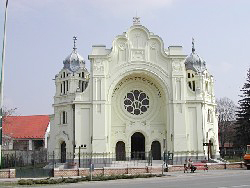
Synagogue: Hódmezõvásárhely's synagogue is one of the most outstanding synagogues in all of Hungary. It was originally built in the Romantic style. Construction began in 1852 under the direction of Miklós Busch, a builder from Szentes. The state of the community's finances caused delays, but in 1856 the interior work was begun. In 1857 the synagogue was completed. An inauguration ceremony, led by Rabbi Lipót LÖW of the neighboring community of Szeged, was held on May 15, 1857. In 1881 a collection was initiated to add an organ behind the women's gallery, but it was not installed until 1897. Also around the turn of the century, a choir was introduced and services began to be conducted in Hungarian.
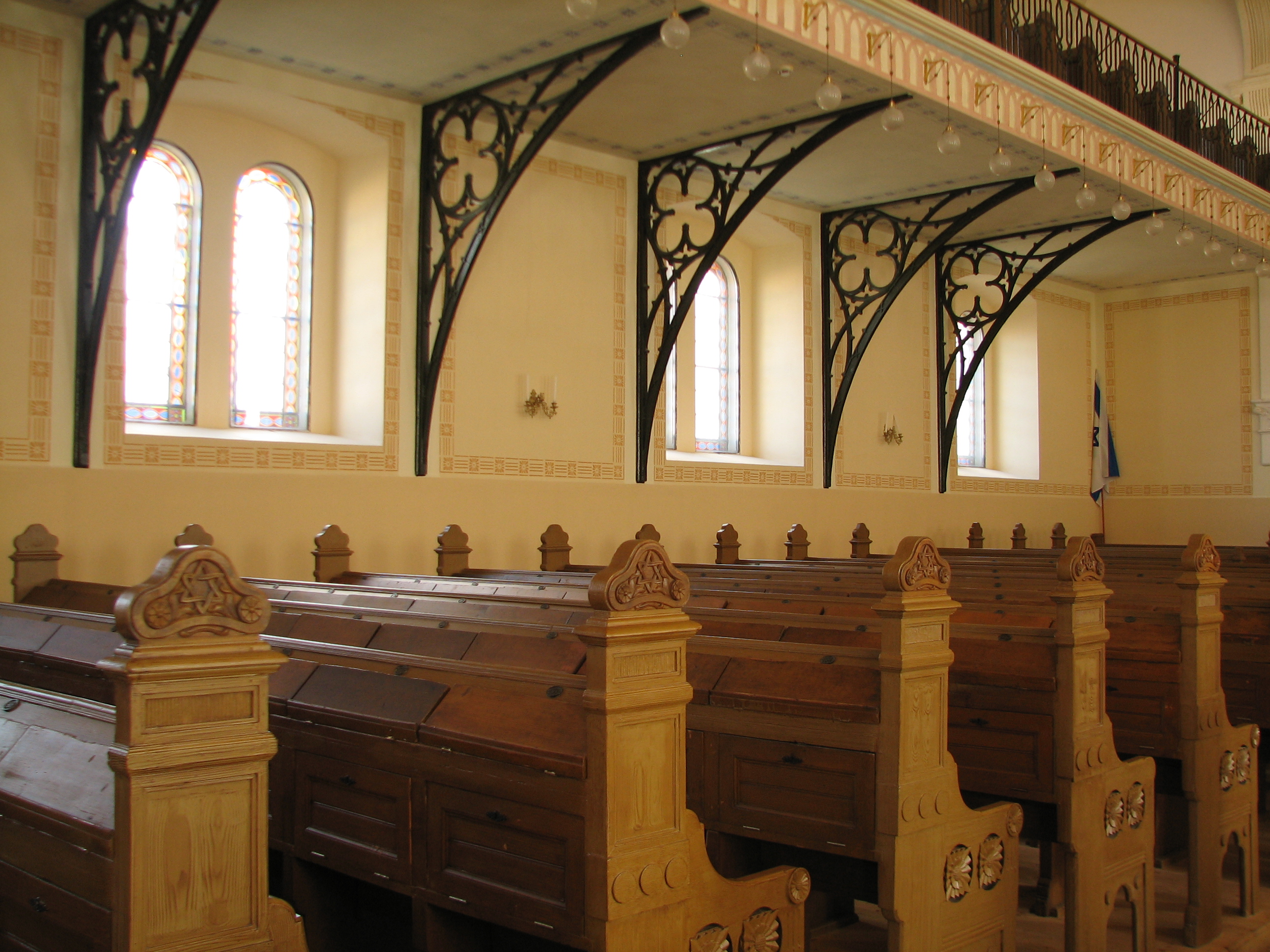
The synagogue was refurbished in the Secessionist* style between 1906 and 1908 under the direction of Szeged architect Miksa MÜLLER. At this time the building received a new main facade and staircase, a new reinforced concrete ceiling, as well as modifications to the interior. Sculptor József BERTAKOVITS from Budapest was hired for the interior work. A new Aron Kodesh was constructed, the organ was relocated to the eastern side, and the windows were replaced with stained glass.
The women's galleries frame three sides of the interior and the choir stalls are above the Aron Kodesh (Ark). Above the Ark is an inscription in Hebrew from Psalms 16:8--"I have set the Lord always before me". Above the lead-glass Tiffany style rosette on the front of the building is another Hebrew inscription quoting Psalms 91:2--"I will say of the Lord, He is my refuge and my fortress, my God; in him will I trust."
Following the war, János VANDERSTEIN and József SZEKERES helped organize the community of survivors and led efforts to restore the building. However, the remnants of the once-thriving Jewish community were no longer able to maintain the synagogue. The state of the building deteriorated, helped along by a thunderstorm during which the roof was severely damaged. Although the roof was eventually repaired, there was considerable damage to the ceiling and walls.
In 1974 marble memorial plaques and a symbolic black tomb memorializing the deported Jews were placed in the vestibule of the synagogue. In 1986, the Jewish community made an agreement with the municipality, in which the town would purchase the synagogue and the school building and utilize them for cultural purposes. The synagogue, which was still in a state of disrepair, began reconstruction for a 3rd time, funded generously by the municipality. Reconstruction on the adjoining school began in the late 1990s. Reconstruction was slow and laborious, but the buildings were fully restored in time for the country-wide Holocaust commemoration in 2005. As well as worship services, the synagogue can also be used as a venue for concerts and other cultural activities. The school building houses a permanent Holocaust exhibit, a museum which is unique in rural Hungary.
In 2005, approximately 40 people attended Rosh Hashanah services in the 626 seat synagogue, a tribute to the durability and persistence of the community, but nevertheless a stark reminder of the losses suffered by the city's Jews.
*Secession: an eclectic style of decoration in art and architecture developed towards the end of the 19th century characterized by organic and dynamic forms, curving design and "whiplash" lines, often incorporating folk motifs.
 |
 |
|||
| Hódmezõzovásárhely
synagogue |
synagogue
interior |
Rabbis: Several prominent rabbis served the community of Hódmezõvásárhely. Among them were:
Izrael STEINER: first Rabbi of the town, originally from Nyitra.
Ábrahám GRÜNHUT (born in Nagy Karoly in 1809 and died in 1877; officiated 1830-1866), also known as A. KROL.
Lajos SELTMANN (1854, Tiszanáná-1932, HMV; officiated 1879-1932; married Anna nee PAPPENHEIM) was a noted Rabbi, philosopher, theologian, author and orator. His father, Alexander SELTMANN (1800-1860), was the Rabbi of the village of Poroszló. Due to the early death of his parents, Lajos' youth was marked by struggle and poverty. A hardworking student, he first went to Bratislava for his studies, then to the University of Berlin where he received his Doctorate in Philosophy. He received his first position as a Deputy Rabbi in Szeged in 1878 at the age of 24. The following year, he became Rabbi of Hódmezõvásárhely. He was well respected by the various factions of the Jewish community and able to bring them together, creating a more harmonious community. He traveled widely and gave his sermons alternately in Hungarian and German. He also maintained excellent relationships with the non-Jewish community, and his funeral was attended by town dignitaries and officials of the local churches.
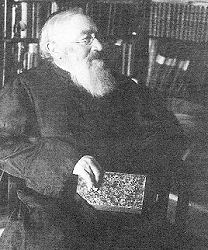 |
| Lajos SELTMANN |
Meir (Dr. Pál) WEISS / WEISZ (born 1908 in Budapest, died 1998 in Jerusalem, Israel; officiated 1933-1937) He was able to reach Palestine in 1945 after a journey from Bergen Belsen to Switzerland. During his career he was a teacher, writer of technical and scientific work, a school principal and a University professor. He was at Bar Ilan University in Ramat Gan, Israel from 1957 to 1961, then in 1961 moved to the Hebrew University of Jerusalem where he was a professor of Bible Studies until his retirement. He received the Israel Prize* in 1990 for his contributions to Jewish Studies.
*The Israel Prize is awarded to those who have displayed excellence in their field, or who have made major contributions to Israeli culture or to the State of Israel.
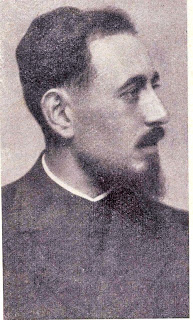 |
| Rabbi Meir (Dr. Pál) WEISS |
Aaron (Dr. Adolf) SILBERSTEIN (officiated 1938-1944), authored a monograph about the community.
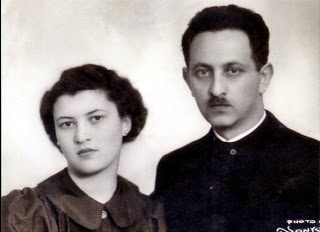 |
| Dr. SILBERSTEIN and his wife, Éva |
Károly TIMÁR was Deputy Rabbi and Cantor from 1950-1957.
Notable Jews from Hódmezõvásárhely
Includes biographical sketches of teachers in the Jewish School as well as a list of members of the Israelite Hungarian Literary Society, founded in the 1890s by Lajos SELTMANN.
The Jewish Community today: The Jewish community consists of about 40 people. Regular Friday evening and holiday services are held in the synagogue, led by a Cantor. There is no Religious School due to the very small number of children in the community. Jewish education takes place during services and holiday events. A community organization known as the "Hungarian-Israel Friendship Organization" aims to educate the general public about Jewish culture and religion. Aside from regular local meetings, in 2009 a conference was held in which 15 Jewish communities from within Hungary and nearby countries participated. The Holocaust Museum has an active education program and hosts high school groups from around the region. Many tourists, both from within Hungary and abroad also visit. While a good number of people are receptive to learning about Jews and Judaism, nevertheless, ignorance of Jewish tradtions at best and overt anti-Semitism at worst continues to be a problem. A member of the community describes it as a "great challenge to be a Jew in Hungary". Jews are expected to conform to Hungarian societal norms, making it difficult to observe Jewish customs, an example being not receiving time off from work to attend holiday services. Assimilation and attrition within the community are also challenges. Though many of the older generation seek to reclaim their origins and identity, other Jews seek the larger communities of Budapest or Israel.
Pinkas Hakehillot Hódmezõvásárhely
Lists of Hódmezõvásárhely community members in 1942
The 1848 Hódmezõvásárhely census
Jews from Hódmezõvásárhely who participated in the Hungarian Revolution of 1848
Õrmesterek: KOHN, Alb. (peddler), SCHWEIGER, Mor (broker), WEINBERGER, Sim.
Tizedesek: STEINER, Vilmos, RUHMAN, Mor (peddler)
Közhonvédek (Civil defense): MULLER, Karoly (peddler), POLLÁK, Samuel (servant), SINGER, Karoly (peddler), SINGER, Lõrincz
www.hmvhelyzsidohitkozseg.blogspot.hu
website (in Hungarian) about the Jewish community of Hódmezõvásárhely. Google Chrome will automatically translate the site, and though the translation is not great, one gets the idea. The webmaster thanks the Jewish community of Hódmezõvásárhely for the use of information from their website on this page.
Families:
BALASSA
NÉMETH family (ANISZFELD and KERTÉSZ)
RITSCHER/ELKAN
ROSNER/ROZNER
SCHWIMMER (ROTH and MESSINGER)
SONNENFELD/KUN
WODIANER
STÖSZEL family:
The family of the webmaster is the STÖSZEL family. A family of cantors, they were very itinerant, but lived in Hódmezõvásárhely from about 1860 through the 1870s. The patriarch of the family was Cantor Israel STÖSZEL/STESZEL (1781-1864). He and his wife Resi nee HECHT had 5 children--sons Moritz/Mor and Salomon, both cantors, and daughters Fani (1848-1866), Czilli and Mari. The children were born in such varied places as Csecse, Brezova and Eger. The family lived in Eger prior to moving to Hódmezõvásárhely.
1)
Moritz STÖSZEL (1833, Brezova-?), a cantor at the
synagogue, pictured above, and his wife Antonia nee
DESZBERG had their first child, Hani, b. 1859, in Eger,
but most of their subsequent children (daughter Rozi,
twins Katarina and Josephina, both of whom died as
infants, son Sandor who also died as an infant, son Lajos
and daughter Lotti) were born in Hódmezõvásárhely. In
the late 1860s they moved to Buda, where their daughter
Rozi died, only 4 years old. Around 1870 they moved
to Nagyvarad (Oradea, Romania), where they had two more
children: Miksa and Jeno (died in infancy). They may
also have had a daughter named Marta in Nagyvarad.
Lotti STÖSZEL (1870-1944, Auschwitz)
married Max Daniel BRASCH (1866-1942, Theresienstadt), a
merchant from Berlin, where they lived prior to being
deported to Theresienstadt.
2)
Mari STÖSZEL (1840, Eger 1877, Nagyvarad) married David
KRAUSZ (1836-1884). They had 5 children, 2 of whom
did not survive infancy. Their daughter Pepi, b.
1869, was married twice, first to Unknown REININGER and
second to Zsigmond BIZAM (1861-1939), with whom she had a
daughter, Maria, born in 1893. Mari and
David's other children were Roza, b. 1863, and Wilhelm, b.
1867. Roza, aka Regina, lived at 5 Zsigmond Street
in Hódmezõvásárhely
when
she was deported on June 16, 1944. Mari and her
husband also went to Nagyvarad, where Mari died in 1877.
3) Czilli STÖSZEL (1835, Csecse - 1910, Eger), the eldest daughter, stayed in Eger with her husband Israel Jozsef DRESDNER (1835-?) and their 13 children. Four of the children died in infancy or as toddlers. It is not know what happened to most of the children, but three of the daughters married.
Pepi/Josefa/Piroska DRESDNER (1866-?) married Karoly DEUTSCH (1860-?), a merchant and had 10 children, Endre, Iren, Gyula, Istvan, Aranka, Oszkar (Oszi), Sandor, Gyorgy (Gyuszi), Jozsef and Erzsebet. Gyula and Istvan died as infants. Two sons, Dr. Gyorgy DEUTSCH (1900-194?) and Dr. Jozsef DEUTSCH (1903-1943) died in labor battalions during the Holocaust. Information from the International Tracing Service (ITS) collection held by the United States Holocaust Memorial Museum (USHMM) suggests that Jozsef was attached to the Hungarian 2nd Army which was overrun and virtually wiped out during a major offensive by the Soviet Red Army along the Don River near Voronezh in Russia in late January, 1943. The rest of the children survived the Holocaust, and their descendants live in Canada, the United States and Hungary today.
Francziska DRESDNER (1877-?) married Ferenc WEISZ (1881-?) in 1905 in Ujpest. Their son, Jozsef WEISZ, was born in 1911.
Maria Lujza DRESDNER (1878-?) married first Izsak Mozes WILBACH (1876-?) in Ujpest in 1902. Their daughter was Sara WILBACH (1905-?) who married Ivan TIBOR in Ujpest in 1931. Maria Lujza's second husband was Armin GONDA (1875-?), whom she married in 1919 in Ujpest.
Salomon and Rozi's daughter Therezia/Rezi was born in 1865; she married Salamon KRAUSZ (b. 1862, Csosz) in Vac in 1887. Their son, Ivan, was living in the small town of Vajszlo in southern Hungary near the Croatian border as of 1944.
The middle daughter, Josefa, was born in Nyitra in 1868. She died at the tender age of eighteen in Vac of an intestinal ailment. The middle son, Zsigmond, born in 1869 in Nyitra, was a plumber and died of tuberculosis in Buda in 1890.
Another daughter, Gizella, lived in Budapest and was an accountant who remained single. The 5th daughter, Eleonora, married Marton SILBERKRAUSZ of Gyöngyos, a painter, surname changed to SZÁNTÓ, in 1898. They had four children: Rozsi, Imre, György (Gyula) and László, all born between 1901 and 1907. György, a slave laborer, perished in the Felixdorf, Austria concentration camp. Rozsi, her parents and Aunt Gizella all died just days apart just after Budapest was liberated by the Russians in January of 1945. Imre and László survived and co-inherited the family's apartment on 37/c Szondy utca. Anyone with information about any descendants of the surviving brothers is urged to contact the webmaster.
Salomon and Rozi were divorced, and Salamon subsequently married Maria LICHT of Körmend, Vas megye in 1875. Salamon and Maria and their 5 children moved to Uzhorod and then to the United States. They lived in Cleveland, Ohio, where the name STÖSZEL was Americanized to STACEL. Salomon was the cantor for the Eagle Avenue Hungarian Synagogue, now known as B'nai Jeshurun, in Cleveland. Salomon and Marie's son Jacob STACEL was a municipal judge in Cleveland in the 1920s and 1930s and was the grandfather of the webmaster.
*Anyone with knowledge of any of the individuals mentioned in the STOSZEL family story is encouraged to contact the webmaster. In addition, there is a STÖSZEL/POLLATSCHEK (POLACSIK) family in Vac that is possibly related to my family. Regina/Rebeka STESZL/STÖSZEL (1824, Oravka, Arva megye-1904, Budapest) married Natan/Nathan POLACSIK/POLLATSCHEK. On her death certificate, Regina's parents are listed as Ignatz STÖSSEL and Terez DONNER. If Ignatz and Israel are the same person, then Regina would be a half-sister by presumably the first wife. The children of Nathan POLLATSCHEK and Regina STÖSZEL were:
Izsak b. 1850, married Regina PRAGER in Pest in 1879; children Sandor b. 1881, Roza b. 1883, Ilka b. 1884, Ferenc, (1886-1890). Unconfirmed child: Terez, married Nandor KIS.
July/Julia b. 1852, married Mark RAUSNITZ in 1873 in Pest; son Nandor b. 1874.
Ester Anna b. 1853, married Samu SCHANZER in 1873 in Pest. Children Terez, b. 1875, Nandor b. 1877, Lipot b. 1879, Hermina (1881-1883), Jeno (1882-1883).
Tscharna/Sarolta? ?married? Juda POLACSEK in 1872; son Mano b. 1889.
Hanni b. 1857, married Armin GLATTER in Pest in 1877; children Alfred b. 1878, Vilmos b. 1880, Jeanetta b. 1882, Izidor 1883-1884, Ernesztin b. 1885 and Ede b. 1892.
Felix b. 1859,married Hanni PRAGER in 1882 in Pest; children Iren b. 1883, Olga (1884-1885), Sandor b. 1889 and Natalie b. 1894. Unconfirmed children: Anna b. 1886, married Vilmos RACZ and Erzsebet married Jeno GRUNFELD.
Gyula/Elchane b. 1861, married Terez BERGSTEIN in Pest in 1886. Children Bela (1891-?; changed surname to POLLACK, married a member of the Polish nobility, became an architect in Krakow and served as treasury minister in Poland, had two daughters, one of whom died during the war, one survived and lived into the 1980s. Grandchildren live in Krakow today), Gizella (1899-?), Zsofia (1894-?; married unknown REVETZ, no children), Lilica (?-1973, had a daughter also named Lilica), Janka (1899-1944; married Dr. Sandor WOLLNER who had a son Daniel from a prior marriage; Janka and Sandor had a son Tamas 1935-1944), Adel (1887-1961; married Zsigmond TOROK, their daughter Marta, b. 1909 married Dr. Laszlo SPINNER)
Resi b. 1863
Pepi b. 1867.
This site is a work in progress!
Anyone who would like to contribute additional information to this website--stories, photos, family data, travelogues or any other information--is encouraged to contact the webmaster.
Webmaster:
Judy
Petersen
<KPeter3434@aol.com>
<KPeter3434@aol.com>
| JewishGen Home Page |
JewishGen ShtetLinks |
|
| Hungary
SIG Home Page |
||
| JewishGen All
Hungary Database |
The JewishGen All-Hungary Database contains over 660,000 entries referring to individuals living in the current and former territories of Hungary including present day Hungary, Slovakia, Croatia, northern Serbia, northwestern Romania and subcarpathian Ukraine. Searchable databases include the JewishGen Family Finder (JGFF), 1828 Hungarian Property Tax Census, 1848 Hungarian Jewish Census, 1869 Hungarian Census, other Hungarian Census Records 1781-1850, Hungarian Births Database, Hungarian Marriages Database, Hungarian Deaths Database, Hungarian Holocaust Memorials Database, Who's Who in Budapest 1837 and 1845, and much more. The All-Hungary Database is a work in progress and new entries are being added regularly. Volunteers to help transcribe records are needed. Contact the webmaster for more information on how to volunteer.
Resources used in
the creation of this web page:
Internet resources:
JewishGen Communities Database
Wikipedia
European Jewish Press 06 Oct 2005
http://hungarystartshere.com/synagogue-Hodmezovasarhely
http://www.hodmezovasarhely.hu/oldal-2
http://www.answers.com/topic/art-Nouveau
http://www.jewishvirtuallibrary.org
http://www.hmvhelyzsidohitkozseg.blogspot.hu
Books:
Atlas of the Holocaust by Martin Gilbert, published by William Morrow & Co.
The Politics of Genocide, Vol 1 and 2, by Randolph Braham, published 1994 by Columbia University Press
Hódmezõvásárhelyi Zsidók by Dr. Adolf Silberstein, originally published in 1943, reprinted in 2004
The History of the Synagogue in Hódmezõvásárhely by Béla Sisa, published in 2004
Holocaust Museum, compiled by Mária Schmidt, edited by Zsuzsanna Körmendy, published by the Local Government of Hódmezõvásárhely County and Town
Encyclopedia Judaica
Jewish Budapest: Monuments, Rites, History by Kinga Frojimovics, Géza Komoróczy, Viktória Pusztai and Andrea Strbik, English edition published 1999 by Central European University Press, Budapest
Heddy and Me by Susan Varga, published 1994 by Penguin Books Australia Ltd.
1848 és a Magyar Zsidók by Dr. Bela Bernstein, published in Szombathely, Hungary in 1906
A Második Világháború és a Fasizmus Hódmezővásárhelyi Áldozatai edited by Imre Makó and Lajos Katona, published in Hódmezõvásárhely, 1991
A Magyar Haviselt Zsidók Aranyalbuma az 1914-1918-as viágháború emlékére by Marton Hegedüs, published in Budapest in 1940.
The Geographical Encyclopedia of the Holocaust in Hungary, edited by Randolph L. Braham, published by Northwestern University Press in association with the United States, Holocaust Memorial Museum and the Rosenthal Institute for Holocaust Studies; copyright 2013.
Vihar és véz közepette: A holocauszt hódmezõvásárhelyi áldozatai by Imre Makó and János Szigeti
Photos:
photos on this page courtesy of B. Fisch
photos on SCHWIMMER family page courtesy of E. Schwimmer
Individuals:
Noemi Vanderstein
Inge Winter
Daniel Gerhat for assistance with translations
Andrew Lenard, with special thanks for his suggestions, assistance and most of all, his support of this endeavor
T. Poteat
Internet resources:
JewishGen Communities Database
Wikipedia
European Jewish Press 06 Oct 2005
http://hungarystartshere.com/synagogue-Hodmezovasarhely
http://www.hodmezovasarhely.hu/oldal-2
http://www.answers.com/topic/art-Nouveau
http://www.jewishvirtuallibrary.org
http://www.hmvhelyzsidohitkozseg.blogspot.hu
Books:
Atlas of the Holocaust by Martin Gilbert, published by William Morrow & Co.
The Politics of Genocide, Vol 1 and 2, by Randolph Braham, published 1994 by Columbia University Press
Hódmezõvásárhelyi Zsidók by Dr. Adolf Silberstein, originally published in 1943, reprinted in 2004
The History of the Synagogue in Hódmezõvásárhely by Béla Sisa, published in 2004
Holocaust Museum, compiled by Mária Schmidt, edited by Zsuzsanna Körmendy, published by the Local Government of Hódmezõvásárhely County and Town
Encyclopedia Judaica
Jewish Budapest: Monuments, Rites, History by Kinga Frojimovics, Géza Komoróczy, Viktória Pusztai and Andrea Strbik, English edition published 1999 by Central European University Press, Budapest
Heddy and Me by Susan Varga, published 1994 by Penguin Books Australia Ltd.
1848 és a Magyar Zsidók by Dr. Bela Bernstein, published in Szombathely, Hungary in 1906
A Második Világháború és a Fasizmus Hódmezővásárhelyi Áldozatai edited by Imre Makó and Lajos Katona, published in Hódmezõvásárhely, 1991
A Magyar Haviselt Zsidók Aranyalbuma az 1914-1918-as viágháború emlékére by Marton Hegedüs, published in Budapest in 1940.
The Geographical Encyclopedia of the Holocaust in Hungary, edited by Randolph L. Braham, published by Northwestern University Press in association with the United States, Holocaust Memorial Museum and the Rosenthal Institute for Holocaust Studies; copyright 2013.
Vihar és véz közepette: A holocauszt hódmezõvásárhelyi áldozatai by Imre Makó and János Szigeti
Photos:
photos on this page courtesy of B. Fisch
photos on SCHWIMMER family page courtesy of E. Schwimmer
Individuals:
Noemi Vanderstein
Inge Winter
Daniel Gerhat for assistance with translations
Andrew Lenard, with special thanks for his suggestions, assistance and most of all, his support of this endeavor
T. Poteat
| Compiled by Judy Petersen Last updated by JP March 2015 copyright © March 2009 by Judy Petersen <KPeter3434@aol.com> |