New Materials Collected After Publication of the Original Book
Appendix Was Not Part of the Original Yizkor Book Yurburg - Professor Dov Levin and Yosef Rosin
Holocaust in Jurbarkas - B. A. Thesis of Ruta Puisyte
"My Life, My Environment, My Epoch - Ze'ev Bernstein"
In the Kovno Ghetto - The Story of Gita Abramson Bereznitzky
Documents of Her Life - Hadassah Levinsohn Heussinger
Naividel -Krelitz - Eliashevitz Families
Home on the Iron Range - S. Aaron Laden
Fanny Ellis Bernstein Rubinstein - End of an Era
Sarah Eliashevitz Laden - Bernard Laden
Max Zarnitsky - Chief Land Appraiser in Israel
Ben Heshel Craine, Photographer of 1927 Yurburg film
Mordehai (Moti, Motel) Naividel
The Mexican Connection - Max Sherman-Krelitz
Letters from Yurburg 1939-1941 - Krelitz Family
Sudarg by Fania Hilelson Jivotovsky
A Journey to My Past - Fania Hilelson Jivotovsky
Photos from the 2000 Yurburg Family Reunion in Detroit, Michigan
The Yurburg Jewish Cemetery and List of Headstones
We hereby take advantage of the opportunity to add new material that has come to light since the publishing of the original Hebrew book in 1991 and hence it is included here. Since the tone of this material is different from the material in the original Yizkor Book, the editor hopes that the reader understands the intent of including this material is to enrich the content of the book, enhance the history of the town and its descendents and make it more appealing to a wider readership, who can read the history of our community of Yurburg.
This chapter contains new material from the autobiography of Professor Ze'ev Bernstein about his father, Boris, a newly written history of Yurburg written by Professor Dov Levin and Josef Rosin, editor and assistant editor respectively of the Hebrew volume Pinkas Kehilat Lita, Encyclopedia of Jewish Communities of Lithuania, descriptions of the lives of Yurburgers who settled in Israel, Canada and the United States, and a description of a trip to Yurburg and Sudarg taken by descendants of Yurburgers in 2001.
Yurburg
Note: This article was written by Professor Dov Levin and Josef Rosin, Editor and Assistant Editor, respectively, of Pinkas HaKehilat Lita, Encyclopedia of Jewish Communities of Lithuania (Yad VaShem, 1996). This article is based upon and expanded from their article on Yurburg in that book. This article was written especially for this book and was requested by Joel Alpert, compiler of this book.
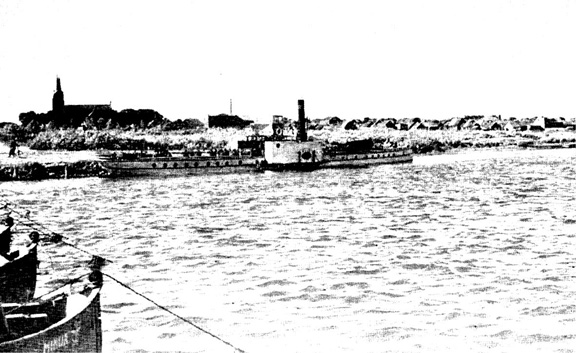
Yurburg is situated on the right hand shore of the Nieman (Nemunas) river where the tributaries Mituva and Imstra converge. The town used to be about 12 km (7.5 miles) to the east of the Prussian border, surrounded by woods. It began as a stronghold of the Knights Order of the Cross in the thirteenth century named Georgenburg or Jurgenburg, but after the border between Lithuania and Germany was defined in 1422, Yurburg became a border town and a customs point. During the thirteenth century the importance of Yurburg increased due to the harvesting of trees in the surrounding woods for commercial purposes, when the logs were floated on the Nieman River to Prussia. Thanks to the ethnic diversity of its inhabitants, its location on a main sailing route - the Nieman - and its proximity to Prussia, Yurburg became a communication and commercial center between east and west. During Russian rule (1795-1915) the town was included in the Kovno Gubernia (province).
As a result of railway construction and road improvement in the region during the nineteenth century, sailing on the Nieman subsided and the growth of Yurburg slowed down. The town was taken over by rebels for a short time during the Polish mutiny in 1831, but after the mutiny was repressed by the Tzar, Yurburg returned to its former life.
German culture from across the border influenced the social life greatly and affected the mode of living in town, which also continued to be the case during the period of Lithuania's independence (1918-1940).
Because of its topographic situation and location between the two rivers and the Nieman, the town frequently suffered from floods. In 1862 eighty houses were inundated and their residents rescued themselves by climbing onto the roofs. Yurburg also suffered from fires, the greatest fires being in 1906 when 120 of its houses burnt down.
Yurburg was first mentioned in the book of Rabbi Meir ben Gedalyah (1558-1616) from Lublin "Sheloth uTeshuvoth" (Questions and Answers) concerning the case of an "Agunah" (deserted wife) whose husband had been killed in Yurburg. The testimonies of this case were reported in 1593 and 1597. During the period of the autonomous organization of Jewish communities in Lithuania "Va'ad Medinath Lita" (1623-1764), Yurburg was included in the Keidan district, and by 1650 there were already seven Jewish houses in town.
In the middle of the 17th century, some Yurburg's Jews earned their living by renting the right to collect taxes for the government in Yurburg, Birzh and other towns, and this was done under the cover of Christians.
At the beginning of the 18th century the community wanted to replace the officiating Rabbi, but he complained to the authorities and received a " letter of protection " from the king. On the 17th of November 1714 Rabbi Aizik. Leizerovitz was mentioned in an official document, but detailed information of Jewish settlement of Yurburg exists only from 1766. At this time there were 2,333 Jews in the town who owned a few prayer houses, among them the magnificent wooden Synagogue built in 1790, one of the oldest in Lithuania. There was also a Jewish cemetery, as well as welfare and religious education institutions. In 1862 there were 2,550 Jews in Yurburg.
Yurburg Jews suffered during the Polish mutiny in 1831. A local resident, Reuven Rozenfeld, was hanged by rebels, who blamed him for aiding the Russian rulers. After the mutiny was quelled, a trial of those involved in the hanging took place for many months, among the accused was a Jew named Tuviyah ben Meir Danilevitz. After being imprisoned in Rasein for 13 months, he was acquitted due to lack of evidence.
In 1843 the Czar issued an order stipulating that Jews living in an area within 50 km of the western border of Russia should be transferred to some of the Gubernias (provinces) inside Russia. Yurburg's community was one of 19 communities that refused to obey this order.
Most of Yurburg Jews made their living from the timber trade, floating timber to Germany, commerce, customs commission, transport and shopkeeping. In 1865 a branch of one of the greatest commercial firms in Germany "Hausman et Lunz" opened in town.
The local garrison was also situated there, providing a living for Jewish merchants. In 1861 Jewish soldiers of the garrison donated money for writing a new "Torah Scroll," which was later brought into the synagogue by the Jewish soldiers, with due festivity. The celebration was attended by respected local people, headed by the commander of the garrison.
At the end of the 1880s a cooperative credit company was established, for which it took three years to receive permission from the authorities.
As a result of the general atmosphere in Yurburg, the "Haskalah" (Enlightenment) movement flourished there among the Jews more than in Zhamut's (Zemaityja region) other communities. This was demonstrated by the cooperation of the community heads in the establishment of a quite modern Talmud-Torah in 1884, where 100 poor children studied, and in addition to religious subjects, Hebrew and grammar, mathematics and Russian were also taught. Members of the management of this institution were: L.Valk, M.H. Kostin and L.Boger, one of the teachers being the famous Hebrew writer Avraham Mapu. Although the school was under the supervision of the government, its financial maintenance was mainly the responsibility of the community. Due to the fact that the 900 Rubles received from the "Meat tax" was not sufficient, the community heads appealed to former Yurburgers in New York, Saint Louis and Rochester in the United States for help. A partial list of donors (who donated from $0.50 to $750) was published in the Hebrew newspaper "HaMeilitz" in July 1889.
The Yurburg Jewish institutions also served smaller Jewish communities in the vicinity, such as Shaudine, Pakelnishok, Gaure. (After World War there were no more Jews in Pakelnishok).
In the Hebrew newspaper "HaMagid" from 1872 there is a list of 39 Utyan donors of assistance for starving Persian Jews. (See Jewishgen-Database-HaMagid-by Jeffrey Maynard).
During the years of famine (1869-1872) which affected many parts of Lithuania, Yurburg suffered less and its Jewish residents donated money to needy communities. The fundraisers were Yitshak-Aizik Volberg and Shelomoh Bresloi.
In a list of donors for the Settlement of Eretz-Yisrael dated 1896, names of 20 Yurburg Jews appear (see Appendix 3). The fundraisers were Tsevi Fain and Avraham-Yitshak Kopelov.
In the old Jewish cemetery in Jerusalem there is a headstone of Rivkah Gitel bat Mordehai Margalioth from Yurburg. During World War I many of Yurburg's Jews left the town, some returning later.
After the establishment of independent Lithuania, Yurburg was included in the Raseiniai district. The number of Jewish residents in Yurburg was smaller than before as some of those who had left did not return and also due to immigration abroad. However, their proportion amongst the whole population increased, as can be seen from the first census performed by the government in 1923. There were 4,409 residents including 1,887 Jews (43%), while in 1897 there were 7,391 residents, of them 2,350 Jews (32%).
In 1922 the elections for the first Lithuanian Seimas (Parliament) took place, with 774 Utyan Jews participating. 477 voted for the Zionist list, 199 for the Democrats and 98 for the religious list "Akhduth."
According to the autonomy law for minorities issued by the new Lithuanian government, the minister for Jewish affairs, Dr. Max Soloveitshik, ordered elections to be held in the summer of 1919 for community committees in all towns of the state. In Yurburg a committee was only elected five years later, in 1924, after much pressure from the National institutions of Lithuanian Jewry (Va'ad HaAretz). The committee (Va'ad) comprised five members of the Workers list, three Zionist-Merchants, two Religious, two Democrats, one "Tseirei-Zion", one Mizrahi and a representative of the butchers. The committee, which collected taxes as required by law and was in charge of all aspects of community life, was active till the end of 1925 when the autonomy was annulled.
Among the 14 members at the local council (later the municipality) elected in 1924, six were Jews, one of them serving as deputy chairman and another as a member of the management. The elections of 1931 resulted in three Lithuanians, one German andone Russian being elected, as well as five Jews: Z. Levitan, M. Shimonov, Y. Grinberg, Sh. Zundelevitz, Adv. H. Naividel, one of them as deputy chairman. In the elections of 1934, when two Jewish lists were presented, four Jews, four Lithuanians and one German were elected.
During this period, as previously, Yurburg's Jews made their living from trade with timber, fish, poultry, fruits and eggs that were exported to Germany. Others dealt in crafts, fishing and shipping, a large part of economic activity taking place on weekly market days (Monday and Thursday) and during the 24 annual fairs.
According to the government survey of 1931 there were 75 businesses in Yurburg, 69 being owned by Jews (92%).
The list of traders according to the type of business is given in the table below:
|
Total |
Owned by Jews |
|
3 |
3 |
|
4 |
4 |
|
13 |
9 |
|
4 |
2 |
|
9 |
9 |
|
2 |
2 |
|
13 |
13 |
|
4 |
4 |
|
6 |
6 |
|
3 |
3 |
|
1 |
1 |
|
5 |
5 |
|
3 |
3 |
|
1 |
1 |
|
4 |
4 |
According to the same survey there were 19 light industries in Yurburg, including 18 owned by Jews (95%), as can be seen in the following table:
|
Total |
Jewish Owned |
|
1 |
1 |
|
2 |
2 |
|
1 |
1 |
|
8 |
7 |
|
3 |
3 |
|
4 |
4 |
In 1937 there were 93 Jewish artisans: 19 tailors, 12 butchers, 12 bakers, 8 shoemakers, 6 barbers, 5 stitchers, 4 painters, 3 hatters, 3 glaziers, 2 oven builders, 2 locksmiths 2 electricians, 2 watchmakers, 2 jewelers, 2 photographers, 1 tinsmith and 8 others. In 1925 there was also one Jewish doctor and 2 dentists.
The Jewish popular bank (Folksbank), established in 1922, which later had up to 400 members, played an important role in the economic life of Yurburg's Jews. Among the great businesses in town the private bank of the Bernshtein family, the "Export-Handel" company and the shipping companies in the Nieman River, should be mentioned.
By 1939 there were 116 phone owners, 41 of them belonging to Jews.
Throughout the ages mutual tolerance existed between the different ethnic groups in Yurburg, and this also continued during Lithuanian rule. However, there were exceptions from time to time, as in 1919, when Yurburg Jews complained to the minister for Jewish affairs in Kovno about a decision by the local authorities that all signs should be in the Lithuanian language only. Previously there had been some signs on Jewish shops in Yiddish or in Hebrew. One of the factors that fostered strong mutual relations was the local branch of the Organization of Jewish Combatants for the Independence of Lithuania, but during the thirties a significant decline took place in the relations between local Lithuanians, Germans and their Jewish neighbors. It expressed itself by the suppression of Jewish commerce, such as the closing of the "Export-Handel" company, in assaults and in the burning of Jewish property, i.e. the flourmill of the Fainberg family.
To the deterioration of the economic situation of Yurburg's Jews, the lower and middle classes in particular, added the many fires and floods caused by the rising water level in the Nieman during the melting of the ice.
Yurburg was famous in Lithuania for its nationalistic atmosphere and Hebrew culture that dominated it. One of the two public parks was almost officially called "Tel-Aviv," and the Hebrew high school was called "Herzl" after the founder of the Zionist organization. In addition to the old Talmud Torah, which was turned into a modern elementary school, a new Hebrew school of the "Tarbuth" chain was also established. There was a public Yiddish library called after "Mendele Mokher Sefarim" and a Hebrew library called after Y. H. Brener.
The "Maccabi" sports organization with about 100 members, an urban Kibbutz of HeHalutz named "Patish" and branches of all Zionist parties, were established. There was also much activity by Zionist youth organizations, such as "HaShomer-HaTsair," "Beitar " and "Benei-Akiva"
The Leftist-Yiddishist movement, the "Jewish Knowledge Society" and the sports organization the "Jewish Workers Club" were also active among Yurburg's Jews. Communist youth too had their supporters.
The table below shows how Yurburg Zionists voted for the different parties at five Zionist Congresses: (See the key below the table)
|
|
|
|
|
|
|
|
|
|
|
|
|
|
|
|
|
5 -- |
|
|
|
|
|
|
|
|
|
3 -- |
|
|
|
|
|
|
|
|
|
|
|
|
|
|
|
|
|
|
|
|
|
|
|
|
|
|
|
|
|
|
|
|
GZ = General Zionists Gm =Grosmanists Rn = Revisionists Mz= Mizrachi
During Nazi rule a member of the illegal Communist youth organization named Yekutiel Elyashuv, who had managed to escape to Russia at the beginning of the war, was parachuted in Lithuania. He fell in battle.
World War II broke out on the first of September 1939, when the German army attacked Poland. A German-Soviet agreement of August 23rd 1939 had stipulated that Lithuania would be under German influence, but that same year, in September 1939, Germany and the Soviet Union decided that Lithuania would be under Soviet influence. Accordingly the agreement of October 10th 1939 stipulated that the Soviet Union return Vilna to Lithuania, this ending its occupation by Poland. This included an area of 9000 square kilometers around the town, and Soviet troops were allowed to establish bases all over Lithuania.
On June 15, 1940, Lithuania was forced to establish a regime friendly towards the Soviet Union, and after the new government headed by Justas Paleckis was installed, the Red Army took over Lithuania. President Smetona fled, Lithuanian leaders were exiled to Siberia, and political parties were dissolved. A popular Seimas was elected, 99% of its members being communists, and decided unanimously that Lithuania join the Soviet Union.
Following new rules, the majority of factories and shops belonging to Jews of Yurburg were nationalized and commissars were appointed to manage them. Most of the artisans were organized into cooperatives (Artels). Some flats and buildings were confiscated. Some enterprises were turned into government institutions, others into public and communal companies.
After these events the supply of goods decreased and, as a result, prices soared. The middle class, mostly Jewish, bore most of the brunt, and the standard of living dropped gradually.
All Zionist parties and youth organizations were disbanded, the Hebrew "Tarbuth" school was closed, and the Yiddish school which was broadened, became an official Soviet institution. At this time Yurburg numbered about 600 Jewish families.
On the 22nd of June 1941 the war between Germany and the USSR began, the German army entering Yurburg on the same day. Many people connected to the Soviet regime tried to escape, but only a small number managed to board a steamer, which sailed to Kovno. Very few managed to escape to the USSR. (See also the BA Thesis of Ruta Puisyte from the University of Vilnius "Holocaust in Jurbarkas " in the next article on page 570.)
Those Jews who remained in town hid in the bathhouse, but German soldiers discovered them and forced them to return to their homes. Although the Gestapo should have processed Jews from Tilzit, during the first weeks of the occupation the fate of the Jews was in the hands of the local Lithuanian police and its newly appointed head, a teacher in the local high school. The Lithuanians forced Jewish youths to work in various jobs, including cleaning the streets. The Lithuanians also forced Jews to destroy the old and magnificent wooden synagogue (built in 1790) with their own hands, including the "Bimah" and "Eliyahu's Chair" with their splendid ornamental wooden carvings.
During this work, Jews were beaten and mistreated, one example being when a brick was fixed to the town cantor's beard (Alperovitz) and he was thus led through the streets. On Saturday, June 28, 1941, Lithuanian police forced the old Rabbi Hayim-Reuven Rubinshtein as well as Jewish family heads to bring all Torah scrolls and other holy books to the synagogue yard to burn them. The next day policemen made Jews run through the streets in a so-called procession, while a sculpture of Stalin was carried ahead. In front of a curious crowd, Jews were forced to dance and humiliate themselves by declaiming speeches that were dictated to them and similar actions. Several Jewish doctors and learned people were murdered, after having been humiliated and tortured by local Lithuanians.
On the 3rd of July 1941 (7th of Tamuz 5701) German and Lithuanian police detained 322 Jews, whom they led to the Jewish cemetery cruelly beating them on the way, and then shot them one by one near the pits which had previously been dug. One of the victims was the exporter Emil Max, who as a German soldier during World War I, was decorated with an Iron Cross, first degree. He attacked a Gestapo officer, and was shot dead immediately. After the carnage a party for the murderers was arranged in town.
On the 27th of July, 45 elderly Jews were put on carts to be taken to Rasein for a supposedly medical inspection. After a journey of 15 km they were murdered together with the coachmen who transported them and with Jews from neighboring villages. On the first of August, 105 elderly Jewish women were murdered in the same manner. On the 4th of September, 520 women, children and relatives of the 322 men, victims of the carnage of the 3rd of July, were imprisoned for 3 days in the yard of the Jewish school, after which they were transferred to the yard of Motl Levyush which served as a labor camp. At midnight, the 7th of September, these women and their children, who resisted and hit the Lithuanian murderers with their fists and shouted with anger, were led to the Smalininkai grove (seven kilometers from Yurburg), where they were shot with rifles and machine guns, with only a few girls managing to escape. One week later the last 50 Jews, who had been left temporarily in Yurburg for work, were murdered too. Only a few were hidden by peasants.
During the three years of Nazi occupation, several Jews who managed to sneak away from the hands of the rulers and also from local residents who were liable to betray them to the police, roamed around in the surroundings of Yurburg and Staki. The Fainshtein brothers, armed with automatic weapons, met a Soviet pilot whose plane had been shot down, and together they acted as a partisan group.
Later on several tens of Jews from the Kovno ghetto and from other places joined this group and in the spring of 1944 they numbered 35-40 armed fighters. From time to time they attacked German vehicles on the roads and punished Lithuanian collaborators. When the frontline approached their base, they were suddenly surrounded by German gendarmerie and after a short fight all fell in battle. From this group only two wounded women and five men (among them the Fainshtein brothers who were absent from the base during the fight) survived. Among Yurburg's Jews those who survived were those who had managed to escape to Russia, those who arrived in the Kovno ghetto and several others who fought with the partisans.
After the war a monument was erected on the mass graves.
In 1991 "The Book of Remembrance" of Yurburg Jewish Community" was published in Hebrew and Yiddish, edited by Zevulun Poran (Petrikansky).
The number of Jewish survivors who returned to live in Yurburg decreased, in 1970 there were nine Jews, in 1977 there were four, in 1998 only five, and in 2001 there were none!
In 1991-92 the government cleaned and restored the old Jewish cemetery.
Yad Vashem Archives: M-/Q-1314/133; M-9/15(6); TR-10/40,275 Koniukhovsky Collection 0-71, files 49,50.
Central Zionist Archives-Jerusalem, Z-4/2548; 13/15/131; 55/1788; 55/1701; JIVO, Collection of Lithuanian Communities, New-York, Files 507-509, 1388, 1523.
The Oral History Division of the Institute of Contemporary Jewry, the Hebrew University in Jerusalem, evidence 65/12 of J.Tarshish.
Gotlib, Ohalei Shem, -page 93 (Hebrew).
Kamzon J.D., Yahaduth Lita (Lithuanian Jewry), pages 147-154 (Hebrew), Rabbi Kook Publishing House, Jerusalem 1959.
Levin Sh.- "Lithuanian Jews in the 1831 Uprising"- YIVO Pages.
Poran Zevulun-Sefer haZikaron leKehilath Yurburg-Lita, (Hebrew and Yiddish) Jerusalem 1991.
Dos Vort -daily newspaper in Yiddish of the Z"S party, Kovno-30.10.1934; 11.11.1934; 12.2.1939.
Di Yiddishe Shtime-daily newspaper in Yiddish of the General Zionists-Kovno, 24.8.1919; 3.9.1919; 4.4.1922; 25.4.1923; 19.10.1924; 23.11.1924; 19.6.1931; 28.8.1931; 5.10.1937.
HaMeilitz, St.Petersburg, (Hebrew), 18.8.1886; 3.1.1889; 19.4.1889; 19.2.1899; 2.7.1893; 6.3.1901.
Folksblat - daily newspaper of the Folkists, Kovno (Yiddish), 7.3.1933; 10.4.1935; 16.7.1935; 21.3.1937; 29.3.1937; 5.10.1937; 20.11.1940.
Funken, Kovno (Yiddish), 8.5.1931.
Di Zeit (Time), Shavl (Yiddish)-5.6.1924; 6.5.1924.
Hamashkif - daily newspaper of the Revisionist party, Tel-Aviv (Hebrew) 22.4.1945.
Forverts -New York (Yiddish)-4.4.1946.
The Small Lithuanian Encyclopedia, Vilnius 1966-1971 (Lithuanian).
The Lithuanians Encyclopedia, Boston 1953-1965 (Lithuanian).
Lite, New-York 1951, volume 1 & 2 (Yiddish).
Yahaduth Lita, (Hebrew) Tel-Aviv, volumes 1-4.
Masines Zudynes Lietuvoje 1941-1944 (Mass Murder in Lithuania 1941-1944) vol. 1-2, Vilnius (Lithuanian).
Pinkas haKehilot Lita (Encyclopedia of the Jewish Settlements in Lithuania) (Hebrew). Yad Vashem. Jerusalem 1996, Editor Dov Levin, Assistant editor Yosef Rosin.
The Book of Sorrow, Vilnius 1997 (Yiddish, Hebrew, Lithuanian, English).
Cohen Berl,. Shtet, Shtetlach un Dorfishe Yishuvim in Lite biz 1918 (Towns, small Towns and Rural Settlements in Lithuania till 1918) (Yiddish) New-York 1992.
Gimtasis Krastas - (Country of birth) (Lithuanian) 8.9.1988.
Naujienos ,Chicago-(News) (Lithuanian) 8.9.1949.
Sviesa, Jurbarkas, (Light) (Lithuanian) 12.7.1990; 8.8.1990; 11.8.1990.
Valstieciu Laikrastis-(Farmers Newspaper) (Lithuanian) 26.4.1990.
Aizik Leizerovitz - mentioned in an official document in 1714.
Aryeh-Yehudah-Leib - during the18th century.
Yehushua-Zelig Ashkenazi (about 1785-1831), refused to accept a salary because he had a rich father-in-law.
Mosheh haLevi Levinson, from1861 in Yurburg.
Ya'akov-Yosef ben Dov-Ber (1841-1902), from 1888 a Rabbi in New York where he died.
Yehezkel Livshitz (1862-1932), in Yurburg 1887-1891.
Avraham Dimant (1863-1940), in Yurburg for several tens of years until his death.
Hayim-Reuven Rubinshtein (1888-1941), the last Rabbi of Yurburg, murdered by the Lithuanians.
Most of the above mentioned Rabbis published books on religious matter.
Shelomoh Fainberg (1821-1893), philantropist, moved to Kovno in 1857, married Baroness Rosa von Lichtenstein from Vienna, in Koenigsberg from 1866. He received the title of " Councellor of Commerce " from the Czar, and died in Koenigsberg.
Shelomoh Shakhnovitz - author of the book "The Skill of Reading the Torah" (Keidan 1924).
Mendel Shlosberg (1843-??), moved to Lodz, where he participated in the development of the Polish textile industry.
Shelomoh Goldstein (1914-1995), a graduate of the Hebrew high school in Yurburg and a graduate of Rome university in chemical engineering, one of the leaders of "HeHalutz" in Lithuania, was imprisoned in the Kovno ghetto. Lived in Skokie, USA, from 1948, a philanthropist who supported many Jewish and Zionist institutions in America and in Israel, among them the Hebrew University in Jerusalem. For many years a member of the Zionist executive.
Zalman and Tuviyah Samet, born in Yurburg in 1857 and 1858, founders and directors of the big firm "Brothers Samet" in Lodz.
William Zorach (1887-1966), sculptor and painter, also painted many pictures on Yurburg. He died in Bath, Maine, U.S.A
Shelomoh ben Yisrael Bresloi, a learned man and philanthropist, donated 500 Rubels for establishing a "Gemiluth Hesed" in town.
Hirsh Noteles, sent a Hebrew poem to the Czar and received a letter of thanks and a golden ring as a memorial gift.
- Gut Leib Segal Ya'akov
- Garzon Mordehai Fainberg Gavriel
- Homler Avraham-Leib Pustapedsky A.H.
- Helberg Shemuel Kopelov Avraham-Yitshak
- Hershelevitz Avraham Kaplitz Hertz
- Yablonsky David-Shelomoh Rubinovitz Max
- Yozefer Hayim-Nathan Dr.Tsezar Rabinovitz
- Yozelit Hayim Rochelson Shimon
- Leibovitz Aba Rivkin Dov
- Mendelson Leib
- Myakinin Avraham
- The fundraisers were Tsevi Fain and Avraham-Yitshak Kopelov.
Contents Introduction
1. The economic, social and cultural life of the Jews of Jurbarkas in Lithuania (1918 - June 1941) 2. The mass extermination of the Jews in Jurbarkas. (June 1941 - September 1941)
2.1 Events in June 1941
2.2 Events in July 1941
2.3 Events in August 1941
2.4 Events in September 1941
2.5 The Jewish Ghetto in Jurbarkas
3. The fate of the Jewish survivors of Jurbarkas in Lithuania after the June - September 1941 Events
Conclusions
Bibliography
Appendices
Footnotes
In 1941-1943 the Lithuanian Jewish Community, which had existed in Lithuania for centuries, was struck by a catastrophe never experienced before in world history: the community was cruelly massacred by the Nazis and their local collaborators. Only the graves, a handful of the living and a never-fading memory remained. Though more than half a century has passed since this horrible catastrophe, historians in Lithuania still have not conducted research into how and when such a regional community was destroyed. From this prospective, Ruta Puisyte's bachelor's thesis on the massacres of the community of Jurbarkas is the first attempt to fill this void. The author was not driven merely by scientific interest. She is a young and talented Lithuanian historian, whose conscience demanded that she reveal one of the bitterest truths in Lithuania's mid-century history.
One outstanding feature of this thesis is that the author details not only the dates and the places of massacres, but she also names the victims, their executioners, and those righteous Lithuanians who saved Jews.
I hope that the English translation of the paper will be useful to those people all around the world who carry out investigations of the Holocaust.
Professor Mejeris Subas, Head of the Center for Judaic Studies The University of Vilnius
As a person who has learned from his own personal experience about the massacre of the Lithuanian Jewry, fortunate to arrive to Eretz-Israel in 1945, and actually take part in the establishment of the State of Israel and for tens of years has been engaged in researching Lithuanian Jewry and its annihilation, I have a particular interest in presenting to the "Litvaks" (Lithuanian Jews and their descendants) and the general public the important work of Miss Ruta Puisyte. Her thesis was completed to fulfull the requirements of her Baccalurate degree under the guidance of my longtime colleague Professor Mejeris Subas (Meyer Shub), Head of The Center of Judaic Studies of the Vilnius University. Miss Puisyte systematically reviewed the history of the Jewish Community of Jurbarkas (Jurburg, Lithuania) and in particular its terrible fate during the Holocaust. She also precisely documented the names of the murderers. Her findings not only reveal her patience and the arduous work needed to collect data from a variety of sources, but the work also displays her objectivity in documenting the horrific details describing the cruelty and murders perpetrated on the Jews. In the social reality of present-day Lithuania she also exhibited a great deal of personal courage, integrity and bravery to reveal, by name, those who were the murderers. Therefore this work has a greater significance than it's scientific merit because it can serve as a model to others to also seek and report the truth intelligently and with integrity. As a consequence of this thesis it is clear that it would not be an exageration to say that such work merits respect and dignity to the Vilnius University which is striving to earn its place among the other research institutions in the western world.
It is my honour and pleasure to thank my good friend Joseph Rosin who volunteered to translate this book from Lithuanian into English so as to enable the English-speaking population all over the world access to its contents. Mr. Rosin was also my assistant in editing the Encyclopedia of the Lithuanian Jewish Communities (Pinkas haKehilloth. Lita, Yad Vashem, Jerusalem 1996) which also served as a primary source to Miss Puisyte in preparing her thesis.
Jerusalem, June 1998-Sivan 5658 Professor Dov Levin, Head of the Oral History of the Institute of Contemporary Jewry, The Hebrew University of Jerusalem
A few comments on the English translation:
1. All the books and articles mentioned in this thesis were written in Lithuanian except The Encyclopedia of the Jewish Communities in Lithuania (Pinkas haKehiloth Lita) which was written in Hebrew.
2. All the Jewish names mentioned in this thesis were written without the Lithuanian endings in the English translation and spelled as they were pronounced in Yiddish.
3. I thank my friends Sarah and Mordechai Kopfstein for helping to translate this thesis.
Text added by Joel Alpert in further editing for clarification is contained in {brackets}.
During the years of the German Nazi occupation of Lithuania several hundred thousand people were murdered, among them about 170,000 to 180,000 Jews, i.e. about 94% of the Jews living in Lithuania before World War II. After three years of war, out of the 200,000 Jews who had lived there before the war, only 8,000 to 9,000 Jews remained alive in Lithuania.
After Lithuania regained its independence, the subject of the Holocaust (Katastrofa in Lithuanian) was opened up for investigation. The murder of the Jews in Lithuania during the years of World War II was not only a great numerical loss of the country's citizens, but also an historic problem strongly related to justice being done for a crime actually committed and to the punishment of actual persons. It is a pity that this historic tragedy is essentially only being investigated half a century after it happened.
The mass extermination of the Jews in the chronological margin of the 1941-to-1944 period is part of the now popular research in Lithuania being carried out by historians and non-historians with regard to the 1940-to-1956 period. During this period, people experienced Soviet occupation and reoccupation, the uprising of June 23, 1941, resistance after the war, and exile. When conducting research into all the aspects of this period or of particular problems in it, the theme of the Jewish Holocaust became just one part of the whole process.
The search for the accused in the mass murders is a painful question for the Jews as well as for the Lithuanians. Is the nation guilty (moral responsibility)? Is the government guilty? Or maybe only individual people are guilty? Historic research could help to investigate the many aspects of this problem and answer these questions, also for people from the extreme fringes of society, amongst whom "all Lithuanians were Jew killers", and "all Jews were communists."
This work deals with events in Jurbarkas during the period of the three months (June to September 1941), starting from June 22, 1941 till the middle of September 1941. If we divide the extermination of Lithuania's Jews into three periods - a) June 1941 - December 1941; b) January 1942 - June 1943; c) July 1943 - July 1944 -, then the above three months take up less than a half of the first period and in this short time the town of Jurbarkas lost half of its inhabitants. 2,000 Jurbarkas Jews among the 170,000 murdered are but a drop in the ocean when referring to numbers, but we are dealing with human beings and therefore 2,000 people is a very significant number.
In 1941, the town of Jurbarkas was 10 kilometers (6 miles) distant from the Lithuanian SSR-German border. At 8 o'clock on the morning of June 22, 1941, the German Army marched into the town. The town was situated within the 25 kilometers border strip controlled by the Tilzit operative group. The future of the Jews was determined by German politics, but the fate of individual Jews depended on the friendship or hate of individual Lithuanians. During the first months of the war the Nazis did not as yet have an official plan for solving the Jewish Problem. "The Final Solution" was only drawn up in January 1942, during the Wannsee Conference.
One of the particular characteristics of Jurbarkas was that it was a border town, and the other, that it was situated in the Lithuanian provinces. Here the mass murders of the Jews were performed abruptly and quite "silently, with the same cruelty as in the big cities, and the perpetrators did not expect any massive resistance from the victims or other disturbances.
During the years of Soviet rule the Jews' mass extermination by German fascists and local collaborators was not investigated. Many books were published about the crimes of the Hitlerites and the "bourgeois nationalists." There were many documents3,4,5 and books dealing with particular regions of Lithuania and particular locations, such as Panevezys6, Kretinga7, Dzukija8 and others.
Some data about Jurbarkas can be found in the collection of documents "Mass Murders in Lithuania." In the second part of this book, where the crimes of the Tilzit operative group are detailed, mention is made that "on July 3, 1941, 322 persons were shot in Jurbarkas." Furthermore, mentioning the fate of the survivors, (the murderers knew that the number of the victims was greater), it said: "In some indefinite place on some indefinite day an indefinite number of people...."9 This intensifies the motivation and importance, from a Jurbarkas point of view, to search the archives for documents and supplementary collections of memoirs.
In the collection of memoirs of Mrs. S. Binkiene11, there is a story about the fate of Jurbarkas's Jews, by S. Rozental "Macijauskas." During World War II this man hid a few Jews and among them a native of Jurbarkas, David Levin.
Among the recent literature it is worthwhile mentioning a specially published book12 about Jurbarkas in which, in separate articles, particular themes are discussed, i.e. schools, the vocations of its inhabitants, healthcare and more. The information in this book was very important when writing the first part of this thesis - i.e. the economic, social and cultural life of the Jews in Jurbarkas between the two world wars.
This thesis also used a particular article from the Encyclopedia of Jewish Communities in Lithuania13 published in Israel, about the history of Jurbarkas Jews. I am very grateful to the Vilnius resident Mrs. Riva Bogomolnaja for her translation of the Hebrew text into Lithuanian.
This work was supported by documents from two archives: The Central Lithuanian State Archives (LCVA) and the Special Archives (LYA). From the central archives file Number 1753 was used, the documents of the municipality of Jurbarkas, paragraph Number 3, in which there were orders from the Siauliai (Shiauliai) Gebietskomissar, head of the Raseiniai region, from the mayor of Jurbarkas and others. Also statements and correspondence on the execution of orders by the town's occupation power, personal, economic and financial questions. Many files were reviewed, but there were only a few documents relating to the subject of this work.
In the special archives many files were found regarding the murderers of the Jews. But the murder of Jews was of minor importance, because the accused mentioned in these files very often took part in other "punishment deserving" activities - he would be a partisan (against the Soviets), or belonged to some "nationalist" organization and the like, which interested the Soviet courts a lot more. In these courts the questions to the accused were designed in such a way as to take into account that the answers had been arranged beforehand, always weighted against the accused. This does not mean that the files in the aforementioned archives are not a credible historic source. After these archives became accessible to researchers, the possibility opened up investigation into the Holocaust in Lithuania by relying not only on memoirs or the press of those days, or archives material of high German and Lithuanian institutions, but also took into account the evidence given after the war by murderers and witnesses in Soviet hearing and court institutions. A critical approach to these sources helps the historian to remain objective.
The second part of this thesis describing the Holocaust of the Jews in Jurbarkas, tries to record the events of this four-month period chronologically. It was impossible to order all the events chronologically by relying only on documents from government archives, and it was essential to obtain additional historical sources.
The bases of this work are the collected and recorded memoirs of Chayim Jofe. Chayim Jofe (1916-1995), a Jurbarkas Jew, who dedicated the last ten years of his life to collecting material about his murdered fellow-citizens. I am very thankful to his widow, Mrs. Brone Jofe, who willingly allowed me to use her husband's archives. I used them for the part they tell about the Holocaust, for parts 1 and 3 of this work, and the Appendices were taken from copies of Chayim Jofe's archives existing in the Lithuanian State Jewish Museum (LVZM).
Some of the events of June-September 1941, mentioned in short articles, were taken not from Chayim Jofe's personal archives, but from those published in the newspapers.
Speaking about the investigations of some Lithuanian authors into the Holocaust after the re-establishment of independence, it is worth mentioning that there were no wider studies and it was difficult to get a many-faceted view of the subject. Apart from this, almost everything which was written about Lithuanian - Jewish relations, was neither scientific nor journalistic, but rather emotional, with many prejudices and stereotypes being involved.
The goal of this B.A. thesis was to use the scientific research methodology to analyze the Holocaust in Lithuania.
The topics of this work include:
Jurbarkas was not chosen as the object of inquiry on the assumption that there would be source material available. On the contrary, this thesis' theme was chosen before having any knowledge of where to obtain any material. Therefore I am very thankful to the people who helped me collect material and delivered it to me. They were: Mr. Gediminas Grybas14; Mrs. Rachele Kastanjan15; Mr. Iliya Lampert; Mr. Josef Levinson16; Mr. Asher Meirovitz17; Mr. Zalman Kaplan.
Jurbarkas (in Yiddish - Jurburg/Jurburk) is situated in the valley of the river Nemunas (Nieman), on its right bank. It is difficult to state the exact period when the first Jews settled there, but it is known that in 1650 there were seven Jewish houses, i.e. about eight families18 in Jurbarkas. During the follwing years this number increased significantly.
During the years of the Lithuanian Republic, Jurbarkas was the regional center in the Raseiniai district. According to the first population census of Lithuania in 1923, Jurbarkas then had a population of 4,409 people, among them 2,031 (46%) Lithuanians and 1,887 (43.2%) Jews (880 men, 1,007 women)19 .
There now follows a description of the economic, social and cultural life of Jurbarkas's Jews during the period of the Lithuanian Republic, with emphasis on the end of the fourth decade - the eve of the Holocaust.
Due to the geographic situation of Jurbarkas throughout its history the main occupations of the town's citizens were concentrated in commerce. Most of Jurbarkas's merchants, i.e. 70 to 80 %, were Jews20, in other words, about 92% of Jurbarkas's Jews were engaged in commerce21 .
In 1931 there were 73 shops in the town, of which 66 belonged to Jews22.
|
Total |
Owned by Jews |
|
3 |
3 |
|
4 |
4 |
|
13 |
9 |
|
4 |
2 |
|
9 |
9 |
|
2 |
2 |
|
13 |
13 |
|
4 |
4 |
|
6 |
6 |
|
3 |
3 |
|
1 |
1 |
|
5 |
5 |
|
3 |
3 |
|
1 |
1 |
|
4 |
4 |
The Jewish merchants were different: there were small shops (selling so called ‘colonial' merchandise) and they were owners of big shops and warehouses, such as: Yakov Golde who owned a shoe warehouse; Bela Nevjark - cotton knitwear; Max Simonov traded in iron products and agricultural machines; Moshe Krelitz - silver and other metal products; Sarah Israel dealt with office equipment.
It should be mentioned that although it was a small town, at that time commerce was already quite specialized.
According to 1931 data, 19 light industries were actively producing in Jurbarkas, of which Jews owned 18:
|
Total |
Jewish Owned |
|
1 |
1 |
|
2 |
2 |
|
1 |
1 |
|
8 |
7 |
|
3 |
3 |
|
4 |
4 |
Most of these industries were small, employing one to three workers. But they also had shop outlets, i.e. the owner of a meat products factory also had a meat shop, a bakery owner also had a bread shop, etc.
There were also bigger factories or workshops. The brothers Fainberg owned a flourmill, a power station and a sawmill; Itzik Geselowitz had a lemonade factory (he also owned the cinema "Triumf"); Girsh Margolis, O. Sefler, K. Krom - each had a furniture workshop.24
Many of Jurbarkas's Jews were the owners of various means of transportation, such as, in those times were very expensive, buses, trucks, floating barges and steamships on the river Nemunas. For example, Yakov Golde was the owner of four buses and three trucks. In 1940, 14 steamships, 15 motor ships and 39 barges were sailing on Lithuanian rivers, a third of them belonging to Jews from Jurbarkas as follows: Israel Levinberg, L. Aizenshtat, J. Fainberg, Moris Arshtein, J. Lubin, Arel Aremjan and David Karabelnik25
There were two Jewish banks in Jurbarkas, one of which was established in 1922 and called the "Volksbank" with about 400 members, whereas the other was a private bank and belonged to Bernshtein26.
In 1939 Jurbarkas had 116 telephones, 41 belonging to Jews.27
In 1940 there were five hotels and lodging houses in Jurbarkas, of which four belonged to Jews. The hotels were owned by Yitzchak Fridman, Roza Berkover and Shmuel Limas and the lodging house belonged to Chashe Finberg. Chaya Polak, Motl Kaplan and Moshe Kaplan each had a restaurant. Mrs. Kabilkovsky28 was the owner of a teahouse.
The most popular crafts among the many Jewish craftsmen in Jurbarkas were shoemakers, tailors, blacksmiths and stove builders. There were also unskilled and part-time workers, such as porters, coachmen, raftsmen etc. being representatives of the less prestigious professions29 .
There were also workers in the liberal professions, in health and in education. N. G. Naividel was a lawyer.
In 1925 a government lung hospital was established in Jurbarkas, but there were also people engaged in private medicine. In a journal called "Medicine" (1920, Number 5) two practicing doctors are mentioned in Jurbarkas: Elias Levin with fully certified papers because he was a graduate of Dorpat University and passed the examinations in Russia, and Leib Gershtein, who did not pass those examinations.
In this "Medicine" journal (1920, Number 7) there is a list of dentists, mentioning two Jurbarkas citizens, Mordechai Simonov and Moshe Rikler.
Later on the Health Department started to publish, in the "Medicine" journal's supplement, lists of the practicing doctors, veterinarians, pharmacists and health institutions in Lithuania. In its list of 1922 there were three doctors who had temporary permission to practice medicine, being: Leib Gershtein, born 1891, completed medicine in 1923 in Kaunas; Tuviah Goldberg, born 1887, graduated in 1914 in Petrograd; Elias Levin, born 1890, graduated in 1916. Of them only L. Gershtein, who received his rights to practice in Kaunas in 1923, was mentioned in the list of 1928 to 192930.
Sources dating back to 1888 already mention the Jewish pharmacist Markus Bregovsky. His pharmacy continued to exist, managed by his heirs, till 1940, when it was nationalized. In 1923, two pharmacies were in business in Jurbarkas, belonging to Fania Bregovsky and Shmerl Fin. Josl Shabashevitz worked as assistant pharmacist, having concluded his studies in 1914 in Dorpat. Elias Rabinovitz - graduated in 1888 in Moskow - was a qualified pharmacist. Later Goldberg, M. Bregovsky, J. Fin, G. Zundelovitz were added to the list. In the list of 1923, a new doctor appeared, named Josef Karlinsky, born 1880, having received his rights to practice in Kaunas in 1923. In the list of 1936 another two new doctors are shown: Josef-Ber Girshovitz, born 1901, graduated in 1933 and Basia Naividel-Maizler, graduated in 1928 in Kaunas. In 1936 four dentists practiced in Jurbarkas, two of them Jews: Miriam Kopelov-Goldengeim, born 1902, graduated in 1926 in Kaunas and the already mentioned M. Simonov. During the fourth decade the number of pharmacies in Jurbarkas stabilized. There were two, one belonging to Bregovsky (director Miss Libe Katz, born 1906, graduated 1933 in Kaunas), and the other, the so-called " Central Pharmacy" (Owners Sh. Fin and L. Flier). In the list of 1938 we found the assistant pharmacist Elena Flier-Surasky, born 1895, who graduated in 1918 in Petrograd. Doctor Boris Reichman31, not mentioned so far, worked in Jurbarkas's hospital in 1940.
The Jewish children of Jurbarkas were able to study in three schools32
On September 1, 1921 the Jurbarkas Jewish High School was inaugurated, with Hebrew as the language of instruction. The initiator of the project for the establishment of this school and its organizer was J. Fainberg. At the end of 1921 the school had enrolled 104 pupils in four classes and during this year seven teachers worked there: the director A. Efros, Itzik Tzintovsky, D. Verblovsky, Miss E. Rabinovitz. In 1922 a fifth class was established and by the end of that year the school consisted of 140 pupils and nine teachers. According to 1924 data, 140 pupils studied in the school at that time. The tuition fee was then 30 to 60 lit ($1=10 lit) per month, but about 20% of the pupils were exempted from payment of tuition.
Being a private school, it did not receive any financial support from the Ministry of Education. By 1925 this school grew to include seven classes, 139 pupils and nine teachers. In 1926 there were eight classes and 144 pupils. On April 24, 1934, the director of the high school D. Kagansky, not being able to solve the financial problems of the school, announced that as from the first of July the Jewish High School in Jurbarkas would be closed down. In 1934 there were only 46 pupils studying in this high school, whose scholastic achievements were quite low.33
Two of the town's elementary schools were Jewish. One of them was school Number 3, called "Talmud-Torah", in which the teaching language was Hebrew. In 1944 the withdrawing Germans set fire to it. During the years 1924-1939 five teachers worked in this school: the director D. Gershon, Tchechanovsky, Chayim Sigel, Chayim V. Jozefer, Miss M. Joselzon.
Another Jewish elementary school was school Number 5, called the "Volksschule." In this school, situated in the poor Jewish neighborhood, the teaching language was Yiddish and there was no tuition fee. It had been established in 1921 and was kept going with the help of the Jewish Community. Its first director was Miss Dora Fainberg, and during the years 1931 to 1940 the director was Basia Gut. Forty to fifty pupils attended this school in four classes.
Jurbarkas Jews also participated in the town's administration. The town council of 1918 had 23 members, consisting of 16 Lithuanians, three Jews, three Germans and one Russian. On April 30, 1919 the town's social care department was established and on its board there also served a Jew, I.Rabinovitz. In 1931 three Lithuanians, one German, one Russian and five Jews (Levitan, Simonov, Grinberg, Zundelovitz, and Naividel) were elected to the town council. In the elections of 1934, four Jews won election to the town council, and one Jew, Sh. Fainberg, became the alternate mayor35.
Honorable and intelligent people were elected as leaders of the Jewish community36, so that at different times there were such leading figures as Hirsh Fin, Pinchas Shachnovitz, Israel Levinberg, Shmaya Fainberg, Alter Simonov, Meir-Zuse Levitan, Reuven Olshvanger, Josef Karlinsky. The members of the social committee in 1923-1924 consisted of five laborers, five merchants (two of them wholesalers), and two delegates of the intelligentsia and three of the synagogues.
The Rabbis of Jurbarkas: Jakov Josef Charif (emigrated to USA and became a Rabbi in New York); Jechezkel Lifshitz (later Rabbi in Kalish); Avraham Dimand (1863-1940, famous as a Gaon) and the last Rabbi Chayim Reuven Rubinstein (1888-1941, famous as a writer, who published his own book)37.
At the end of the eighteenth century the Jurbarkas's Jews had been able to build a big wooden synagogue, an interesting and valuable architectural structure, its interior being a carved work of art, the most beautiful wooden synagogue in Lithuania. During the nineteenth century and not far away, the Jews also erected a synagogue built of brick. Both were the center of the spiritual and public life of Jurbarkas's Jews.
Jurbarkas Jews had an extensive, varied cultural and public life, and following herewith is a description of some of the Jewish organizations.
The Jewish national- democratic educational association, which directed the athletic club "JAK", a library, a reading room, art circles. "Hapoel" (The Worker) - a leftist sports organization.
The Zionist organizations: Hashomer Hatsair" (Young Watchman) connected to the "Scouts." Their uniform was green blouses and blue neckties. "Hechalutz" (The Pioneer) prepared Jewish youth for agricultural work in Palestine. On the extreme right there was "Betar" (named after Joseph Trumpeldor) with its militant wing "Beit Hahashmal. There was also "Maccabi", the Zionist youth sports organization.
The Jewish volunteers who took part in Lithuania's battle for independence had their own association38.
Quite a few charity associations were active in Jurbarkas: "Hachnasat Orchim" (Shelter for Passersby) and cared for beggars; "Hachnasat Kala" collected money for poor brides' doweries; "Bikur Cholim cared for the sick; "Somech Noflim" aided the impoverished; "Gmilath Chesed" provided loans to poor people on easy terms; "Tzdaka Tatzil Mimaveth" (Charity Saves from Death) collected money for funerals.
A Jewish drama group also existed in Jurbarkas, whose members were: J.Arshtein, I. E. Pelbaum (or Perlbaum), D. Tchertok, M. Fidler, D. B. Portnoy, I. Purvas, Miss B. Jozefer, B. Shmulovitz, G. Kravetzky, H. Sh. Michelson, M. Beder, H. Zarkin, M. Shmulovitz, Katriel Levin and others (mostly youths)39.
The Jewish community of Jurbarkas, having a valuable cultural and a wealthy economic life had to face two foreign occupations of the Lithuanian Republic, one following the other.
On July 21, 1940, Soviet rule was proclaimed in Lithuania. This thesis does not deal with the Jews' reaction to this situation in detail, but it is interesting to note how many communists and commsomols (members of communists youth organization) were among Jurbarkas's Jews. In Chayim Jofe's list of Jurbarkas's Jews who were killed, there were four40: Miss Sheine Geselkovitz, Miss Mika Lubin, Leib Polak (these three were comsomols), Boris Reichman (a communist)41.
During this year of Soviet rule, the organizations were closed down, private and public property was nationalized, and this disaster included both Jews and Lithuanians. The banishment into exile of June 14 and 15, 1941 badly effected several Jurbarkas Jewish families. In the list of those "deported to Soviet Russia"42, drawn up during the years of the German occupation, these Jews can be found:
Chayim Polovin, son of David, born 1896,
The family of Moshe Polovin, son of David, born 1896; his wife Tzile Polovin-Golberg, daughter of Shlomo, born 1917; his daughter Tzile (?) Polovin, born 1939,
Asher Meirovitz, son of Levi, born 1909,
The family of Yakov Leshzh, son of Yankel (?), born 1895; his wife Lika Leshzh-Finkelshtein, daughter of Motel, born1904; her mother Dveire-Chane
Finkelshtein-Maltovsky, daughter of Yudel, born 1861,
The family of David Lapinsky, son of Yankel, born 1874; his son Berl Lapinsky, born 1904; daughters Feige, born 1900 and Yese, born 1908;
Referring to additional sources investigating their banishment43 44, a few more of Jurbarkas's Jews should be added to this list:
The family of E. Geselovitz: his wife Tzipa, daughter of Avraham, born 1890; his daughter Bete, born 1915,
The daughter of J. Leshzh, Hanna, born 1927,
The children of M. Polovin: son Faivel, born 1937; his daughter Gita, born 1935,
Rachel Shugam, daughter of Leon, born 1904 with her children Yankel, born 1920; Kushel, born 1924; Sheitele born 1927; Lina, born 1940. Although he was the head of this family, Mr. Shugam was not mentioned in these sources, he was also oppressed.
Zalman Kaplan, a Jurbarkas Jew living in Vilnius, pointed out the exiled Grinberg family members: Motel Grinberg, son of Zalman, born 1864; his second wife Ema, his daughter in law Zhene and his son Robert, born 192845.
Speaking about all Jurbarkas's citizens, we may suppose that in the wagons taking them to exile on June 14, 1941 there were no less then 60 people46 and among them 29 Jews.
In this part of this thesis many Jewish names and family names have been mentioned, but almost none of their special vocations, such as merchants, teachers, coachmen etc. This is important, because {note added in editing by Joel Alpert: it was due to that fact that} all of them or their offspring were shot during those few months in 1941.
Every name and family name belonged to an individual human being. It is a fact that in history a person often becomes a mere number. For this reason it is important to know who the Jews were who lived in Jurbarkas on the eve of the German occupation.
The Encyclopedia of Lithuania indicates that in 1940 the town's population numbered 5,400 inhabitants, of them 42%, about 2,300, Jews47. The data of the Central Lithuanian State Archive (LCVA) show different numbers: ."..according to the registration of the citizens on December 26, 1940, there were within the boundaries of Jurbarkas 4,439 people, of them 1319 Jews, i.e. 29.7%48." C. Jofe refers to the number of 2,500 Jews. From the Encyclopedia of Jewish Communities in Lithuania published in Israel one learns that in 1941 2,000 Jews (600 Families)49 lived in Jurbarkas.
2.1 Events in June 1941
In 1941 Jurbarkas was about 10 kilometers distance from the German border. On June 22, 1941 the war between Germany and the Soviet Union began and on that same day the German army entered the town at 8 o'clock in the morning. Jurbarkas's Jews quickly felt the changes of the new order.
After the German occupation of Lithuania, local government authorities were established in the provinces. All the former functionaries from the time of the Lithuanian Republic returned to their previous jobs, this being done in accordance with orders of the Temporary Government of Lithuania, but local initiative was important in establishing institutions of self-government, committees, police. These institutions, established de facto, were later legalized de jure, mostly without any changes50.
Jurgis Gepneris, an elderly Jurbarkas citizen acquainted with every resident of the town and fluent in Lithuanian, Russian, German, Polish and Yiddish, again became Mayor of Jurbarkas. On the order of Tchaponsas, the commander of the town, Mykolas Levickas was appointed head of Police on June 24, 1941 and thereafter. He organized a group of policemen, composed mainly of former policemen and soldiers; an auxiliary police company was also established in sufficient numbers for defense purposes, from which members from the civilian security units were recruited 51. During the years 1941 to 1943 Romualdas Levickas served in the Jurbarkas Gestapo and wore an SS uniform.
Jurbarkas was inside the 25-kilometer zone operated by the Gestapo of Tilzit. Among the Germans arriving from Tilzit as SD agents were the officials in charge Grigalavicius, Voldemaras Kriauza, Richardas Sperbergas, Oskaras Sefleris and Karstenis52. The Germans played the managerial role, but the responsibility of the local executors for the fate of the Jews is indisputable.
The first Jewish victims in Jurbarkas apparently were the Es brothers. In a letter written by J. Gepneris on January 6, 1941 to the principal of the Raseiniai District it was said that "at this time there was no registration of those killed, but according to unofficial reports two Jews (the Es brothers) were killed during the shooting in the town"53. I wrote "apparently", because in another document J. Gepneris wrote to the Commissioner of the department about the victims in Raseiniai, that in Jurbarkas " no people became invalids or were killed by German weapons"54. On the first days of the occupation the Germans conducted themselves in a "calm" manner, in order to convince the Jews to obey the orders of the government and not to frighten them. One day a German took Chatzkel Jofe55, Leib Meigel and Leib Karabelnik to a nearby abandoned beer factory, ordered them to dig a hole, to undress and kneel by the side of the hole. Stepping back about ten steps, he used an automatic weapon to shoot over their heads. After that he approached them laughing, offered them cigarettes and released them, saying, that Germans do not shoot people. On their return they told their families and neighbors everything. This had a soothing effect, but nevertheless the Jews instinctively felt great anxiety and fear56. These events happened during the very first days, but soon the murder of the Jews started, although not yet the mass murders. Mykolas Levickas, during investigation, admitted "the first shooting of Jews took place on the fourth day of the German occupation. The perpetrators were Germans SS members, the place - the Jewish cemetery. How many were shot - I don't know"57. Witness J. Keturauskas testified to these facts: "One night at the end of June 1941, policemen V. Ausiukaitis and V. Muleikas went to carry out a special task, from which they returned with many valuables." Later, in the summer of 1941, J. Keturauskas had an opportunity to speak with V. Muleikas. He told him that during that night, together with V. Ausiukaitis, they took part in the shooting of Jews and Soviet activists, and for this they got 3,000 Mark58. Witness P. Mikutaitis related: "I saw (policeman) Kairaitis rushing up the street to a Jew whom I knew, whose first name was Yoshke, I have forgotten his second name, arrested him and took him to the Ghetto. Yoshke was about 60 years old, did not work anywhere and lived with relatives. He was kept in the Ghetto for three days and then shot in the Jewish cemetery"59.
Those events had occurred by the end of June. J. Bogdanskis also reported that the chief of police ordered him and P. Greiciunas to arrest the Jewish doctor B. Raichman and about a week later, on July 3rd, the doctor was shot to death60.
2.2 Events in July 1941
On July 3, 1941, a Thursday afternoon, in the office of J. Gepneris the Mayor of the town, the first Jewish mass extermination was decided upon, to be carried out in the Jewish cemetery61. A group of 40 Gestapo men62 arrived in the town, and together with the local policemen began to round up Jewish men, pulling them out of their houses or their places of work. N. Bregovsky the pharmacist was arrested in his pharmacy in similar manner by policemen K. Almonaitis, P. Kairaitis and M. Urbonas, who also performed "a personal search" on him. N. Bregovsky was led through the town63wearing his white gown. (By the way, the policemen exploited these situations - when arresting a Jew they would steal some of his valuables. For example, A. Dravenikas, who worked in the Jurbarkas police as an interpreter, was arrested by the Germans and imprisoned for two months in Siauliai prison because of "stealing a lot of Jewish property, with which he afterwards speculated" 64). The policemen gathered up groups of about 30 Jews and led them to the police station. Policeman P. Krescinas, the leader of one of these groups which included the Most family, snatched a little child from Most's hands and banged him down onto the road, while at the same time Most himself was pushed forward. Jewish women picked up the child, but they were also shot later. The above mentioned policeman arrested many Jews: Karabelnik, Michelson, the brothers Most and others65. A large empty shed was filled with people, who had been evicted from their homes to the market place. By one o'clock about 300 Jews were gathered there as well as several tens of Soviet activists66. Lacking the required number, 60 more Jews and three women with children, who did not want to be separated from their husbands (the fathers of their children), were brought along. Upon the command: "One step to the left - we shoot! One step to the right - we shoot! One word - we shoot! March!" the column moved in the direction of the cemetery. During the first "actions" a column of about 350 was assembled, three in line, who were then driven to their death. At the end of these columns there would be a few motor cars. The first car held the machine guns, Germans sat in the others, and a car with shovels67 brought up the rear. On that day policemen K. Almonaitis and A. Dravenikas found Most and his son hiding in the kitchen garden. They were torn away from their family and pushed into the death column68. The town's doctor J. Karlinsky was shot as an enemy of the (German) Reich. A Lithuanian doctor, A. Antanaitis, tried to save him, asking the German in charge of the execution to free the doctor from the column since he was needed as a specialist, but the SS man struck A. Antanaitis several times with his stick and threatened to push him too into the column of the condemned. Doctor J. Karlinsky even turned to the chief of the Auxiliary Police Mykolas Levickas whom he had treated and cured. But Mykolas Levickas made a helpless gesture with his hands and, turning away, shouted "Forward!"69. Those Jews who had been driven to the cemetery earlier, had already dug a long trench, and were to dig three more later on. The people arriving now (who were not made to dig, because there were not enough shovels for all) were ordered to break branches from the trees in order to camouflage this place from the road and the town. After finishing this task, the condemned were ordered to beat one another "as much as possible, and whoever refused to do so, would be whipped to death." Nobody moved; nobody raised a hand. Then Jankel Rizman was ordered to climb onto a nearby pear tree and chirp like a lark. He climbed to the top of the tree, shots rang out and Yankel's body fell through the branches70. Emil Max, who had served in the German Army during the First World War and had been decorated with the" Iron Cross", was among the Jews. Standing at the side of the trench, he took hold of a German policeman and tried to throw him into the trench, but a shot "silenced" Max 71. The story of witness Narjauskaite72 confirmed of Chayim Jofe's reports: " At the cemetery the condemned were ordered to break branches from the trees, to dig trenches and to beat each other. The actual shooting was carried out by Germans from the "Dead Head" battalion, the Lithuanians guarded the site. The shooting took place at 4 o'clock in the afternoon, before which the condemned were tortured, and the moaning and crying was even heard in Jurbarkas"73. Several tens of Lithuanians were among those murdered there - communists, comsomols, trade union activists and the Jurbarkas sculptor Vincas Grybas. Some people found themselves alive in the trench, managed to scramble out and escape, among them Antanas Leonavicius74, Povilas Striaukas75 and Abel Vales76. Also Leizer Michailovsky survived this "action", but by different means. When in the death column march, he walked last in line and managed to escape, at the beginning to "some ditch where he hid", later Lithuanian peasants harbored him77.
After the "action" of the men on July 3, 1941, the Jurbarkas occupation authority ordered all elderly Jews to register every morning and evening with the police department. On July 21, 1941, 45 aged men were detained during registration. They were put on carts and each was given a shovel. The official version was that they were going to Raseiniai for a health check up, after which those not fit for physical work would be brought back, whereas the others would be left in Kalnujai to repair a gravel road. "The carts started to move. Rotuliai, Antkaniskiai, Molyne, the small towns of Skirsnemune (already "cleansed" of the few local Jews), Zvyriai, Siline ...passed out of sight. On arrival in Kalnujai, the policemen ordered the Jews to write letters to their families. Leading them farther away from the road and the individual farms, they were ordered to dig a "gravel pit." The men dug slowly, knowing what awaited them, and for that the policemen beat and kicked them. The carrier David Portnoy (whose 12 year old daughter was raped) came to blows with a Lithuanian, called on the other Jews to take the shovels and attack"78. But the end was predetermined and final - all 45 Jews were shot.
From a document dated July 23, 1941 written by the town's mayor J. Gepneris to the Raseiniai district office in connection with the population survey, we learn how many Jews still remained in alive Jurbarkas at this date:" They numbered 1,055 Jews, including 25 children of up to two years old, 39 children aged two to four and 46 children from four to six years old"79.
On of July 25, 1941 the occupation authorities ordered the Jews to tear down the wooden synagogue and with trembling hands they obeyed the order. A group of spectators {Lithuanian Non-Jews} quickly gathered near the synagogue; some of them shrugged their shoulders, being afraid to voice their protest or to show it by the look on their faces. Others looked intently at how the Gothic style roof, the wooden walls, the interior carved decorations were being torn down, and some more active spectators hurried to take parts of those decorations home. After the synagogue had been destroyed, the Jews were ordered to dance and sing. Soon thereafter, the small building situated near the wooden synagogue that had been used as a poultry slaughterhouse was also destroyed. While tearing this building down and cleaning the plates full of blood (which the Germans, apparently, used for some other purposes later on), the Jews dirtied themselves with the blood of the poultry and feathers stuck to their garments. After this work the Jews were ordered to march in formation to the Nemunas River in order to clean up. Arriving by the river, a new order was given: to wade waist deep into the water and then to wash. People who tried to resist were kicked, beaten and pushed into the water by force. The Lithuanians did the beating, while the Germans took photographs. The Jews were cruelly tortured, such as being scalped, and their bodies combed with a sharp iron rake80.
On the following day, July 26, 1941, this vicious mockery of human suffering continued, and this time the victim chosen was the elderly Jurbarkas Cantor Alperovitz. He was a tall, corpulent, gray-headed man, who had graduated from a conservatory in Germany and composed music. A Lithuanian policeman pulled him out of his house on Butchers Street, tied a brick to his beard and led him through the streets, while the Germans took photographs81. Later Cantor Alperovitz was cruelly murdered together with others who remained alive from previous "actions."
On July 27, 1941, 18 Jurbarkas citizens were shot, but it is not clear how many of them were Jews. Policeman P. Bakus confessed that he shot Zilber82 himself.
On the morning of July 28, 1941, (a Shabbath), an order was given to weed some grass. On the same day at 4 p.m., all Jewish books had to be delivered to the site of the ruined synagogue. Jurbarkas Rabbi Chayim Rubinstein brought his books and writings on a handcart. At 5 o'clock the Torah scrolls were ordered to be brought from the brick synagogue (now a three-story dwelling) and the other smaller synagogues (there were five of them) and put on top of the books already piled up. Petrol was poured over the heap and then ignited. For the religious Jews this was a catastrophe.
On July 29, 1941, another order was proclaimed, "all Jurbarkas Jews were to gather beside the town's library," and warned that "anyone who did not appear would be found in any case (with the help of Lithuanian collaborators, of course) and shot." The Jews gathered and were drawn up three in line. Three elderly men were given the bust of Stalin taken from the library, pictures of the Soviet leaders were put into the hands of the women, and then they were ordered to march through the streets of Jurbarkas. The procession was led by Mykolas Levickas, who was assisted by policemen P. Budvinskas, J. Kilikevicius and others. The procession turned in the direction of Nemunas, where a group of spectators had already gathered, and the spectacle began. The Jews put Stalin's bust on a previously arranged table, while all the others stood around. A policemen ordered Fridman (formerly a well known artist) to read a text abusing and slandering the Jewish nation, after which a bonfire was lit into which the Jews threw all the pictures they had brought as well as Stalin's bust. Again they were ordered to sing and dance, and again the Germans photographed83 the spectical At the end of July the chief of police P. Mockevicius summoned policemen V. Almonaitis, P. Kairaitis and J. Marcinkus, ordering them to shoot three elderly (50 to 70 years old) Jewish men from the Ghetto. Each of the Jews were given a shovel and then driven in the direction of Smalininkai. At the seventh kilometer along the road leading from Jurbarkas to Smalininkai, the group turned to the right and walked about one kilometer into the heart of the forest, where the policemen forced the men to dig a hole for themselves, about 1.5 m deep. The condemned men were made to stand at the edge of the hole and then the policemen shot at them from a distance of 50 m. Every policemen shot one bullet at his victim. The shovels they left in the forest. They did not bother to take the clothes of these elderly men, as they were dressed84 rather poorly.
The protocol of J. Grybas' investigation was similar. Not only in this, but also in other investigation protocols it could be clearly evident, that the investigator was more interested in the fate of Soviet activists than in the Jews (inspite of the fact that they were also Soviet citizens). J. Grybas hid from the occupation authorities in a forest not far from Jurbarkas, and four times he witnessed the policemen drive Jews to be shot in large groups of about 100 people. After the words: " I secretly crawled near those places and saw how Jews were shot", the investigator stopped J. Grybas and changed the subject, asking about events after the war, not going into the details of who had shot, or when and where the shooting occurred85.
2.3 Events in August 1941
August, actually Tuesday, August 1, 1941, started with an "action" of elderly women, children and the newborn, the younger and healthy women still being kept back for work. The arrested women were driven into the yard of the elementary school "Talmud-Torah" and in the evening they were ordered to stand in line two-by-two. It was difficult to obey the German order because children got in the way everywhere, and pushing started, with beating and shouting. The pits had been readied beforehand and the shooting took place at night (at the seventh kilometer on the road between Jurbarkas and Smalininkai). There was great panic, the laughing and crying of women who had gone crazy was heard. Not all the women were killed, as some fell into the pit alive or were only wounded. Policemen split the heads of the small children on trees in order to save bullets.
The events of August became known from the file of policeman P. Kresciunas: "At 2 o'clock at night two carts arrived near the Ghetto, and we dragged about 20 Jews into the carts. We drove them six to seven kilometers in the direction of Smalininkai near the village of Kalnenai, having told them that they were going to work in Germany. Then some of us drove the Jews into the forest, whereas the others stayed on the road to guard. After 10 minutes shots were heard. V.Ausiukaitis arrived and ordered us four men to go into the forest. Four to five Jews were still alive and we were ordered to shoot them. If we did not participate in the shooting, he would tell the others about it. I (Kresciunas), P. Greceiunas, B. Angeleika and S. Sibaitis did the shooting. Whether I killed my Jew I don't know, as it was dark. We, the four of us, returned to Jurbarkas on one cart and the others remained in the forest. After a few days V. Ausiukaitis called me, ordering me to proceed to the police station, where V. Ausiukaitis, S. Gylys, P. Bakus, M. and R. Levickai, P. Greiciunas, S. Sibaitis, B. Angeleika, Narvydas, K. Kilikevicius, Rimkus and three Germans were already present. Everyone got a rifle, and we were told to accompany the remaining twelve Jews. Again we went into the same forest and again we four watched on the road. After 10 to 15 minutes shots were heard..."86
In a document from August 21, 1941, in which the chief of the Raseiniai district was informed of the number of Jewish residents within the boundaries of Jurbarkas, these data were given: " Number of Jews - 684; working on the road - 64"87 . The list of people in the liberal professions dated August 7, 1941, included these Jews: Mrs. Miryam Kopelov (dentist), Miss Gita Zaveliansky (midwife)88 . The list of specialist workers from August 28, 1941 included Yerachmiel Shmulovitz (tailor) and Shepsel Maister (tailor)89.
2.4. Events in September 1941
The date of the fourth "action" was September 8, 1941. This time younger working women and hidden children who had been betrayed by local people were shot. Again the women were driven into the yard of the "Talmud-Torah", the women's Ghetto. On the afternoon of September 8, 1941, the building was surrounded by Lithuanian and German policemen. The waiting women were to be driven to "work", but in fact their journey ended at the seventh kilometer, near Kalnenai. Their torment was the same: "The women were ordered to beat one other, to kick and bite, to tear their hair. Questions of "why?"or "because of what?" were answered by automatic shooting or beating"90.
In Chayim Jofe's material this "action" was mentioned as the last one, but documents of the Central Archives showed that "on September 12, 1941 there were still 272 Jews in Jurbarkas, 73 of them working"91.
In a list of specialist workers living in Jurbarkas on September 30, 1941 no Jew is mentioned.92 In a letter from the mayor of the town to the Lithuanian Statistics Office in Kaunas dated October 6, 1941, he declared: "On the first October of this year there were no more Jews within the borders of the town of Jurbarkas, and such is the situation today"93.
In the encyclopedia94 published in Israel, the sequence of events were as follows:
In the "action" of July 3, 1941, 322 people were shot in the Jewish cemetery.
On July 27, 1941, at the fifteenth kilometer along the Jurbarkas-Raseiniai road, 45 Jewish men were shot. Together with them, Jews from neighboring small towns were murdered.
On August 1, 1941, 105 women were shot.
On September 4, 1941, 520 Jews - wives, children and other relatives of the 322 men killed on July 3, 1941 - were arrested and shot.
On the night of September 7, 1941 women and children were shot. The location was a small forest near the seventh kilometer on the Jurbarkas-Smalininkai road.
A week later, about September 14, 1941, the last 50 Jews were shot.
2.5.The Jewish Ghetto in Jurbarkas
On August 27, 1941 the mayor of Jurbarkas, J. Gepneris received an order confirming the orders issued by the mayors and district heads, according to which the Jews had to be transferred into camps and led to work everyday95. The same order also stated that this had to be carried out by August 30, 1941. By this date a written report of events had to be sent to the State Commissar, also stating the number of Jews involved96. During the same month, a meeting of all mayors and heads of districts in Siauliai took place, where the Jewish problem was discussed. Information was read out by district commissar Gebeke himself. A Ghetto was to be established in every town, where the Jews would be watched until they would be shot 97.
The Jurbarkas Ghetto (we can name it so only conditionally) existed long before these orders were published. Mykolas Levickas affirms in his testimony that "after the first shootings in June, mass arrests were carried out by a group of the police and the auxiliary police. The arrested Jewish men were transferred into the Ghetto (...) The mass murders started in July. I think that there were two Ghettoes, both in Dariaus and Gireno St., being guarded by police and auxiliary police"98. Some more information about the Ghetto can be gathered from P. Kairaitis' file: " Policemen J. Marcinkus and J. Jokubaitis guarded the Ghetto. We would stay on duty for eight hours, after which we would be relieved by the other policemen J. Jakaitis, P. Budvinskas and K. Almonaitis (...) The Jews with their children and the elderly were placed in the Ghetto, which was a building surrounded by barbed wire (...). There the Jews lived under prison conditions. Nutrition was bad, consisting of cabbage soup and a little bread. They were driven to work under guard and had to clean rubbish from the houses and the streets and do other most disgusting and difficult work, with food being scarce. M. Urbonas, the deputy chief of police, distinguished himself by beating them (...). Those involved in the shooting of Jews were M. Urbonas, K. Almonaitis, P. Budvinskas, J. Jakaitis and J. Marcinkus. After the shooting was over, they would take the more valuable items, such as dresses and footwear, for themselves, and on returning to Jurbarkas, also would take appropriate domestic utensils of murdered Jews"99.
It is worth noting, that the Jurbarkas Ghetto was not a specially fenced off area in the town where Jews were to be settled, in order to be taken a few at a time to be shot. As I mentioned before, the mass murder of Jurbarkas Jews started before the so-called Ghetto was established. Finally, Gestapo agent Grigalavicius arrived and ruled that a Ghetto was not needed, but that it was important to expedite the extermination of all the town's Jews100. However, the arrested were kept in some special buildings, called Ghettoes, since it was more convenient to supervise these people there, to organize their work and to drive them from there to be shot.
There were several ways for Jews to survive, such as to hide in a village with Lithuanian acquaintances, to escape to the USSR101, to join the underground or to become a Soviet partisan. A few survived, because they had not been killed along with all Jurbarkas Jews, or arrived in the Kaunas Ghetto and later in the concentration camps in Estonia and Poland, where they stayed till the end of the war102.
Why did so few of Jurbarkas Jews survive? They were living near the German-USSR border and should have realised what was in store for them, what the Second World War would mean for the Jewish people, but it caught them by surprise. As I mentioned before, the German Army was already in Jurbarkas at 8 o'clock in the morning of June 22, 1941. It was then too late to escape. True, a few left Jurbarkas in time, some to Kaunas early in the morning with the last steamship, others, young people with bicycles to Raseiniai, from there through Siauliai to Riga and on into the heart of Russia, but very few survived. The sister of Chayim Jofe, Perl Jofe-Skirstemunsky with her little son Ice-Leibele, who had just undergone a heart operation, returned to Jurbarkas on a barge on June 22, 1941, where her husband, her two other children, her mother and her brother's family awaited her and ...their death.
Could the Jews have resisted? There were no organizations of any military character in Jurbarkas, which could have provided arms and lead a fight. There were, of course, healthy strong men, and also men, who had served in the Lithuanian army and were familiar with weapons. But there were also sick old men and women, children and babies. People were scattered, the situation seemed to be hopeless for most. In their minds the thought was: "Maybe if we do nothing - nothing will be done to us" or "Whatever will happen to all, will happen to us." The Jews relied upon God's providence, and prayers to God were heard even at the mass murder trenches before the shooting and during the vicious mockeries103.
Jews saved by Lithuanians:
Leizer Michailovsky was hidden and saved by Juozas Totoraitis and his wife Antanina Totoraitiene-Galinaityte from Geisiu village, in the small district of Jurbarkas104 .
Leib Meigel and his wife Chaite were hidden and saved by Pranas and Veronika Leksaiciai from Auolyno village, the small district of Jurbarkas.
Chana Sviler-Segal was hidden and saved by Vincas Stankevicius.
Chayim Leib Tatz and Dvora Tatz-Peisachov were hidden and saved by Lithuanian peasants (their names could not be found).
Rachile Jamin was hidden and saved by Jonas Sadauskas from Veliuonos105.
Gita Abramson-Bereznitzky was in the Kaunas Ghetto from August 1941, and a member of the anti-fascist partisan organization from 1942 till August 1944. She was hidden by Marijona Leseiskiene in Vilijampole.
David Levin saved his life by hiding in the house of Polikardas Macijauskas where a special shelter with an exit to the field was built106.
The Lithuanians Marijona Ambutaitiene and Juozas Domkus107 gave asylum to Jews.
Hiding Jews was very dangerous both for Jews and for Lithuanians. The head of the Raseiniai district declared in an order: " Persons who are found disobeying the existing strict orders against the Jews, such as hiding them, maintaining them or helping them by any means whatever, are committing a serious crime. I order all residents of the Raseiniai district in whose neighborhood Jews are hiding, no matter what sex or age, to take measures to detain them and to deliver them to the nearest police station. Should, after the announcement of this order, people be noticed to have any contact with Jews, they will be delivered to the German military authorities. If Jews perform terror or sabotage acts, all people in the area where the accused Jews hid, will be held responsible (Raseiniai, August 29, 1941)108.
There were peasants in the surroundings of Jurbarkas who risked helping Jews. In the summer of 1942 the Jurbarkas police was informed that a 23 to 24 year old Jewish girl, Feja Naividel, was hiding in the village Geisiai, at the place of Petras Stankaitis. Policemen P. Kairaitis, J. Marcinkus and P. Budvinskas went to arrest her. Feja Naividel was shot, but P. Stankaitis was left alive109. The fate of J. Blazys, who hid the Jewish girl Mika Lubin on his farm, was different. Mika Lubin had survived the "action" of the women on September 8, 1941. At first some woman sheltered her after finding her in the forest, and later Mika hid with an acquaintance, farmer K. Blazys. In the spring 1943, after a neighbor informed the police, both were arrested and shot110.
Most painful was the fate of Nisan Zundelovitz. He was a man who would carry various goods needed in the villages on his shoulders and there barter them for agricultural products. Zundelovitz had many acquaintances in the villages, but for some reason he did not go to them to hide. "People related that he hid on an island which divided the Nemunas into two branches, and which was covered with brush and thicket. There he died of starvation." According to another version, the Germans caught and shot him111.
Conclusions
During the German-USSR {campaign of World War II} war, the Genocide {of the Jews} carried out by the Germans and their Lithuanian collaborators in Jurbarkas accounted for about 1,924 Jewish victims.112
During German rule in this country, Lithuanian cooperation with the occupying power could only be called collaboration. The fate of Jews, in general, did not depend on the will of the Lithuanians, {that was the will of the Nazis,} but the suffering and the pain {did depend on the Lithuanians}. Only the first "action" was carried out by Germans. Thereafter, those who did the shooting were Lithuanians only.
Worthy of great honor and remembrance are those Lithuanians, who saved Jurbarkas Jews, risking their own and their relatives' lives. Obviously not all the saviors are known.
We did not succeed in finding all of Jurbarkas's Jewish survivors after World War II (we depend on Chayim Jofe's number mentioned, i.e. 76). This BA thesis is the beginning of an inquiry into the Holocaust in the Lithuanian provinces.
Bibliography: List of Sources and Literature
1.Documents from Archives. 1.1 Lithuanian State Central Archives (LCVA).
Instructions to village heads in the Siauliai district// F.1753. Ap.3. B.12. L.1. A list of those exiled to Soviet Russia// F.1753. Ap.3. B.3. L.217.
A letter from the Mayor of Jurbarkas to the Lithuanian Statistics Office// F.1753. Ap.3. B.13. L.148.
A letter from the Mayor of Jurbarkas to the Commissioner of the Department for Victims in Raseiniai// F.1753. Ap.3. B.24. L.222.
A letter from the Mayor of Jurbarkas to the Raseiniai District Committee concerning the number of the town's residents// F.1753. Ap.3. B.13. L.4.
A letter by the Mayor of Jurbarkas to the chief of the Raseiniai district concerning the number and composition of the town's residents// F.1753. Ap.3. B.13. L.28.
A letter from the Mayor of Jurbarkas to the chief of the Raseiniai district concerning the population survey // F.1753. Ap.3. B.13. L.10.
A letter from the Mayor of Jurbarkas to the chief of the Raseiniai district concerning the number of the town's residents// F.1753. Ap.3. B.13. L.58.
A letter from the Mayor of Jurbarkas to the chief of the Raseiniai district concerning people who were killed during skirmishes between Germans and Russians// F.1753. Ap.3. B.24. L.3.
List of specialist workers working within the boundaries of Jurbarkas// F.1753. Ap.3. B.13. L.18.
List of specialist artists living within the boundaries of Jurbarkas// F.1753. Ap.3. B.13. L.73.
List of persons in the liberal professions living within the boundaries of Jurbarkas// F.1753. Ap.3. B.13. L.13.
An order by the Chief of the Raseiniai district// F.1753. Ap.3. B.4. L.26
An order by the Siauliai Land commissioner to District Chiefs and Mayors// F.1753. Ap.3. B.4. L.27.
1.2.1 Lithuanian Special Archives (LYA).
1.2.2 File Numbers of the Accused.
85/3. Jurgis Gepneris 5582/3. Aleksandras Dravenikas
7314/3. Pranas Bakus
8231. Jonas Bogdanskis
11039/3. Pranas Kresciunas
14142/3. Mykolas Levickas
16816. Pranas Kairaitis
1.2.3 Titles (Names) of Documents.
The protocol of the investigation of P. Bakus. 1947 05 16// B.7314/3. L.75. The protocol of the investigation of J. Bogdanskis. 1944 10 18 // B. 8231. L.12.
The protocol of the investigation of witness S. Dravenkiene. 1946 08 20// B.5582/3. L.23.
The protocol of the investigation of J. Gepneris. 1945 08 22// B. 85/3. L.16.
The protocol of the investigation of J. Gepneris. J.Gepneris. 1945 08 23// B.85/3. L.19.
The protocol of the investigation of witness J. Grybas. 1947 11 14// B.11039/3. L.43-44.
The protocol of the investigation of P. Kairaitis. 1948 01 25// B. 16816. L.38.
The protocol of the investigation of P. Kairaitis. 1947 08 23// B. 16816. L.53.
The protocol of the investigation concerning the confrontation of P. Kairaitis with witness J. Keturauskas. 1948 06 21// B. 16816. L.69-70.
The protocol of the investigation of P. Kresciunas. 1947 11 01 // B. 11039/3. L.22-23.
The protocol of the investigation of witness A. Leonavicius. 1944 10 17 // B. 8231. L.24.
The protocol of the investigation of M. Levickas. 1948 02 20 //LYA B. 14142/3. L. 146.
The protocol of the investigation of M. Levickas. 1948 11 10 // B. 14142/3. L. 12.
The protocol of the investigation of M. Levickas. 1948 11 24 // B.14142/3. L.47-48.
The protocol of the investigation of witness P. Mikutatis. 1948 04 14 // B. 16816. L.77.
The protocol of the investigation of witness P. Mikutatis. 1948 05 20 // B. 16816 L.67.
The protocol of the investigation of witness P. Mikutatis. 1948 11 23 // B. 16816. L.46.
The protocol of the investigation of witness Narjauskaite. 1948 01 09 // B. 9007/3. L.24.
The protocol of the investigation of witness Petrukaitiene. 1948 01 04 // B. 4039/3. L.46.
1.3 The Archives of the Lithuanian State Jewish Museum (LVZMA)
The material of Chayim Jofe. 2. Collections of Documents.
The mass murders in Lithuania 1941-1944. Vilnius; Mintis, 1965 , part 1. Page 347. 1973, part 2. Page 423.
3. Personal archives.
Of Chayim Jofe. 4. Articles.
Chayim Jofe. Antanina // sviesa. 1990 12 04. Chayim Jofe. Mika // Vastieciu Laikrastis 1990 04 26/ 05 03.
Chayim Jofe. Niskutis // sviesa 1990 10 11.
Chayim Jofe Rachile // sviesa 1990 08 23.
T.Suravinas. The tragedy of Jurbarkas's citizens // Tarybu Lietuva 1944 10 14.
5. Books.
J.Balsaitis, A.Pirockinas, A.Skandunas. A history of the schools from the middle of the 16th century to the beginning of the 20th century // Jurbarkas. Vilnius; 1996. P. 448. V.Brandisauskas. The fight for the restoration of Lithuanian independence (o6 1940- 09 1941). Thesis for a doctorate in the Humanities, Faculty of History. Vilnius; The Institute of Lithuanian History, 1995. P.16.
The Hitlerite murderers in Kretinga. Vilnius; The State Publishing House of Political and Scientific Literature, 1960. P.159.
Chayim Jofe. Jewish life and death // Jurbarkas. Vilnius; 1996. P.174
The murdered accuse. Vilnius; The State Publishing House of Political and Scientific Literature, 1963. P.208.
Blood infiltrated into the sands of Dzukija, Vilnius; The State Publishing House of Political and Scientific Literature, 1960. P.71.
The Lithuanians Encyclopedia. Boston; The Publishing House of the Lithuanians Encyclopedia, 1957. T.10. P.544.
Populated places in Lithuania. The first population survey of Lithuania in 1923. Kaunas; Ministry of Finance, The Central Statistics Bureau, 1925. P.735.
The Genocide of Lithuania's citizens. Vilnius; The Inquiry Center for Oppression in Lithuania, 1992. T.1.: 1939-1941. P.803.
J.Malinauskas. Health observance in Jurbarkas until 1940 // Jurbarkas. 1996. P.448.
Traces of death beside the Nevezys. Vilnius; The State Publishing House of Political and Scientific Literature, 1960. P.80.
A.Piroe kinas. Victims of the occupation // Jurbarkas, 1996. P.448.
A.Stravinskas. Vocations of Jurbarkas's citizens (from the 19th to the first half of the 20th century), Jurbarkas, 1996. P.448.
The Exiles of Lithuania 1941-1951. Vilnius; Ministry of Interior Issues, 1993. Book 1. P.549.
Documents accuse. V.Gintaras, 1970. P.80.
Encyclopedia of the Jewish Communities in Lithuania (Hebrew), Jerusalem, Yad Vashem 1996. P.748.
Appendix Number 1
- Shmuel Baron
- Yankel Beiman
- Chanan Berkover
- Josel Berkover
- Yudel Fleisher
- Chayim Jofe
- Bliuma Josefer
- Zalman Kaplan
- Chone Levin
- Hertzel Magidovitz
- Reuven Magidovitz
- Shmuel Mazur
- Moshe Most113
- Michael Rizman
- Sholem Rizman
- Reuven Rozenberg114
- Baruch Portnoi
- Meir Veinberg
Jurbarkas Jews - Soviet partisans.
- Yankel Holtzman
- Moshe Magidovitz
Jurbarkas Jews who survived the hell of German concentration camps. Bela Abramson Yankel Gutshtein
Michael Gutshtein
Mere Gutshtein
Moshe Gutshtein115
Chane-Mere Most
Leah Most
Pesia Mazur
Tzipa Zeider
Basia Zeider
Dobe Most
Appendix Number 2
In Kaunas: Zelda Krom, Dobe Rozenberg-Most, Judith Mackevitz-Patz In Vilnius: Chana Kuritzky-Simno, Zalman Kaplan, Asher Mejerovitz, Seroginda Lantzman
In Klaipeda: Zalman Rikler
Abbreviations: husb=husband, daug=daughter, sist=sister, wom=woman, fath=father, mot=mother brot=brother, grma=grand-mother, grpa=grand-father
No. NAME RELATE OCCUPATION No. NAME RELATE OCCUPATION 1. Abramson Motel husb photographer 2 . Abramson Pese wife housewife 3. Abramovitz Zusel husb loader 4. Abramovitz Zlate wife housewife 5. Abramovitz David son loader 6. Abramovitz Berl son loader 7. Abramovitz Shimon son militiaman 8. Abramovitz Israel son singer 9. Abramovitz Sara daug dress maker 10. Abramovitz Nechama daug dress maker 11. Alperovitz Moshe ------ cantor 12. Altman Riva wom housewife 13. Altman Natan son forwarder 14. Altman Shmuel son ------ 15. Altman Avraham son employee 16. Altman Hirsh son employee 17. Altman Fania daug pupil 18. Altman Chiene " " 19. Altman Chume-Mere " dress maker 20. Aizenshtat Hilel husb steambt owner 21. Aizenshtat Mina wife housewife 22. Aizenshtat Moshe husb steambt ownr 23. Aizenshtat Grunia wife housewife 24. Apriyasky Chiene wom small shop 25. Apriyasky Shefe daug dress maker 26. Apriyasky Sheine " " 27. Aranovsky Motel husb small shop 28. Aranovsky Chana wife " 29. Aranovsky Riva daug dress maker 30. Arnshtein Monik 124 ---- cashier 31. ArnshteinYudel 124 brot electrician
32. Ars Chayim husb small shop
33. Ars Sara daug pupil
34. Ars Emka " "
35. Averbach Yankel fath tailor
36. Averbach Gita daug ------
37. Baron Moshe husb grave digger
38. Baron Pese wife housewife
39. Baron Roza daug pupil
40. Bas Sholem husb watchmaker
41. Bas Rocha wife housewife
42. Beder Zelda mot "
43. Beder Henia daug employee
44. Beder Mina daug "
45. Beder Leah " pupil
46. Beder Dina " "
47. Beder Motel husb invalid
48. Beder Chaya wife housewife
49. Beder Mina daug dress maker
50. Beder Meir son hair dresser
51. Beder Percel wife housewife
52. Beder Icik son baby
53. Beiman Icik-David husb small shop
54. Beiman Chaya wife housewife
55. Beiman Mira daug pupil
56. Beiman Yankel son pupil
57. Beiman Reuven " "
58. Beiman Riva grma retired
59. Beilis Yakov husb book keeper
60. Beilis Chiene small shop
61. Beilis Sara daug pupil
62. Beilis Chana " "
63. Beilis Josel son "
64. Berelovitz Zusman husb employee
65. Berelovitz Leah wife cook
66. Berelovitz Zita daug pupil
67. Berelovitz Meir son "
68. Berkover Riva mot housewife
69. Berkover Leizer brot small shop
70. Berkover Feiga daug employee
71. Berkover Chana " dress maker
72. Berkover Chaya " housewife
73. Berkover Sheine " pupil
74. Berkover Yudel ------ shop
75. Berkover Aba brot "
76. Berkover Etel employee
77. Berkover Sheine " dress maker
78. Berkover Shimon fath brick layer
79. Berkover Yente daug employee
80. Berkover Rikel(Rachel)" dress maker
81. Bernshtein Shmerl fath bank director
82. Bernshtein Zlata wife housewife 123
83. Bernshtein Mina daug baby 123
84. Bernshtein Sara small shop 123 85. Berzaner Motel husb hotel owner 86. Berzaner Itel wife " 87. Berzaner Raizale122 daug pupil
88. Bresky Chone-Yankel invalid
89. Bresky Roche small shop
90. Bresky Yankel brot bathhouse heater
91. Bresky Mina wife housewife
92. Bresky Etel dress maker
93. Bregovsky Liova husb pharmacist
94. Bregovsky Sonia wife "
95. Bregovsky Hirsh son pupil
96. Brun Henia wom housewife
97. Brun Boria son student
98. Brun David son pupil
99. Brun Chana daug dress maker
100. Brun Grunia daug employee
101. Brun Ana daug "
102. Budraicky Motel husb loader
103. Budraicky Mina wife housewife
104. Budraicjy Faivel son tailor
105. Cintkovsky Aron husb teacher
106. Cintkovsky Mika wife housewife
107. Tchertok David husb tailor
108. Tchertok Mere wife housewife
109. Tchertok Velvel brot hair dresser
110. Tchechanovsky Leizer husb teacher
111. Tchechanovsky Lina wife housewife
112. Danilevitz H.Reuven fath employee
113. Danilevitz Zalman son "
114. Danilevitz Gershon " "
115. Dimant Rachel ------ dress maker
116. Dimant Liba housewife
117. Dratvin Shmuel fath coachman
118. Dratvin Zalman son employee
119. Dratvin Sara wife housewife
120. Dratvin Rachel dress maker
121. Dratvin Riva " "
122. Dratvin Mere " "
123. Es Leizer-Hirsh husb small shop
124. Es Braine wife housewife
125. Es Esther daug pupil
126. Es Josel son pupil
127. Es Reuven " "
128. Es Josel fath ------
129. Es Yankel son ------
130. Es Etel daug employee
131. Es Hana " pupil
132. Es Mina " dress maker
133. Es Riva mot housewife
134. Es Nechemia son butcher
135. Es Faivel " "
136. Es Beinish " hair dresser
137. Elyashov Chayim fath tailor
138. Elyashov Moshe son "
139. Elyashov Taube mot small shop
140. Elyashov Itke daug "
141. Elyashov Braine " dress maker
142. Elyashov Yekutiel son tailor
143. Elyashevitz Meir husb small shop
144. Elyashevitz Taube wife housewife
145. Elyashevitz Icik son small shop
146. Elyashevitz Yona (Yeine)" watchmaker
147. Elyashevitz Leah-Golde daug book keeper
148. Epelbaum Israel fath small shop
149. Epelbaum Icik son mechanic
150. Epelbaum Chaya daug pupil
151. Es Daniel husb small shop
152. Es Mina wife housewife
153. Es Orke son small shop
154. Es Basia daug dress maker
155. Es Golde " pupil
156. Es Moshe husb butcher
157. Es Gita wife housewife
158. Es Hirsh son butcher
159. Es Shmuel " "
160. Es Chayim " "
161. Es Mina daug employee
162. Es Chiene " dress maker
163. Es Sara " pupil
164. Fainberg Eliyas brot power statn ownr
165. Fainberg Sholem " flour mill owner
166. Fainberg Meir " sawmill owner
167. Fainberg Malvina housewife
168. Fainberg Shmuel ------ small trader
169. Fainberg Rachel housewife
170. Fainberg Sonia " employee
171. Fain Gitel mot housewife
172. Fain Nechemia son small shop
173. Fain Mere daug "
174. Fainshtein Leib-Chone husb watchmaker
175. Fainshtein Chana wife housewife
176. Feldman Moshe husb small shop
177. Feldman Leah wife housewife
178. Feldman Yankel son musician
179. Feldman Sheine daug dress maker
180. Fidler Motel husb hair dresser
181. Fidler Mere wife gardener
182. Fidler David son pupil
183. Fidler Jankel " "
184. Fisher Chanan husb musician
185. Fisher Chava wife housewife
186. Fisher Josel son small shop
187. Fisher " "
188. Fisher Yankel husb glazier
189. Fisher Vilentzik Braine wife ------
190. Frank Malka housewife
191. Fridland Kalman husb small shop
192. Fridland Braine wife housewife
193. Fridland Esther daug dress maker
194. Fin Gershon ------ pharmacist
195. Flier Elias husb "
196. Flier Riva wife "
197. Flier Mira daug pupil
198. Fridman Yitzhak husb hotel owner
199. Fridman Libe wife "
200. Fridman David son pupil
201. Frakt Yudel fath brick layer
202. Frakt Leib son photographer
203. Frakt Yankel " hair dresser
204. Frank Icik fath small shop
205. Frank Yudel son ------
206. Galiner Natan ------ laborer
207. Geselkovitz Icik husb cinema owner
208. Geselkovitz Riva wife housewife
209. Geselkovitz Sheine daug pupil
210. Geselkovita Konia " "
211. Geselkovitz Nehemia butcher
212. Gitelman Zalman husb employee
213. Gitelman Mere wife hatter
214. Gitelman Dora daug baby
215. Gitelman Hirsh husb employee
216. Gitelman Braine wife housewife
217. Gitelman Leizer son 4 years old
218. Gitelman Baruch " baby
219. Glazer Zalman ----- dispatcher
220. Glazer Heshel brot "
221. Glazer Sender " "
222. Glazer-Kravetz Sonia housewife
223. Golde Yakov husb wholesaler
224. Golde Musia wife housewife
225. Golde Leib son pupil
226. Golde Taibe daug "
227. Gitelzon Kopl ----- small shop
228. Gitelzon Meir brot "
229. Gitelzon Gita housewife
230. Gitelzon Fruma " employee
231. Gitelzon Braine " dress maker
232. Goldshtein Chayim ----- employee
233. Gorshon Dora mot housewife
234. Gorshon Leib son teacher
235. Gorshon Mina daug employee
236. Grayevsky Leib husb small shop
237. Grayevsky Mina wife small shop
238. Gut Motel ----- teacher
239. Gutshtein Michael ----- employee
240. Gutshtein Pesach brot "
241. Gutshtein Reuven " coachman
242. Holerman Elijas fath small shop
243. Holerman Moshe son pupil
244. Hein Boris ----- engineer
245. Chosid Leizer husb brick layer
246. Chosid Mere wife housewife
247. Chosid Chaya-Beile daug dress maker
248. Chosid Leah " pupil
249. Ingel Yudel ----- employee
250. Ivensky Yankel husb "
251. Ivensky Golde wife housewife
252. Ivensky Avraham son ---
253. Yapu Avraham husb small shop
254. Yapu Stira wife "
255. Yapu Hilel ----- baker
256. Yapu Chana ----- "
257. Yasvonsky Hirsh fath small shop
258. Yasvonsky Mira daug pupil
259. Jofe Roza mot housewife
260. Jofe Chatzkel son glazier
261. Jofe Bela wife housewife
262. Jofe Icik-Leib son ------
263. Jofe Chayim husb small shop
264. Jofe Riva wife housewife
265. Jofe Leib son pupil
266. Jofe Mina daug "
267. Jozefer Shlomo husb joiner
268. Jozefer Dina wife dress maker
269. Jozefer Leib son student
270. Jozefer Meir " pupil
271. Jozelit Tzadok husb small shop
272. Jozelit Mere wife "
273. Katzev Chayim husb baker
274. Katzev Bela wife "
275. Katzev Sheine daug pupil
276. Karlinsky Josef husb doctor
277. Karlinsky Sonia wife housewife
278. Karlinsky Judith daug student
279. Kaplan Moshe fath cinema owner
280. Kaplan Josel son small shop
281. Kaplan Sarah daug dress maker
282. Kaplan Leah " "
283. Karabelnik David husb steamshp ownr
284. Karabelnik Mina wife housewife
285. Karabelnik Leib son steamshp ownr
286. Karabelnik Tcherne daug employee
287. Karabelnik Riva " "
288. Kaplan Aba husb coachman
289. Kaplan Feige wife housewife
290. Kaplan Chayim-Ber ----- loader
291. Kagan Benyamin man small shop
292. Kagan Dora "
293. Kagan Esther " "
294. Kagan Hinde " dress maker
295. Kaplan Leib ----- small shop
296. Kaplan Moshe husb butcher
297. Kaplan Etel wife housewife
298. Kaplan Yankel son butcher
299. Kobelkovsky Leizer ----- tailor
300. Kobelkovsky Gershon -- employee
301. Kobelkovsky Motel husb tailor
302. Kobelkovsky Mere wife housewife
303. Kobelkovsky Chayim son laborer
304. Kobelkovsky Chaya daug dress maker
305. Kobelkovsky Velvel fath small shop
306. Kobelkovsky Freide daug employee
307. Kobelkovsky Chone (Elchanan) son small shop
308. Kobelkovsky Leizer " "
309. Kobelkovsky Motel " pupil
310. Kobelkovsky Leah ------ housewife
311. Kobelkovsky Chayim husbshoemaker
312. Kobelkovsky Rachel wife housewife
313. Kobelkovsky Moshe son shoemaker
314. Kobelkovsky Motel " employee
315. Kobelkovsky Hinde daug dress maker
316. Kobelkovsky Feige " "
317. Kobelkovsky Icik husb shoemaker
318. Kobelkovsky Leah wife housewife
319. Kobelkovsky Benyamin son hair dresser
320. Kobelkovsky Chiene mot small shop
321. Kobelkovsky Mendel son tailor
322. Kopelovitz Ita mot housewife
323. Kopelovitz Icik son hair dresser
324. Kopelovitz Shaya " "
325. Kopelovitz Leib " "
326. Kopelov Zalman husb dentist
327. Kopelov Ira wife housewife
328. Kopelov Rachel daug baby
329. Kobelkovsky Tzemach husb tailor
330. Kobelkovsky Chaya wife housewife
331. Kobelkovsky Bela daug small shop
332. Kobelkovsky Malka " "
333. Kobelkovsky Chaya (?) " pupil
334. Kopelionsky Avraham husb small shop
335. Kopelionsky Riva wife housewife
336. Kopelionsky Motel son technician
337. Kopelionsky Berel " pupil
338. Krait Fruma mot baker
339. Krait Nachum son "
340. Krelitz Leib husb "
341. Krelitz Tzila wife housewife
342. Krelitz Miryam daug baby
343. Krelitz Moshe husb baker
344. Krelitz Gita wife housewife
345. Krelitz Mina daug baby
346. Krelitz Leah 120 dress maker
347. Krupinsky Zelig fath rope maker
348. Krupinsky Pinchas son "
349. Krupinsky Yudel " "
350. Krupinsky Mira daug dress maker
351. Krupinsky Leah mot housewife
352. Kuselevitz Yudel husb small shop
353. Kuselevitz Riva wife housewife
354. Kuselevitz Berel son pupil
355. Kuselevitz Mina daug "
356. Kushner Aba husb hair dresser
357. Kushner Ela wife housewife
358. Kushner Chava dress maker
359. Lam Josel husb shop owner
360. Lam Feige wife "
361. Leiptziger Icik husb painter
362. Leiptziger Chaya wife dress maker
363. Latush Golde ----- housewife
364. Levin Vulf husb employee
365. Levin Golde wife small shop
366. Levin Leib son tailor
367. Levin Hilel " pupil
368. Levin Yekutiel son photographer
369. Levin Frade wife housewife
370. Levin Shimshon son 4 years old
371. Levin Gavriel son 2 years old
372. Levin Shlomo husb coachman
373. Levin Chaya wife housewife
374. Levin Michael son employee
375. Levin Yankel husb coachman
376. Levin Mere-Leah wife housewife
377. Levin Motel son pupil
378. Levin Sarah daug "
379. Levinson Gavriel fath employee
380. Levinson Tuvia son laborer
381. Levinberg Israel husb steamship owner
382. Levinberg Leah wife housewife
383. Levinberg Shlomo son steamship owner
384. Lebiush Aron husb small shop
385. Lebiush Mina wife housewife
386. Lebiush Icik son employee
387. Lebiush Chana daug dress maker
388. Lebiush Gita " pupil
389. Levitan Zusel husb small shop
390. Levitan Golde wife housewife
391. Lubin Shmuel husb small shop
392. Lubin Grunia wife housewife
393. Lubin Gavriel husb gardener
394. Lubin Rachel wife housewife
395. Lubin Berel son hairdresser
396. Magidovitz Avraham husb small shop
397. Magidovitz Chana wife housewife125 398. Magidovitz Hinde daug pupil 399. Magidovitz Hirsh son " 400. Machat Noach ----- employee 401. Machat Leah hatter 402. Maister Shabtai ----- tailor 403. Maister Yente dress maker 404. Margolis husb furniture fact ownr 405. Margolis Rachel wife housewife 406. Margolis daug student 407. Markir Moshe-Leizer fath synagogue supervisor 408. Markir Meir son " 409. Markir Yente daug dress maker 410. Magidovitz Sholem ----- coachman 411. Marger Shiye husb bakery owner 412. Marger Chaya-Golde wife housewife 413. Marger Benyamin son tailor 414. Marger Mendel-Faivel " courier 415. Marger Ore-Shmerel " mentally defective 416. Marger Gita daug dressmaker 417. Mazur Motel-Leib husb tailor 418. Mazur Leah wife housewife 419. Mazur Gershon son tailor 420. Mazur Leib " employee 421. Meirovitz Yekel husb small shop 422. Meirovitz Etele wife housewife 423. Meirovitz Shlomo son musician 424. Meirovitz Reuven " pupil 425. Meirovitz Elke daug mentally defective 426. Meirovitz Leah " dress maker 427. Mer Yankel ----- butcher 428. Mer Boncik brot " 429. Mer Chaya mot housewife 430. Mer Yente daug dress maker 431. Melnicky Daniel ----- small shop 432. Michailovsky Baruch --- " 433. Michailovsky Shmuel bro small shop 434. Michailovsky Mere " 435. MincerYankel husb " 436. Mincer Shlame wife housewife 437. Miasnik Berel husb butcher 438. Miasnik Riva wife housewife 439. Miasnik Mere daug pupil 440. Miasnik Eliyahu husb butcher 441. Miasnik Leah wife housewife 442. Miasnik Josel husb butcher 443. Miasnik Leah wife housewife 444. Michelzon Motel husb employee 445. Michelzon Mina wife housewife 446. Michelzon Leib son pupil 447. Most Motel husb small shop 448. Most Bracha wife housewife 449. Most Dodik son pupil 450. Most Faivel husb dispatcher 451. Most Dobe wife housewife 452. Most Tzila daug baby 453. Most Hilel ----- book keeper 454. Mushes Zalman husb painter 455. Mushes Pesia wife housewife 456. Mushes Reuven son 10 years old 457. Mushes Pesach " 5 years old 458. Miler Aba husb gardener 459. Miler Sheine wife housewife 460. Miler Riva daug dress maker 461. Naividel Rachel mot housewife 462. Naividel Fruma daug dress maker 463. Naividel Shlomo son pupil 464. Naividel Reuven " bicycle technician 465. Naividel Fania wife housewife 466. Naividel Chaya daug pupil 467. Nochimzon Leib husb small shop 468. Nochimzon Sarah wife housewife 469. Nochimzon Klara daug dress maker 470. Nochimzon Chana " employee 471. Neviasky Reuven husb small shop 472. Neviasky Gita wife housewife 473. Neviasky Dodik son pupil 474. Olshvanger Reuven husb wholesaler 475. Olshvanger Perel wife housewife 476. Orimian Elias ------ steamship owner 477. Patz Fishel husb wholesaler 478. Patz Pese-Hinde wife housewife 479. Patz Betzalel son pupil 480. Patz Elias ------ 5 years old 481. Pazerinsky Pinchas ------ hair dresser 482. Pazerinsky Moshe brot employee 483. Pazerinsky Zalman " pupil 484. Pazerinsky Libe dress maker 485. Pazerinsky Chana " " 486. Pazerinsky Esther " employee 487. Peisachzon Icik husb small shop 488. Peisachzon Liuba wife housewife 489. Peisachzon Leizer son small shop 490. Peisachzon Yechiel " " 491. Peisachzon Reizel daug pupil 492. Per Chayim husb gardener 493. Per Zlate wife "
494. Per Chayim ------ butcher
495. Per David ------ loader
496. Per Tzadok brot "
497. Per Yente dress maker
498. Per Etel " "
499. Perlman Motel ------ small shop
500. Polak Shlomo husb "
501. Polak Leah wife housewife
502. Polak Joselson pupil
503. Polak Leib "
504. Polak Motel " "
505. Polak Tuvia husb restaurant owner
506. Polak Cherne wife housewife
507. Polak Mira daug pupil
508. Polak Liuta " "
509. Polak Sarah " "
510. Polak Koka " "
511. Polak Avraham husb employee
512. Polak Chiene-Etel wife housewife
513. Polak Leib son pupil
514. Portnoy Bela mot housewife
515. Portnoy Chayim-Ber son laborer
516. Portnoy Hinde mot housewife
517. Portnoy Icik son pupil
518. Portnoy Hirsh " 6 years old
519. Portnoy Leah ------ housewife
520. Portnoy Chana ------ "
521. Portnoy Vulf ------ loader
522. Portnoy Bunim-David husb "
523. Portnoy Simona wife housewife
524. Portnoy Chayim-Icik son driver
525. Pres Leib husb ------
526. Pres Rachel wife invalid
527. Pres Taube daug employee
528. Pres Elke " dress maker
529. Pres Hinde " employee
530. Puchert Yankel fath tailor
531. Puchert Yona son tailor
532. Puchert Manke " employee
533. Puchert Sarah daug dress maker
534. Pulerevitz Motel fath factory owner
535. Pulerevitz Reuven son "
536. Pulerevitz Golde daug housewife
537. Pulerevitz Zlate " pupil
538. Pulerevitz Chaya " dress maker
539. Pulerevitz Leah " "
540. Pulerevitz Shmuel ------ electrician
541. Pulerevitz Icik brot cinemadoorkeeper
542. Purve Motel husb small shop
543. Purve Gita wife housewife
544. Pulerevitz Zelig husb employee
545. Pulerevitz Alte wife housewife
546. Pulerevitz Yechiel son mechanic
547. Rabinovitz Yudel ------ pupil
548. Raichman Boris husb doctor
549. Raichman Basia wife housewife
550. Raichman Brone daug baby
551. Ravel Leah ------ small shop
552. Rizman Shmerel husb woolcomb mechanic
553. Rizman Pese wife housewife
554. Rizman Yudel son tailor
555. Rizman Daniel " "
556. Rizman David " watchmaker
557. Rizman Motel " employee
558. Rizman Zelde daug dress maker
559. Rizman Yankel son book keeper
560. Rizman Bela wife housewife
561. Rochtzo Icik ------ employee
562. Rochtzo Israel brot "
563. Rochtzo Shimon husb small shop
564. Rochtzo Braine wife housewife
565. Rochtzo Beinish ------ synagog superviser
566. Rozenberg Chayim-David husb small shop
567. Rozenberg Miryam wife housewife
568. Rozin Hilel husb baker
569. Rozin Bela wife "
570. Rudansky Aba husb employee
571. Rudansky Mina wife small shop
572. Rudansky Chayim son employee
573. Rudansky Judith wife housewife
574. Rabinovitz Mira mot "
575. Rabinovitz Eizel (?) son employee
576. Rabinovitz Masha daug pupil
577. Sigar Chayim husb teacher
578. Sigar Riva wife housewife
579. Sigar Yakov son 4 years old
580. Skirsnemunsky David husb small shop
581. Skirsnemunsky Perel wife housewife
582. Skirsnemunsky Leib son 12 years old
583. Skirsnemunsky Pinele " 8 years old
584. Skirsnemunsky Mutele daug 3 years old
585. Skirsnemunsky Hilel husb small shop
586. Skirsnemunsky Masha wife housewife
587. Skirsnemunsky M.-Leib husb baker
588. Skirsnemunsky Riva wife "
589. Skirsnemunsky Leib (?) son 7 years old
590. Skirsnemunsky Hirsh " 5 years old
591. Skirsnemunsky Motel " 4 years old
592. Soloveitzik Aron husb small shop
593. Soloveitzik Tzipe wife housewife
594. Soloveitzik Esther daug small child
595. Shapiro Asne mot housewife
596. Shapiro Mendel son employee
597. Shapiro Sh.-Reuven " "
598. Shapiro-Berkover Tzivia wife housewife
599. Shmulovitz Leah ------ "
600. Shmulovitz Motel husb shoemaker
601. Shmulovitz Chaya wife housewife
602. Shmulovitz Feige daug employee
603. Shmulovitz Nechama " dress maker
604. Shmulovitz Bentzi son shoemaker
605. Shimonov Alter husb wholesaler
606. Shimonov Mere wife housewife
607. Shimonov Edis (?) son pupil
608. Shmulovitz Motel husb butcher
609. Shmulovitz Hinde wife housewife
610. Shmulovitz Avraham husb butcher
611. Shmulovitz Chana-Eida wife housewife
612. Shmulovitz Mina daug 4 years old
613. Shmulovitz Perel " 2 years old
614. Shlomovitz Aron husb slaughterer
615. Shlomovitz Feige wife housewife
616. Shlomovitz Alter son student
617. Shlomovitz Miryam daug employee
618. Shtern Vulf husb coachman
619. Shtern Roza wife housewife
620. Shtern Noach son handyman
621. Shtern Alter " employee
622. Shtern Judith wife "
623. Shachnovitz Shlomo husb cantor
624. Shachnovitz Leah wife housewife
625. Shachnovitz Chayim son employee
626. Shachnovitz Icik " "
627. Shachnovitz Mina daug pupil
628. Shimne Alter-Leib husb small shop
629. Shimne Mere wife housewife
630. Shimne Meir son employee
631. Shmulovitz Moshe husb coachman
632. Shmulovitz Etel wife housewife
633. Shmulovitz Mira daug artist
634. Shmulovitz Avraham son pupil
635. Shmulovitz Yerachmiel husb tailor
636. Shmulovitz Feige wife housewife
637. Shmulovitz Hirsh son tailor
638. Shtok Leizer husb employee
639. Shtok Leah wife housewife
640. Shtok Aba son small shop
641. Shtok Musia daug dress maker
642. Telzak Avraham husb butcher
643. Telzak Chiene wife housewife
644. Zarkin Hilel ------ butcher
645. Zarkin Yankel brot "
646. Zarkin Chayim " pupil
647. Zarkin Feige dress maker
648. Zachar Base mot baker
649. Zachar Henke daug "
650. Zachar Josel son teacher
651. Zachar Baruch " "
652. Zeider Osher ------ small shop
653. Zarnitzky Reuven husb hatter
654. Zarnitzky Zlata wife housewife
655. Zarnitzky Israel-Moshe son hatter
656. Zarnitzky Sonia wife housewife
657. Zilber Israel husb pensioner
658. Zilber Chaya wife "
659. Zilber Aba husb small shop
660. Zilber Sheine wife housewife
661. Zilber Hinde daug employee
662. Zilber Josel son small shop
663. Zilber Taube wife housewife
664. Ziman Vulf husb small shop
665. Ziman Ange wife housewife
666. Ziman Eva daug pupil
667. Zundelovitz Nisan ------ small shop
668. Zundelovitz Bunke housewife
669. Vales Hene mot housewife
670. Vales Yankel son pupil
671. Vales Shimon " 5 years old
672. Vales Dora daug baby
673. Vitko Malka mot small shop
674. Vitko Josel son pupil
675. Vitko Esther daug "
676. Vladislavovsky Chone husb small shop
677. Vladislavovsky Leah wife housewife
678. Vladislavovsky Shlomo son musician
679. Verblovsky Ortchik ------ employee
680. Vainshtein Gavriel husb "
681. Vainshtein Mina wife housewife
682. Vainshtein Sarah daug pupil
683. Vainshtein Greta " "
684. Veitzman Avraham ------ baker
685. Veitzman Riva "
686. Veitzman Chana " "
687. Veitzman Tile " small shop
688. Vainberg Moshe husb "
689. Vainberg Riva wife housewife
690. Verblovsky Yoche (Yocheved) ---- "
691. Es Esther (Eliashevitz) wife of Es Faivel 121
122 Note: Original list contained name Muti (Miriam, who was brought to the US in the late 1930s). It was the sister Raizale who was murdered. Based on an email from Diana Berzaner Tobin dated 10/5/2000.
(LYA): S pecial Archives
(LVZMA) : The Lithuanian State Jewish Museum Archives
4 The Murdered Accuse, Vilnius 1963
5 The Mass Murders in Lithuania 1941-1944. A collection of documents. Part 1, Vilnius 1965; Part 2, Vilnius 1973
6 Traces of Death Deside the Nevezys, Vilnius 1960
7 The Hitlerite Murderers in Kretinga, Vilnius 1960
8 Blood Infiltrates the Sands of Dzukija, Vilnius 1960
9 Mass Murders in Lithuania 1941-1944. Part 2, page 26
11 Warriors Without Arms, Vilnius 1967
12 Jurbarkas, Vilnius 1996
13 Pinkas haKehilot Lita. Jerusalem, 1996, pages 324-329
14 The son of the sculptor V. Grybas, a historian, at this time the manager of the Memorial Museum of V. Grybas in Jurbarkas (living at Tulpiu St. 13, Jurbarkas)
15 The scientific secretary of the Lithuanian State Jewish Museum
16 Employee of the newspaper "Lithuanian Jerusalem"
17 Exiled Jew from Jurbarkas on June 14, 1941 (now living in Vilnius)
18 Chayim Jofe. Jewish life and death, Jurbarkas. Vilnius. 1996, page 174
19 The populated places in Lithuania. The first census of the population of Lithuania in 1923. Kaunas 1925, page 195
20 A. Stravinskas. The vocations of Jurbarkas citizens (from 19th to first half of the 20th century)
21 Pinkas haKehiloth. Lita. Jerusalem 1996. Page 327
22 Ibid.
24 Chayim Jofe's material
25 Chayim Jofe. The life and death of the Jews of Jurbarkas. Page 176
26 Pinkas haKehiloth. Lita. Page 327
27 Ibid.
28 Pinkas haKehiloth, page 327
29 Chayim Jofe's material
30 J. Malinauskas, Health observance in Jurbarkas till 1940, Jurbarkas. Page 326
31 Ibid, Malinauskas.
32 Except for these three schools, Jewish children also studied in the Lithuanian high school "Saule" in Jurbarkas. Zalman Kaplan and Jozefer finished this school in 1939.
33 J.Balsaitis, A. Pirockinas, A. Skandunas, The history of the schools from the middle of the 16th century till the beginning of the 20th century. Jurbarkas, page 248
35 The mayor was then J. Gepneris
36 In 1923, after the liquidation of Jewish Autonomy, there remained in Lithuania only Jewish religious communities, and it was not obligatory for all Jurbarkas's Jews to belong to the religious community.
37 Pinkas haKehiloth. Lita. Page 328
38 The director of this association was Fridman
39 Chayim Jofe's material
40 There were more. In this list there are only about one third of Jurbarkas Jews who were shot, to which one must add all those, who escaped to Russia at the beginning of the war.
41 It is not known how many Jews were functionaries in the Soviet institutions because the archives of those years are not available.
42 Lithuanian State Central Archives (LCVA) F.1753. Ap3 .L.217
43 The genocide of the citizens of Lithuania, 1939-1941. Vilnius 1992
43 The genocide of the citizens of Lithuania, 1939-1941. Vilnius 1992
44 The Lithuanian exiles of the years 1941-1952, First book. Vilnius 1993
45 A.Pirockinas. The victims of the occupation, Jurbarkas. Page 191
46 Ibid.
47 The Lithuanians Encyclopedia, Boston, 1957, T.10. page 117
48 LSCA. F.1753. Ap.3. B.13. L.28
49 Encyclopedia of the Jewish communities in Lithuania (Hebrew). Jerusalem 1996 Page 327
50 V.Brandisauskas. The Fight for the restoration of Lithuanian independence (06.1940-09.1941) Vilnius 1995. Page 11
51 LCVA. F.1753. Ap 3. B.12. L.1
52 The protocol of Gepneris' investigation. 1945 o8 22// LYA. B.85/3. L16
53 LCVA, F.1753. Ap.3. B.24. L3.
54 LCVA, F.1753. Ap.3. B.24. L.222
55 Chayim Jofe's brother.
56 Chayim Jofe's material. The story of the late Leib Meigel.
57 The protocol of Mykolas Levickas' investigation. 1948 02 20//LYA B.14142/3. L.146
58 The protocol of the investigation of witness J. Keturauskas confronting P. Kairaitis. 1948 06 21// LYA. B. 16816. L.69-70
59 The protocol of the investigation of the witness P. Mikutaitis. 1948 04 14//LYA. B. 16816. L. 77
60 The protocol of the investigation of J. Bogdanskis. 1944 10 18// LYA. B. -8231. L.12
60 The protocol of the investigation of J. Bogdanskis. 1944 10 18// LYA. B. 8231. L.12
61 Chayim Jofe's material. The story of the late Leib Meigel. His house stood in the vicinity of the mayor's house in German St. On the morning of July 1, 1941, the mayor met Leib (Leibukas - so he amiably called his neighbor) in the street and alerted him to take his wife and run, because tomorrow would be too late.
62 Chayim Jofe's material. Mykolas Levickas gave another number - 100// The protocol of the investigation of Mykolas Levickas 1948 11 10// LYA. B.14142/3. L.12.
63 The protocol of the witness J.Mikutaitis' investigation. 1948 05 20//LYA. B. 16816. L.67
64 The protocol of the witness S.Dravenkiene's investigation. 1946 08 20//LYA. B. 5582/3. L.23
65 The protocol of the witness Petrukaitiene's investigation 1948 01 04//LYA. B.4039/3. L.46
66 The protocol of the witness J.Mikutaitis' investigation 1948 11 23//LYA. B. 16816. L.46
67 The protocol of the witness Narjauskaite's investigation. 1948 01 09//LYA. B.9007/3. L.24
68 Chayim Jofe's material. The story of Dobe Most-Rozenberg (living in Kaunas, Asigalio St. 21-6)
69 T. Suravinas. The tragedy of the Jurbarkas citizens// Tarybu Lietuva. 1944 10 14
70 Chayim Jofe. Mika// Valstieciu laikrastis (Farmers newspaper) 1990 04 26
71 Chayim Jofe's material. The story of A.Vales
72 Among those murdered on July 3, 1941 was also her father Narjauskas.
73 The protocol of the witness Narjaukaite's investigation 1947 01 09//LYA. B.9007/3. L.24
74 A.Leonavicius took part as a witness in the trial of policeman J.Bogdanskis. 'They, policemen J.Bogdanskis and Stasys Strancikas, arrested me. On July 3, 1941 together with about 300 people I was driven to the Jewish cemetery to be shot. I escaped and survived'. The protocol of the witness A. Leonavicius' investigation. 1944 10 17 //LYA. B. 8231. L.24
75 After the war partisans shot P. Striaukas and A. Leonavicius to death.
76 After the war A. Vales emigrated to Israel.
77 Chayim Jofe. Antanina// sviesa. 1990 12 04
78 .Chayim Jofe's material. The story of A.Vales.
79 LCVA. F.1753. Ap.3. B.13. L.4
80 T. Suravinas. The tragedy of the Jurbarkas citizens// Tarybu Lietuva. 1944 10 14
81 Chayim Jofe's material. The story of L. Meigel.
82 The protocol of the investigation of P. Bakus. 1947 05 16 //LYA. B.7314/3. L.75
83 Chayim Jofe's material.
84 The protocol of the investigation of P. Kairaitis. 1948 01 25 // LYA. B. 16816. L.38
85 The protocol of the investigation of J. Grybas. 1947 11 14 // LYA. B. 11039/3. L.43-44
86 The protocol of the investigation of P.Kresciunas. 1947 11 01 //LYA. B. 11039/3. L.22-23
87 LCVA. F 1753. Ap 3. B 13. L.10
88 Ibid. L.13
89 Ibid. L.18
90 Chayim Jofe. Mika// Valstieciu laikrastis. 1990 05 03
91 LCVA. F. 1753. Ap. 3. B.13. L. 58
92 Ibid. L.73
93 Ibid. L.148
94 Encyclopedia of the Jewish Communities in Lithuania (Hebrew) page. 328
95 LCVA. F.1753. Ap.3. B.4. L.27
96 Ibid.
97 The protocol of the investigation of J. Gepneris. 1945 08 23//LYA. B. 85/3. L. 19
98 The protocol of investigation of Mykolas Levickas. 1948 11 24//LYA. B.14142/3. L.47-48
99 The protocol of the confrontation of P. Kairaitis with the witness J. Keturauskas. 1948 06 21 //LYA. B. 16816. L.69-70
100 The protocol of the investigation of J. Gepneris. 1945 08 23//LYA. B.85/3. L.20
101 So it happened that Soviet Russia and other Soviet Republics became a refuge for Jews during World War II.
102 This was also the fate of Dobe Most-Rozenberg
103 Chayim Jofe's material.
104 Chayim Jofe. Antanina//sviesa. 1990 12 04
105 Chayim Jofe. Rachile// sviesa 1990 08 23
106 S.Rozentalis. Macijauskas // Ir be ginklo kariai (Fighters without arms). P.145-147
107 Chayim Jofe's material, existing in LVZMA
108 LCVA. F.1753. Ap. 3. B. 4. L. 26
109 The protocol of the investigation of P. Kairaitis. 1947 08 23 //LYA. B. 16816. L.53
110 Chayim Jofe. Mika// Valstieciu Laikrastis. 1990 04 26/ 05 03
111 Chayim Jofe. Niskutis // sviesa. 1990 10 11.
112 This conclusion is hypothetical: if 2,000 Jews resided in Jurbarkas before the war, of whom 76 survived (according to Chayim Jofe), then 1,924 perished.
113 Was killed on the front.
114 Died in 1997.
115 Emigrated to the USA.
117 The list is not complete, and further inquiry is necessary.
118 All the policemen mentioned in the list served in Jurbarkas.
These passages are taken from the chapter "My Roots," based mostly on the author's father's, Boris Bernstein's (1895-1978) descriptions, as he told them to his children.
In the end of the nineteenth and the beginning of the twentieth century Yurburg was a little town in Lithuania with a population of about 2,000 to 3,000 people. Until it obtained its independence in 1918, Lithuania was a part of the Russian Empire and it was officially part of the "Province of Kovno" (Kovenskaya Guberniya).
Until 1917, when the Tsar`s regime was overthrown ("the February Revolution"), the highest representative of the central government in Yurburg was Prince Vasilshchikov, a relative of the Tsar, who conferred on him the rank of Prince and gave him a magnificent castle with a big park in the center of the town as well as all the lands in and around Yurburg. In the 1930s, after the Vasilshchikov family had lost all its riches, the prince`s son, who still called himself "prince," lived in Kovno in poverty and begged alms from the former "Yurbrikers." From time to time he used to come to our house and ask my father "for five litas." Every time his begging was accompanied by the words: "This time I will bring you the money back without fail."
In the beginning of the twentieth century Yurburg was a typical "shtetl," as they were depicted in the Jewish literature of the previous century, e.g. in the works of Sholem-Aleichem, Mendale Moicher Sforim, Yehuda-Leib Peretz, Peretz Smolenskin etc. The houses of Yurburg were mostly one-floor wood houses, most of the streets were not paved, and some of them were cobbled. There was no water main, and fresh water had to be drawn from wells. There was no sewage either. The "conveniences" - a small outhouse over a deep hole and a gap in the floor - were outside the houses.
Most of Yurburg`s inhabitants were poor Jews, mostly craftsmen or storekeepers. There were also woodcutters, water-carriers, laundresses etc. among the Jewish population of Yurburg. A special "class" were the town`s beggars: the shtetl and its environment were divided into "zones," every beggar (sometimes whole families) "worked" in his zone, and God forbid if a beggar were to "invade" another beggar`s territory!
One prominent person was the shtetl`s coachman, Bentse der Furman, owner and "operator" of the single means of conveyance of Yurburg.
The Jewish character of Yurburg was seen everywhere. As every "shtetl," Yurburg had its rabbi, its Dayan (religious judge), shochatim (butchers), chazonim (cantors), gaboim (managers of synagogues), shamoshim (attendants ot synagogues), maggidim (preachers) etc. There were three chadorim ("cheders," religious elementary schools) in Yurburg and the names of the melamdim (teachers) teaching in them (including their nicknames) were Shmuel-Yankl der Frishtik (Shmuel-Yankl the Breakfast), Zelig Tseebale (Zelig the Onion) and Hayim-Nossin der Krok (Hayim-Nossin with the slit in the pants). In Yurburg, like every other shtetl, every Jew had a nickname, mostly based on some distinctive characteristic - external or inner, and sometimes the surrounding people even did not know their fellows` surnames, but only their nicknames. Concerning the three "melamdim," it is not difficult to guess the origin of Hayim-Nossin`s nickname while those of his fellow-teachers are not clear (at least to me).
Among the "shamoshim" there was one called Ber der Soldat (Ber the soldier) who was always standing "at attention" during the prayer for the welfare of the Tsar. Asked for the reason of his strange behavior, he used to explain: "For 25 years I was eating the Tsar`s bread. Doesn`t he deserve that I stand "at attention" for him during 5 minutes a week?" The reason of this reverence was, that as a boy Ber was kidnapped by the Tsar`s kidnappers and forced to serve 25 years as a soldier: he was a so-called "cantonist."
Every week, at the beginning of the Shabbes, one of the shamoshim used to go all around the shtetl`s streets, knock at the windows and proclaim loudly and with a steady melody: "In shul arain!" (Come to the synagogue). Every Shabbes and holiday a delegation of Yurburg`s dignitaries used to pick up the shtetl`s rabbi from his house and lead him with songs through the shtetl`s streets to the synagogue.
There were two synagogues in Yurburg. One of them, called by the local Jews "Beis Medresh", was a massive brick building. The other, called "Di Groisse Shul" (the Big Synagogue) was a tall wooden structure built in 1790 and extended and renovated in 1870. Due to its architectural forms and especially to its inner design, which included artistic carving, it was one of the most magnificent and beautiful synagogues in Lithuania, and the "Yurbrikers" were proud of it.
When Lithuania was occupied by the Germans (1941), the Big Synagogue was destroyed and burned down by the local Lithuanians and the Germans. The "Beis Hamedresh" was turned into a storehouse.
Dr. Ze'ev Bernstein is a retired professor of linguistics at the Tel Aviv University. His father was the head of the Kommertz Bank in Kovno.
Gita and Regina were both very moved while listening to her story. Again, it is only miraculous that she survuved.
How I saved myself from the Kovno Ghetto at the time of the destruction of the ghetto. It was in the last days of the liquidation of the Kovno Ghetto in July 1944. I am Gita Abramson Bereznitzky, born on August 8, 1919, in the town Yurburg, Lithuania.
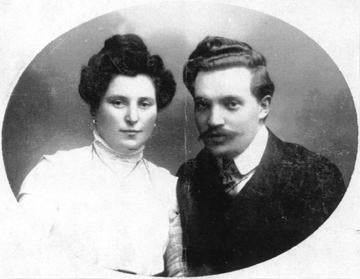
In the beginning of June 1941 I had come to Kovno from Shaulai for an operation. The war broke out while I was still in the Jewish Hospital of Kovno. I was able to walk again, so I went to my sister Bela, who then lived in Kovno on Vilnaer Street. We realized that we could not escape, and therefore we stayed in Kovno. We moved into the Ghetto in August 1941. I remained in the Ghetto from August 1941 until July 1944, from the beginning to the end, that is, from the time when it was established until the destruction of the Kovno Ghetto. In the Ghetto I was recruited to the illegal anti-fascist partisan organization, led by the writer Chaim Yelin (who was ultimately captured by the Gestapo and died in their hands, possibly by suicide - according to Avraham Tory in his book Surviving the Holocaust - The Kovno Ghetto Diary page 500). As a member of the organization I obeyed every command. Since I was fair-haired, and looked like a non-Jew, I became a courier, a person who could easily pass in and out of the Ghetto without wearing the yellow star. Among those things that I did, I would go to the home of a non-Jewish woman in our organization, Mania Lishinzkene, a Lithuanian. She also was a courier and lived in Slabotke Viliampole, at 14 Ragutsha Street. She had a flat, where the responsible leaders of government and Ghetto organizations would meet, along with partisans and secret weapon dealers. At the end of June 1944, I was living at 8 Brolu Street in the Ghetto. This is the place where the fence was located (the border of the Ghetto) - on one side was Brolu street, and on the other side, outside the Ghetto, was a cemetery. Here it was easy to pass, but in order to pass, someone had to watch. Pesach Shatel and Joshke Mikles would watch when I would pass. Our friends Dima Gelpern (he still lives in Vilna), Lucy Zimmerman, Rochel Padeson lived together with me. It was right next to the Catholic cemetery. We were separated from the cemetery by a barbed wire fence, through which I would pass to go into the city without wearing the yellow star.
Before the liquidation of the Ghetto, we, the surviving members of the organization, stayed in the Ghetto in a hiding place. In this hiding place, Dima Gelpern, (who now lives in Vilna), Pesach Shate (died) and Nina Finkelstein (died), Dr. Brauns with his family, myself and others stayed together. On July 13, 1944 the Germans discovered our hiding place. They ordered all of us to leave and to stand up in lines of four people in a row, and told us that we would be led to work. While standing in the row, I decided I would escape given the first opportunity. Each of us had one bottle of water, and a loaf of bread, but I gave this away. I didn't take it so that I could run more quickly. While we were being led through the Ghetto, I recognized Mania Lishinzke standing on the other side of the street. She also recognized me, and shouted to me: "Genia" (and she motioned to me with her hand). I had from the beginning decided that I had to risk an escape. While we were led through Panjeru Street and near a big garden, I quickly left the row and started to run. While running, I heard a shot, and at that moment I threw myself into a field of tall potato plants. I quickly threw away my coat with the yellow star, got up and continued to run. While I was running, a young Lithuanian ran after me and told me to stop. I thought that this was my end. He came running up to me and asked me whether I knew a woman named Sara and where she was. I answered him that I did not know her and continued running. In this moment, I saw that Nina Finkestein was running with me, and both of us turned in the direction to Mania's house. Mania was waited for us at her door, so that she could take us immediately to her hiding place, which was under the steps leading to her house. All this happened on July 13, 1944. In the same night, Lucy Zimmerman came to us; she had run from Alexot. All of us were very happy to have escaped and to be together. We slept over night and the next morning, one of us saw two German soldiers through the window. We crept into the hiding place, but Lucy went out through the door. (She looked Jewish). She crept through the fence into Mania's garden and hurt her foot. Later, she went to the Ghetto and saw that the Ghetto was burning. All this we heard only later. While there, the Russian collaborators recognized her. She was a very good looking, dark-haired, Jewish looking woman. Her foot was bleeding. They approached her and asked her for her documents, but unfortunately, she did not have any documents. She pointed to the house and told them that she lived there. When they came back to the house, Lucy asked Mania for the document, and said that Mania was her sister. "Mania, you are my sister" she cried, "give me the passport, help me." We were lying in the hiding place, and heard all that was being said above our heads. Mania called in one of the soldiers and offered him money, but he said that the older one was the commander and if he would take money, he also would agree. Unfortunately, when the second one entered the house, and heard that she offered him money, he shouted at her and said " you are a Jew too and you have to come with us." Mania also looked Jewish. Mania with her little son, Lucy and the soldiers left to the Ghetto. They were already standing against the wall waiting to be shot, when a Lithuanian neighbor of Mania's came after them and swore that she was not Jewish. Then, a German approached her and asked her for her passport. Mania answered that it was in her house in the cupboard. The German soldiers, Mania with the child and Lucy came back from the Ghetto to the house. The door of the cupboard was pulled open and Mania showed the Germans her passport. The Germans said to her: "Sorry, dear lady." Afterwards they left with Lucy to go back to the Ghetto. Lucy was shot afterwards. Lucy had called: "Mania, you are my sister. Give me the passport." Until today, I can hear these words in my ears, but nobody could help her. This was the end of the second day after the escape.
We heard through the floor what Mania said to herself: " Poor Lucy, such a good woman, what a tragedy." Afterwards, Mania opened one of the planks and told me to come out. She told me: "Genia, I have to talk to you. You see that my house is being watched, so you will have to leave." We stayed overnight and the next day she contacted friends in the city and one of them Mikolas Mustekin (this was his pseudonym) gave us an address in Kovno at 4 Lukshe Street, and the name of someone named Mattas. We did not know who Mattas was. The next day Mania dressed us up and brought us to Mattas using a different route. We arrived at a flat on the second floor. The owners of the flat had left for the country and gave it to their comrade Mattas, who carried a walking stick and wore blue glasses pretending to be blind. He greeted us and was very friendly to us. He cooked small flour dumplings for us. Mania and her son Vitas brought us food and cigarettes. Mania was like a mother to us, and her children were like our brothers and sisters. The oldest son Tadas and Vitas, the middle one treated us very well, without getting anything in return. All this was seemed quite natural for them, when in fact, they continually risked their lives for us.
A few days before the liberation of Kovno, which occurred on July 27, 1944, our dear friend Mattas did not come home to spend the night. We were very afraid and concerned and could not understand what had happened. The lock of the outer door was not in order, and so it was easy to enter the flat. Our window on the second floor was exactly opposite the gate of the courtyard. Nina and I decided that one of us would sleep and the other one would watch to see who would enter through the gate. When I was watching, I saw that Germans soldiers entered the courtyard. This was early in the morning. They knocked on the windows and called: "Get up, come out to work." I woke up Nina and we decided to creep into the attic, which could be locked with a key. We agreed that if they found us, we would say that we had escaped from Vilna, from the Russians. Then we waited in silence. Suddenly we heard a woman at the door say: "You, old man, don't have to be afraid. They are only looking for people who can work." To the Germans she said: "There is only an old man living here, and he is not at home." It was our luck that they left. From the anxiety I had very strong stomach cramps. I crept out of the attic and on my belly crept to the toilet. When I left the toilet I noted the sofa in the front room. I lifted the seat and saw that it contained a chest that was empty except for some soft potatoes. I told this to Nina and we decided that we had to hide in the chest in the sofa, and wait until dark until the siege ended. That is what we did. While we lay in the sofa, I put a soft potato between the lid of the chest and the seat, so that we would have air to breathe. We could not stop thinking about what might have happened to Mattas. Maybe he betrayed us? Later we heard a woman come to the flat looking for the old man. She spoke as if to herself: "Don't be afraid, the Germans have already left." I saw her feet through the opening. I cannot recall how long we were in the chest. Suddenly we heard the old man Mattas entering the flat with his stick. He went to the parrot, which was in a cage and noticed that the plaid cloth, which was on the sofa, was in a different position than before. He opened the sofa and saw us. What happiness that he had found us! With tears in his eyes he repeatedly said: "My dear girls, my good children." He told us that that night when he was coming home, he was called to work on the streets. He played a bit, pointing at his blue glasses and saying that he was totally blind and therefore could only walk with the stick and could not work. Thus, they let him go home. He was sure that they had already found us and taken us away. How happy he was to find us! The same day Mania's son Vitas came to us and brought us food. We asked him to have Mania take us back to her house and that is what happened. She again came to us, dressed us up and brought us to the river. Tadas brought us to the other side of the river, one at a time with a small boat. We could not pass the Slabotka Bridge, because one had to show documents, which we did not have. When we came to Mania, we met a Jewish man who was also hiding there. Mania had found him in a public toilet and taken him in to her house. She called him the "shitty one", because he was full of dirt when she found him. On July 31 at night Mania went out to the street and noted that it was totally quiet. Suddenly she noticed the Red Army. She started to call and we all left the house. We all run to the Soviet soldiers on the street and out of joy kissed and hugged them, not knowing what else to do. It is impossible to describe our joy. This we will always remember and tell that only because of them were we save.
I will never forget our dear "mother" Mania Lishinzke and her children who lived 14 Ragucha1 Street. Mania died on August 20, 1956, from an abscess. We attended her funeral, and accompanied her to her final resting-place.
(Regina asked Gita about the time before the war)
"I was in the Shomer HaZair (Young Watchman - a Zionist organization). I studied at the Gymnasium (secular high school) in Yurburg and I showed you the picture of my class. My best friend in Yurburg was Nuna Chaimovitch. In the Gymnasium we would dance together. I was the girl and she was the "Kozak". In Yurburg we spent a lot of time with the family. Meyerelie Naividel, my mother's first cousin, (and grandfather of your husband Benny Naividel) would come every Friday to our house. Also our friends from school would come - our house was always open and friendly. On Friday my mother would always prepare grey peas. It was a tradition. We would talk then and sing together."
"I was very active in several youth organizations. Then, in 1938 I went to Kovno. Before that I had worked in the Jewish Bank in Yurburg, with Sundelovitch. Afterwards he left for Kovno - there was a factory "Guma", and he was the main bookkeeper there. When he left, he asked me also to come. I worked there from 1938 and in 1940 I was sent to Shavel (Shaulai) in a department of Guma. I worked in this department. Later, the Soviets came and I was transferred from the department in Guma to the "Prokturatur", where I worked in the secretarial department. I worked there until I left for Kovno in June 1941 for my operation. I was there when the war started. My sister Bela lived in Kovno. I went to live with her. We left her flat and since it was late we went to a cellar on the street and were sitting there. Then, we asked ourselves what we were waiting for and so we left the cellar and went back to the flat, because I was still very weak. Shortly afterwards, the cellar was burned down. While sitting in her flat we were afraid, since I was an activist. My mother sent us a letter through somebody - my father was not alive any more by then. On July third the best Jewish men of Yurburg were gathered and murdered. My mother was still alive. She wrote that the "little one" should watch out, since she knew about my activities. Afterwards, my mother was also murdered. When the Ghetto was opened, Bela and I went there and found a place to stay at 5 Ershvuko Street, and we lived there. My sister and I worked. I worked on the airport and in the brigade. Bela married. Together with her husband Yosef Kaplan, she was taken to Alexot and from there to the concentration camp in Stutthof (they now live in Israel). I stayed in the Ghetto, in the organization. A lot of people left to join the partisans, but I was told that they needed me in the Ghetto, because I was fair-haired and could easily leave the Ghetto and act as a courier. "
"After the war I remained in Kovno and worked in the orphanage as a bookkeeper. In the beginning I was again called to work in the Prokuratur. There I worked as a secretary. They paid very little. In the Jewish orphanage I would get food as well, therefore I returned to work there. I did not have anything. Afterwards I left to live in Vilna. There I worked in a department of the Ministry of Health. Josef and I met at the end of 1946 and we were married so thereafter. In 1947 my son Aaron (Alik) was born. After my marriage and the birth of my son, I worked in various places as a bookkeeper. I also worked in a furniture department. I worked until I was 57 years old. On June 28, 1990 we came to live in Israel. "
Gita had written on Oct. 15, 1994, "During the war I was in the Kovno Ghetto together with my sister Bella. We went through an awful lot. Bella was also in the Stuthoff Concentration camp. I escaped from the Kovno Ghetto on July 13, 1944, the day they liquidated the Ghetto in Kovno. I was lucky enough, with the help of a Lithuanian woman, to hid out because I don't really look Jewish. After my sister Bella was freed from the camp, we both resided in Vilna. .... Bella and I with our families are now residing in Israel for the last four years."
Gita Abramson Bereznizky lived with her husband Yosef in Kiron. Their son Aaron (Alik), a psychologist, lives with his family in Kfar Sava, Israel. They immigrated to Israel from Vilna in 1990, along with Gita's sister, Bella Abramson Kaplan.
Gita Abramson Bereznitzky died in August 2000, in Tel Aviv, Israel.
Courtesy of her Nephew Ashley Levinsohn
Ashley Levinsohn reports that his Aunt Hadassa Heussinger (nee Levinsohn) died in December 1999 in Rehovot, Israel. Among her possessions the family found many papers and certificates including her high school graduation certificate and her student identification and also many photographs. These documents reflect the major events in her life.
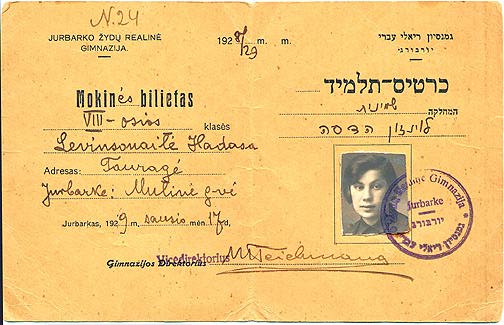
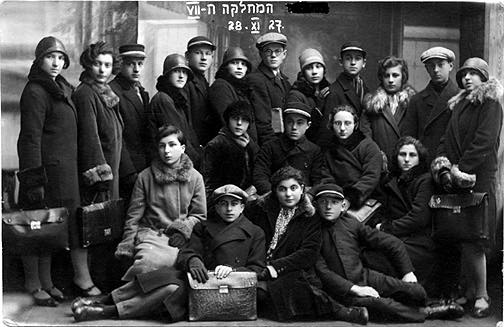
7th Class (Mahlaka) 28th November 1927. Written on the back "Hadassa Levinsohn 7th Class in memory of the day we did not attend the Gymnasium because of the famous 'Soldaritet' dated 6 Jan 28.
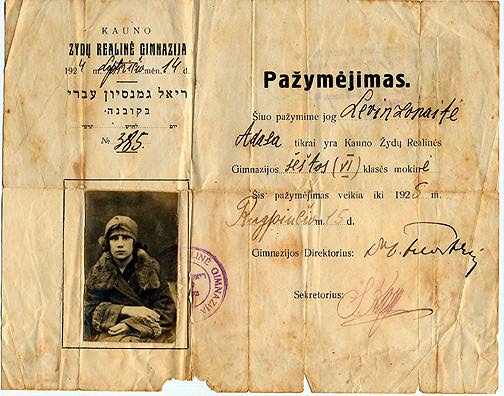
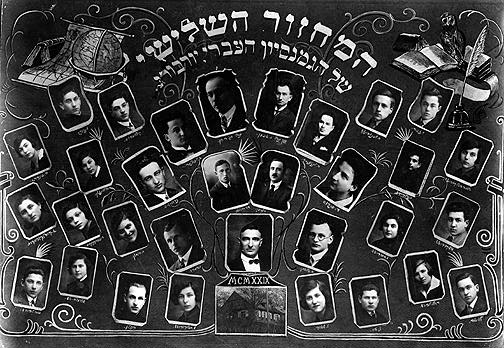
Hadassa Heussinger (nee Levinsohn, aunt of Ashley Levinsohn) is pictured second from the top second from the left.
Bottom row, left to right: Meir Leviosh, Golomowitz, Kaplan, S. Hasklelovitz, Picture of School, L. Shtock, N. Ess, Rachel Laviosh, Leviteh.
Second row from bottom, left to right: G. Kovlakovskit, R. Petrokanskit, H. Baron, J Dambo, Tzikovski, A Altman, T. Haimowitz, Moskowitz.
Third row, left to right: B. Feinberg, H. Levinsohn, Navossitis, Dr. Rotshtein, Y. Lerman, D. Pinkus, Mendlewitz, Bluma Heskelovitz.
Top row, left to right: Weinberg, Colombus, A. Liptziger, Headmaster Engineer D. Chen, Deputy Headmaster Y. Tuchman, H. Lintofski, H. Shachnovitz, Y. Zachar
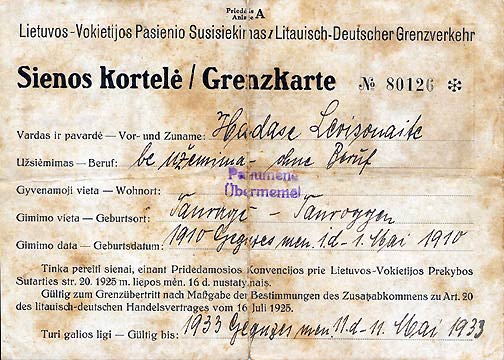
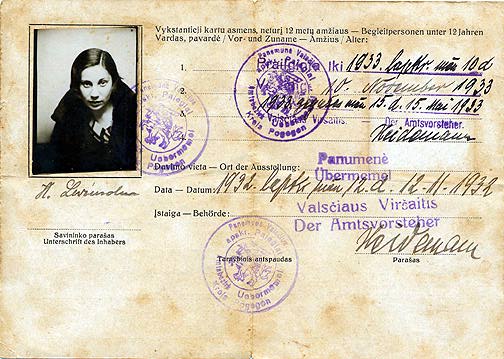
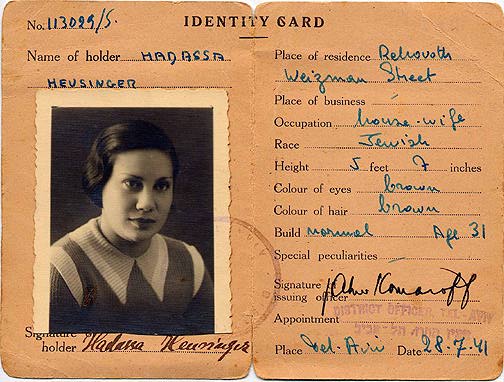
I am a grandchild of Yurburg. I was born in Madison, Wisconsin in the United States in 1944. My maternal grandparents immigrated from Yurburg to the United States on August 4, 1903; they were Harry Ellis (Hillel Eliashevitz) and Celia (Bat-Sheva) Krelitz and they were first cousins, both grandchildren of Hillel Naividel of Yurburg. Consequently, my "recollections" of Yurburg are from an entirely different perspective than those presented in the original Hebrew-Yiddish Yurburg Yizkor Book.
I was fortunate to have sat with my grandfather, Harry Ellis in 1968 and had a discussion about the "family in the old country." Based upon notes and a family tree that my sister, Niki Alpert (McCurry), and I drew up that day, I created a rather large computerized family tree in the early 1990s. It was large because my grandparents had 15 siblings between them and, in addition, my grandfather knew his aunts and uncles and their families well. After reassembling the family on the computer, I then continued to try to find out more about their town, Yurburg. It was during my search that I found the Yurburg Yizkor Book.
When I was growing up, I never heard of any family left in Yurburg, or of anybody in the family who fell victim during the Shoah. I always thought that my family was spared. Only on that day in 1968, when my grandfather mentioned that he and my grandmother each coincidentally had brothers by the name of Meyer, who had remained in Yurburg, and they each had "large families who were lost," only on that day did I learn the truth. Later, as I dug deeper to discover more about our "lost" family, I found out more. Ultimately, I found our Mexican relatives who still had letters written before the war, begging for papers to help them escape their horrible fate (presented in another article later in this book).
It should be noted that the name Krelitz is likely derived from the shtetl of Korelichi (Karelitz) in Beylorussia, 101 km SW of Minsk (n.b. Dov Levin).
I found out that Hillel Naividel had five children from his first wife: Shemuel Naividel; Shalom Naividel; Sarah Beyle who married her step-brother Yitskhak Rosin; Mary (Miriam) who married Shelomoh Elyashevitz (Eliashevitz); Leah who married Cecil Krelitz and Hana Rochel, who married Yankel Bass (I present these facts as best I have been able to figure out). There is a family story, likely true, that Hillel immigrated to New York, probably in the 1860s, earned money to bring his wife to America, but she found the place unacceptable, and they returned to Yurburg. Forty years later, many of their Krelitz and Elyashevitz (Eliashevitz), grandchildren made the same trip and stayed. They settled first in Altoona, Pennsylvania, then in Northern Minnesota, some as merchants on the Messabi Iron Range, and finally in Minneapolis, Milwaukee and Detroit. Some of Hillel's grandchildren, who by a twist of fate did not leave in time, were murdered together with their families in Yurburg and other towns.
Shelomoh and Leah Elyashevitz (Eliashevitz) had 7 children, 6 of whom immigrated to the United States. Cecil and Leah Krelitz had 10 children, 7 of whom immigrated to the United States.
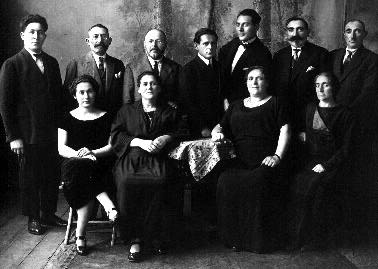
Top Row from left: Lieb Krelitz, his father Meir Krelitz, Lieb Zarnitsky, his son, Max Zarnitsky, Aaron Abramson, his father Yosef Abramson, his brother-in-law.
Bottom Row from left: Rivka Krelitz (daughter of Meir), Elka Krelitz Zarnitsky, Masha Krelitz Abramson, sister of Joseph Abramson. Meyer, Elka and Masha Krelitz were siblings to Ben, Bill, Celia, Chereva and Rae Krelitz who immigrated to America.
Only Max Zarnitsky and Aaron Abramson survived the Shoah.
Hillel's second wife was Elka Rosin, and they had one daughter, Pesha, who married Avraham Meyer Zapolsky, also from Yurburg or Sudarg. They settled in Detroit. One of Elka's sons from her first marriage Yitshak Rosin married Sarah Beyle Naividel, his stepsister.
On a trip to Israel in 1994, I was fortunate to talk to Shimon Shimonov in Tel Aviv (one of the people contributed to the creation of the Yurburg Yizkor Book), and mentioned the Naividel name. He led me to Benny Naividel, son of Mordehai Naividel (later we determined that he was a descendant of Shalom Naividel, one of Hillel's sons). Initially, Benny and I could not make the family connection. I had mentioned that my Great-Great Grandfather was Hillel Naividel, and Benny responded that his uncle was also named Hillel Naividel. We realized that there must be a connection. Then I recalled that Jack Cossid had mentioned that there were two Naividel brothers who were attornies, Mota and Lushka. Benny said that his father Mordechai was called Mota, and his uncle Hillel's was called Lushka. Finally, we made the connection realizing that Benny's grandfather was Meyer, and he was listed on our family tree. Benny's wife, Regina researched the Yurburg connections in Israel and found many descendants of Shemuel Naividel in Israel, including Gita Abramson Bereznitsky and her sister Bela Abramson Kaplan, who had immigrated to Israel from Lithuania in 1990. Benny was born in Lithuania after the war; his father, Mordehai was a "Prisoner of Zion" of the Soviets. The family immigrated to Israel in the late 1970s. The family connections had been severed when my grandparents left Yurburg in 1903 shortly before Mordehai was born, and we had no group memory of this branch of the family.
We knew that Meyer Krelitz, my grandmother's brother, who remained in Yurburg, had two daughters that survived because they immigrated to Mexico in the 1920s and 1930s. Our contact with them had been lost. I had placed a notice on the Internet along with a 1920s family photo from Yurburg, shown above, with a note that I was searching for that Mexican Krelitz family. In 1995, Max Sherman-Krelitz, son of one of those daughters, spotted my note on the web. His mother had been so distraught by loosing everyone from her family, except her one sister, that she could not bring herself to discuss any family with her children. Max and his sister Esther knew nothing of the large Krelitz family in the US, until he spotted the1920 photo with an identical image of his grandfather Meyer, as the one which hung in his home in Mexico City. We have now established contact and visited both in Milwaukee and in Mexico City. Max's story appears later in this book.
Based upon the expanded family tree, family reunions were organized and held in Minneapolis in 1998 with 85 people attending, in Detroit in 2000 with 135 people, and in Milwaukee in 2002 with 100 people. There was also a reunion held in Israel in 1998 with about 20 people attending. These reunions included not only descendents of Aaron Naividel, Moshe Krelitz but also Elka Rosin and Naftali Fainberg (Feinberg). All these Yurburg families had multiple marriages between them. It was these families that donated generously to the translation effort of this Yizkor book and we express our sincere gratitude to all of them.
While in Vilna, Zalman Kaplan, a Yurbriker, found us, having been informed by Duba Most Rosenberg. After spending hours with us, telling us stories of our ancestors and cousins, whom he personally knew, he left us saying that we were the first group of Yurburgers that he ever met since the war and that "when he leaves this world, and joins all his family and friends in the next world, he'll be able to tell them that he met a group of Yurburg descendants looking for their roots and their town." We were all in tears.
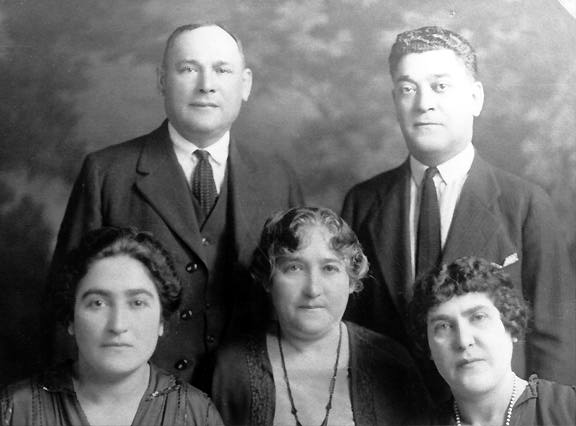
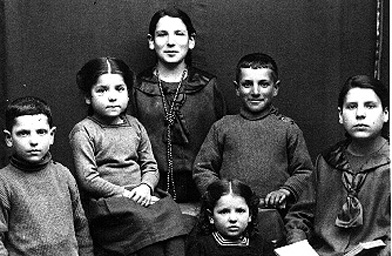
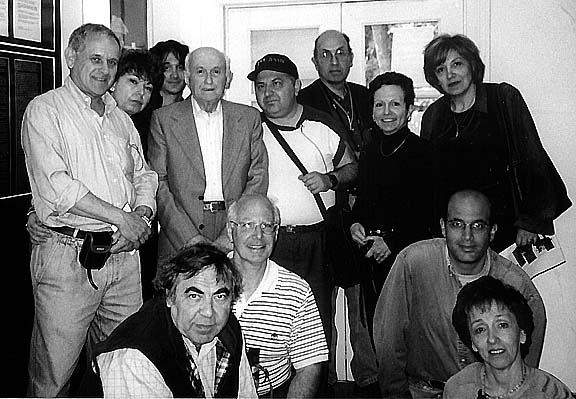
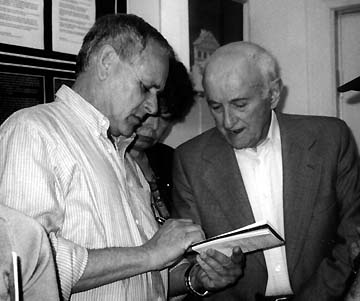
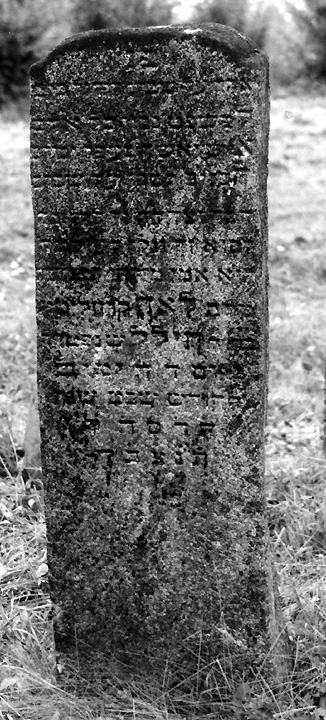
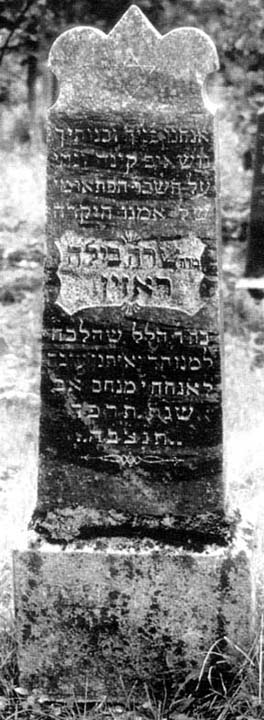
Through the connections formed in these families and at the reunions, and with the publishing of this book in English, the spirit and memory of Yurburg will be carried forth into the future.
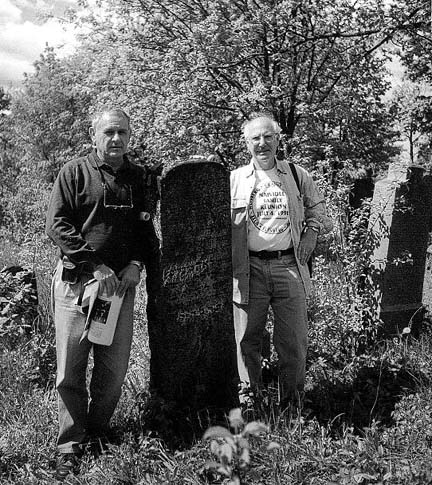
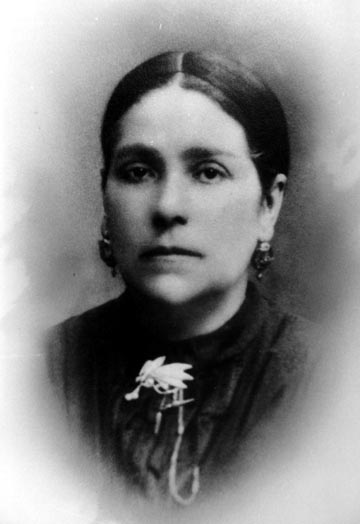
The early decades of the twentieth century witnessed the migration of portions of the Eliashevitz and Krelitz families of Yurburg, Lithuania and the eventual settling of that family in the midwestern United States cities of Detroit, Milwaukee, Minneapolis, and Chicago. The reasons that the migrants came to America, and the unfortunate consequences for those who didn't, are amply documented elsewhere in this book.
It was a youthful and vigorous family that made the voyage. A less energetic family likely could not have made the transition to a new life in a strange new land. And strange it was. The odyssey took nearly thirty years in a land of red rocks, towering virgin forests, deep ice and snow, and rib-cracking cold. The inhabitants of that land spoke many strange tongues, they had curiously straight yellow-white hair, they ate forbidden foods, and they had many curious customs. The land was called "Mesabi," an Ojibwa Indian word for "giant," and it proved to be a giant transition for the descendants of Hillel Naividel from Yurburg, Lithuania.
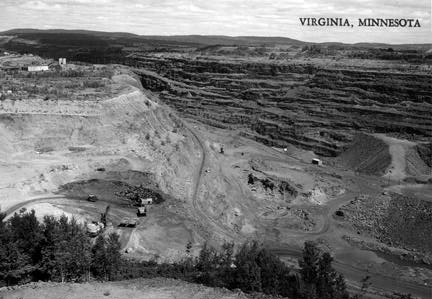
The Mesabi Iron Range in northern Minnesota was opened in 1892 to harvest a vast expanse of rich hematite ore. It is the largest of three iron ranges in Minnesota and, in its heyday, accounted for one-quarter of the world's production of iron ore.
The range is perhaps 70 miles long and 40 miles wide running east to west. The mines were enormous open pits of red hematite ore. The ore was piled into rail cars and shipped 60 miles to Duluth. The ore was placed on ships eastward bound to provide the iron ore for the steel mills of Gary, Indiana and Pittsburgh, Pennsylvania.
A great spiral of railroad tracks descending into the abyss ringed the walls of each pit. During the warmer months, when the mines could be worked, dynamite charges were set to blast the ore free. Huge steamshovels scooped up the ore and piled it into rail cars to be shipped downhill sixty miles to the port in Duluth, Minnesota. There the hoppers were discharged from specially constructed ore piers onto ships bound to the east through the Great Lakes for the blast furnaces of Gary, Indiana and Pittsburgh, Pennsylvania. As mines were worked out, new mines were opened at other points along the range, and new mining camps sprang up. Some of these camps were destined to become incorporated towns, and some have persisted to this very day. The mine at Hibbing, Minnesota was so successful that, as the pit expanded, it ran headlong into the town itself. The entire town was moved to make way for the mine.
The mines were operated by huge concerns like the United States Steel Corporation. They needed a robust work force for an arduous and dangerous job in a remote wilderness previously populated only by Indians and wild beasts. They recruited young men mainly from Scandinavia and the Balkans. The population of the camps was said to be 90% male. They worked long shifts separated from their families for months or years. Naturally, paydays could be wild and boisterous occasions that were often good for business.
Among the early settlers on the range were a small number of Jewish merchants who came to fill the miners' needs for food, clothing, and household goods. Among these men and women were those with names like Ellis (Eliashevitz in Yurburg), Ladin, Loceff, Lippman (Naividel in Yurburg), Bernstein, and Bankman, all Litvaks, and many from Yurburg, Lithuania. With the nearest large city sixty impassable miles away, the miners depended upon the local merchants for their supplies. Without these businesses, the miners would have been at the mercy of the steel companies for both livelihood and provisions.
Today the land that comprises the range is a band of low hills of elevation 300-500 feet that is pitted by huge crater-like mines and studded with mountains and mesas of rubble tailings. At least one of the worked-out mines (Kinney) has been reclaimed as a recreational lake, though on a visit in July 1998, no actual people were observed recreating there. Originally covered with white pine virgin forest, the timber has been substantially cleared for mines, roads, towns, construction, and not least, for firewood to heat homes and to power trains and steam shovels.
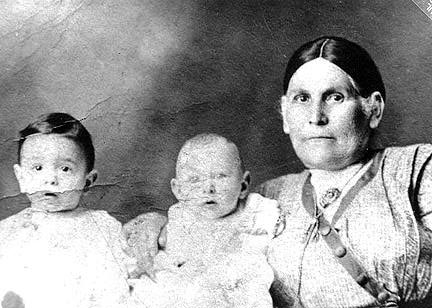
Six sons and daughters of Mary Naividel Eliashevitz (all from Yurburg) and their nuclear families formed the core of the Naividel descendents who came to live on the range. Ultimately, only one son, Meyer, and his family remained to live out their days in Europe. Mary was preceded by several of her children. Others who lived on the range were cousins, the Lippmans (Naividel in Yurburg), the Bankmans, and Ben Craine (Yurburg). A picture of Mary Naividel Eliashevitz is seen at above with two of her grandchildren (photo probably taken in 1920).
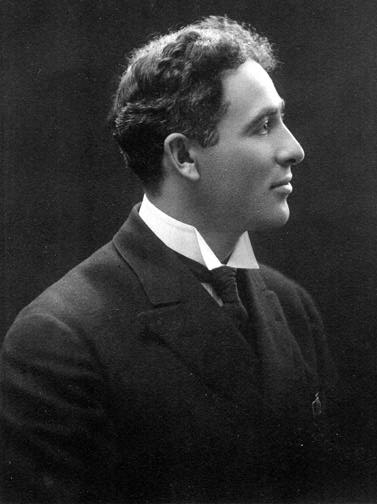
The vanguard of the Naividel descendents in America was George Krelitz who opened a business in Altoona, Pennsylvania. Altoona was an important stopover on the way to the iron country.
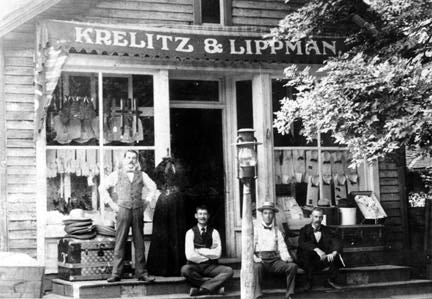
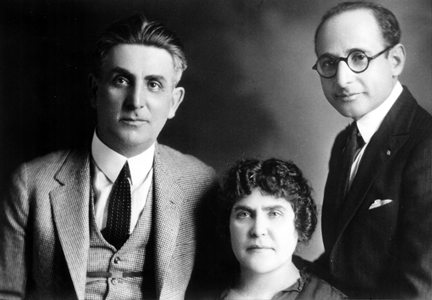
The first to arrive on the range was Sam Ellis who immigrated in 1897, stopping in Williamsburg, PA in the "general store business" from 1897-99 and in Altoona where he worked at the Guarantee Clothing Company from 1899-1901. He then opened the Ellis Haberdashery Company in Duluth, Minnesota.
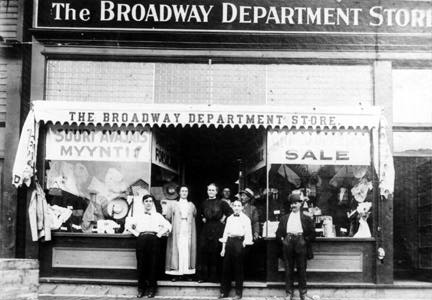
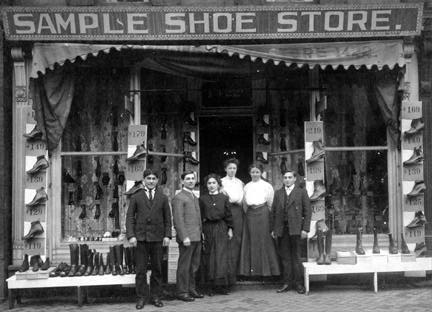
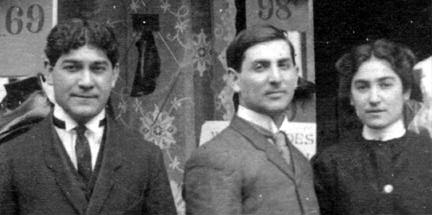
Sam Ellis became the first of the Naividel family living on the range to become a naturalized United States Citizen in 1902 (1920 U.S. Census) and the first Naividel to live on the range when he moved to Eveleth, Minnesota in 1903 and opened a general store. Harry Ellis (Hillel Eliashevitz in Yurburg), Celia Krelitz, and Rae Krelitz (all grandchildren of Hillel Naividel of Yurburg) arrived in New York on August 4, 1903 on the liner Kronprinz Wilhelm, having departed from Bremen, Germany. Family lore tells of Hillel Naividel immigrating to New York (likely in the 1860s) and returning when his wife, upon arrival decided that the American life was not religious enough.
Although Harry did not reside in Minnesota until 1905 (Naturalization petition, 12/3/1914), Rae apparently proceeded directly to Eveleth where she and Sam were married.
Sam was listed as residing in Gilbert, Minnesota on a May 23,1911 when he witnessed a Petition for Naturalization filed by his brother Harry Ellis. He was subsequently recorded as living in Eveleth, Minnesota on November 18, 1911 when he signed as a character witness on Benjamin Craine's Petition for Naturalization.
A birth certificate for a female "Baby Ellis" born alive on July 27, 1916 shows Sam and Rae living in Eveleth, in a house they owned. Their son Myron Ellis was born in Minnesota in 1918 (1920 Census). At the time of the 1920 Census, Sam and Rae were living with Lillian Golda, Rosalin, and Shalby in Eveleth. The family thereafter remained continuously in Eveleth until moving to Milwaukee in 1928.
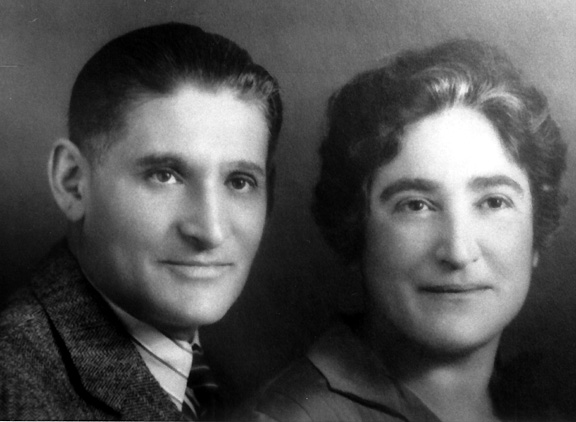
On February 5,1905, Harry Ellis became a resident of Eveleth, Minnesota (Petition for Naturalization, 5/23/1911). Harry and Celia were married in 1913, and the following year. One year later, their first son, George Ellis was born.
United States Citizenship was granted to Harry and Celia in 1916. Their first daughter Leah Golda (Lee) was born in 1917 (named after Leah Naividel Krelitz, her grandmother). [Leah Golda Ellis was the mother of Joel Alpert, Editior of this volume.] Sholem (Sidney) Ellis was born on the range in 1920 followed by Helen R. (Babe) Ellis in 1924. The family departed the range for Milwaukee in 1927. It is interesting to note that on most of the birth certificates, Yiddish and Hebrew names were used.
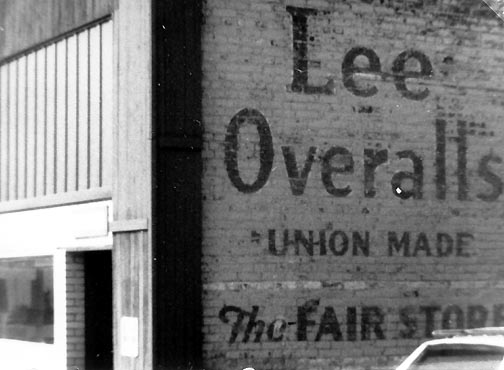
The picture is a recent image, taken about 1995. The Fair Store operated by Sam and Harry Ellis in Eveleth (photo by Howard Bern).
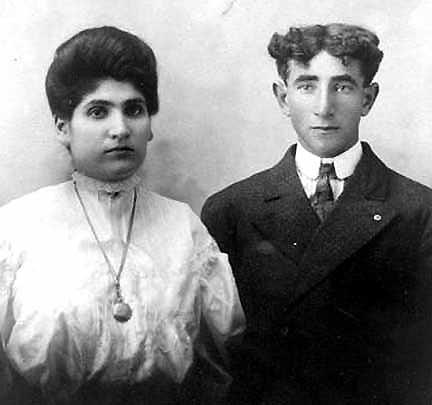
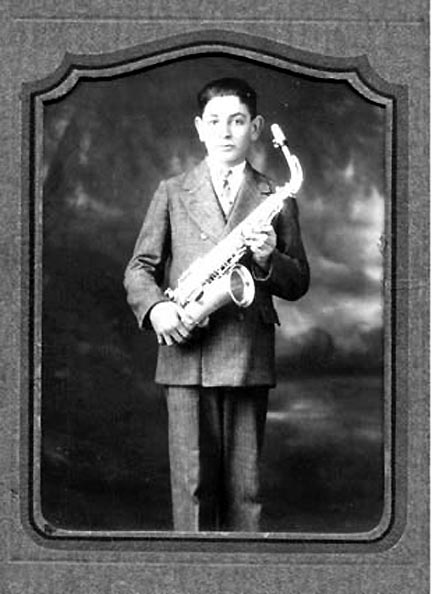
Sarah Reva Eliaschevitz was known to have been on the range since around July 1, 1906, her wedding She married Morris Ladin of Chisholm, Minnesota, a 1901 immigrant from Sveksna, Lithuania which was some 30 miles from Sarah's hometown of Yurburg. Sarah probably emigrated around 1902 (Bernard Laden, personal communication, 2000). Morris was a door-to-door peddler of dress goods and supplies. Ready-made clothes were not yet available on the range. (Sally Ladin Bell. The Ladin Family: Pioneers of Chisholm, Minnesota, Self-published, 1983.)
"Sarah Elias" of "Mt. Iron" (Mountain Iron, Minnesota on the map) was married in "Mt. Iron" according to her Marriage Certificate. A year later, their first child Sadie was born in Chisholm. Sadie was the first of the native born "Mesabi rangers" in the family, having been born on the iron range. A forest fire destroyed the town of Chisholm on September 8, 1908. More than eighty percent of the buildings were consumed.
1908 is likely the year that Sarah became a United States citizen since a woman's citizenship was the same as her husband, and Morris is thought to have become a citizen in that year. The family soon thereafter moved to Kinney, Minnesota where a new mine was opening. Morris purchased the second lot sold in the town, the corner of Main and Maple Streets where he opened a dry goods store. The family lived behind the store on Maple Street. The family was known to reside in Kinney as early as 1910 when Morris was elected a trustee of the town.
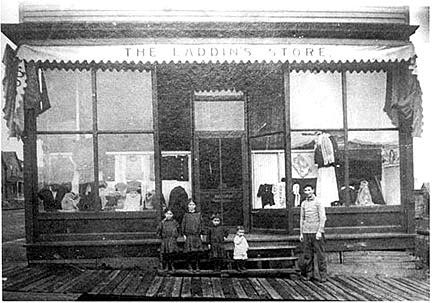
Sarah's second child, Jeannette, was born in Minneapolis in 1909, but her two younger children, Lillian (1911) and Bernard (1913) were both born in Kinney, a distinction that few can claim. The children with Morris are lined up in the photo above, left to right: Jeannette, Sadie, Lillian, and Bernard. Kinney was not so much a town as it was a mining camp. Notice the incline on Main Street as it slopes down to the mine. Bernard sledded this street in winter.
The family fortunes rose and fell with the economic activity of the mine, and the family moved to the neighboring town of Buhl in 1924. 1928 saw a move to Grand Rapids, Minnesota at the headwaters of the Mississippi River, then Virginia, Minnesota in 1930, and finally Milwaukee, Wisconsin in 1931.
During 1931-32, Bernard Laden lived with the Ben Bankman family (cousins from Yurburg) in Virginia as he completed his studies at Virginia Junior College, before he too, moved to Milwaukee to continue his education and be with the rest of the family.
Jenny Ellis arrived in America with her sister Fanny and her mother Miriam (Mary) in 1907.) Two of her children were native Mesabi rangers.
Sanford was born in 1912 in Chisholm and Reva in 1914. The family lived above their store across the street from
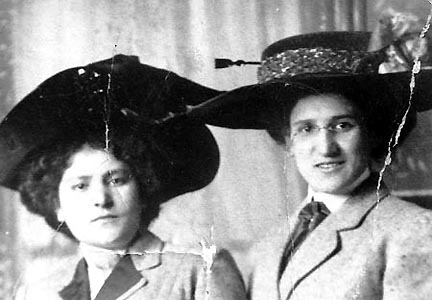
The Fair Store (pictured above), Sam and Harry Ellis's clothing store. They moved to Minneapolis in 1921.
Fanny arrived in America in 1907. She and Max Bernstein (also from Yurburg) were married in 1910 and their four sons were all born on the range: Sanford in 1912, Howard in 1915, Leslie in 1920, and James in 1922. They owned and operated a butcher shop, in Eveleth. Fanny became a naturalized United States Citizen in 1925, the same year that she and her sons moved to Detroit.
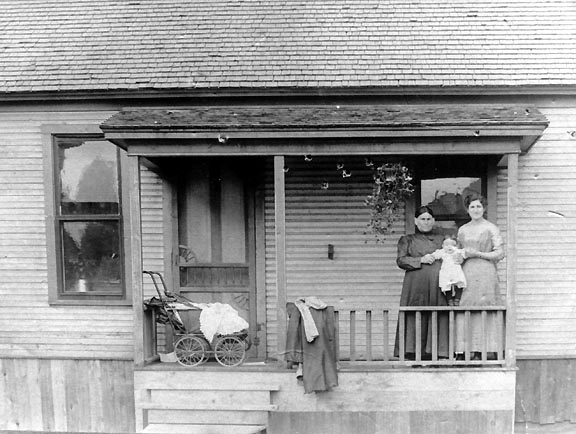
Reuven was the last of Mary Naividel Eliaschevitz' children to immigrate to the United States and to the iron range. Reuven arrived on the Kronprinz Wilhelm from Bremen on May 28, 1913 like his brother and sisters-in-law ten years earlier.
Various documents uncovered during the 1998 visit to the Iron Range Research Center in Chisholm show an impressive range of spellings for both Rueven's first and last names. His signatures reflect the same bewildering array of spellings. Eliashiewitz, Eliashewitz, Elisajewicz all appear. Rubin and Reuvin are predominating, but his name even appears as Robert on a birth certificate for Meyer.
Reuven married Alta Feinberg (also from Yurburg) in Europe and they had four children all born in Yurburg: Solomon born 1907, Abraham (Max) 1909, Milton (Robert) 1911, and Jacob (Joe) in 1913. The family remained in Yurburg when Reuven came to the United States in 1913. World War I intervened, and it was not until after 1920 that Reuven was able to bring them to America. A naturalization petition dated July 24, 1920 showed Chia Faiga (Alta) and four sons all still in Yurburg.
At last, Reuven's family arrived sometime in 1920 or early 1921. Reuven and Alta's fifth son, Meyer, was born in Eveleth on November 2, 1921. Reuven's occupation was listed as "dry goods merchant." Reuven's name was erroneously listed as "Robert" Ellis on the birth certificate. Meyer was good-naturedly welcomed by the family and hence was known as "Mr. America" as the only one of Reuven and Alta's children born in the new land and after a protracted struggle to emigrate. Reuven and Alta are pictured below with children and grandchildren.
Brothers Sam and Henry Lippman (the name was Naividel in Yurburg and somehow was changed to Lippman upon entering the United States)) and their sister Ethel lived on the range. Sam and Henry both appear as witnesses on naturalization papers (Sam on Harry Ellis' petition, 5/23/1911 and again 12/3/1914; Henry on Reuvin Ellis' petition, 7/24/1920). Each is listed as "merchant" living in Virginia, Minnesota.
Ethel Lippman became Ben Bankman's bride and the mother of Julius (1907), Pearl (1913), Jack (1914), and Sam (1916). Ben Bankman also signed as a witness for Reuven Ellis' naturalization petition of July 20, 1920 and listed himself as a "merchant" residing in Virginia, Minnesota. Bernard Laden, son of Sarah Eliashevitz, remembers the Bankman children all as brilliant students. He lived with the Bankman family in Virginia during 1931-32, his final year at Virginia Junior College (now Mesabi Community College)(personal communication, 2000). Others who apparently lived on the range included Ben Lippman who reportedly ran a clothing store in Hibbing (account of Rosalin Ellis Krelitz).
Documents show that Ben Craine came to the United States on the ship Grosser Carfirst on March 1, 1905. He sailed from Bremen, Germany on February 17, 1905 and disembarked at the Port of New York. He took up residence in Minnesota on February 5, 1907. On May 23, 1911, Ben petitioned for citizenship when living in Virginia, MN. He listed his occupation as "clerk." On March 16, 1912, Benjamin Craine was "admitted to become a citizen of the United States of America," having renounced allegiance to "foreign prince, potentate, state, or soveignty, and particularly to Nicholas II the Emperor of all the Russias." A notice from the U.S. Department of Labor, Bureau of Naturalization dated May 2, 1927 indicates Ben Craine's address as 246 Alexandrine Street, E., Detroit, Michigan.
As of 1998, the only known relative still residing on the Mesabi Range was Sam Bankman, retired physicist, living in Virginia.
Keeping kosher was considered an important obligation, but it was a practical feat of endurance and devotion. Several shochet (ritual slaughterers) lived on the range in the larger towns. Bernard Laden tells of having to carry a live chicken purchased at a farmers market a mile or two to the streetcar station. He took the chicken on the streetcar to the shochet in Eveleth or Virginia to be properly dispatched, after which he returned home with the blessed chicken parts.
Sam Ellis was an important member of the Jewish community in Eveleth, having served as president and secretary of the congregation. Eveleth had established the first of four synagogues on the range in 1900, though all of the Jewish communities were small and struggling. The congregation met in homes until eventually purchasing and converting a church for worship. The most impressive physical structure was the brick synagogue built in 1909 in Virginia, which is on the National Register of Historic Places and still exists. A rabbi was even harder to come by. There was a regular rabbi in Virginia from 1909-1915, but rabbis were employed only from time to time thereafter. The Jewish population of the range was counted as 800 in the 1910 census, including 121 in Virginia and 145 in Eveleth. The other two synagogues were located in Hibbing and Chisholm. It was not until the 1950's that a Jewish cemetery was consecrated at Virginia. The synagogue in Virginia was still in operation as of 1991 (Marilyn Chiat "Entrepreneurs and Immigrants: Life on the Industrial Frontier of Northeastern Minnesota" Iron Range Resources and Rehabilitation Board, 1991).
The mining companies and lumber companies played major political and economic roles in the communities. There was sometimes tension between the miners and their union organizers and the mine owners. Jewish merchants sometimes found themselves in the awkward position of sympathizing with the miners but not wanting to arouse the anger of the mine bosses (Marilyn Chiat). Bernard Laden commented that on election days, the miners were told to report to work on the following day if the Republican candidate won (unpublished written recollections). On the other hand, the mining companies were the economic lifeblood of the range. Not only did they provide employment for the merchants' customers, but they also paid the bulk of local taxes. The tax base supported an outstanding public school system. The new Hibbing High School built in 1923 cost a million dollars and had an indoor swimming pool. Virginia, in 1913, had the largest residential steam heating system in the world - steam heat pumped into private residences. This was a significant advantage over a wood-burning stove. (www.virginia-mn.com/history.html)
Leisure time was in short supply. Bernard Laden commented that he was not aware of any. Available time was spent on business, child-rearing, household chores, and religious observance. For children, there was baseball in the street in Kinney during the month or two of summer. Other summer amusements included chopping wood for the winter. In winter, there was chopping the ice off of the woodpile, and carrying wood into the house and carrying ashes out. Snow had to be shoveled and the fire tended. Winter was also the season for ice skating and sledding. Bernard Laden talks of sledding down Main Street in Kinney with no concern for traffic. There was none. Cars had to be propped up on blocks and all fluids drained for the winter. It was too cold and icy to operate a car. Morris Ladin had one of the first cars in the town of Kinney and Sarah Ladin had one of the first washing machines.
Family visits took place on Sundays when the stores were closed. Travel between towns was difficult and time consuming. Traveling was undertaken with trepidation. Automobile suspensions and tires were unyielding, and trips were punishing for the traveleres. Trips of seventy-five miles took all day, and to complete such a trip without a blowout was a remarkable occurrence that was repeatedly remarked upon. Starting a car could be a dangerous enterprise with the manual cranks that could snap back when the engine fired. Many arms were broken in the successful attempt.
Homes were plain wooden structures. The Ladin home in Kinney was a four-room house behind the store on Maple Street. It had a bathroom added on and was the first in town to have indoor plumbing. Other homes had outhouses. The house was illuminated by solitary unshielded incandescent bulbs hanging from each ceiling. A wood-burning stove supplied heat and cooking facilities.
What became of the hard but picturesque life on the range? Why did these families who arrived with so much enthusiasm and against such odds decide to pick up and leave in the late 1920s? Did the great depression arrive early on the range? Perhaps it did. Even in the good years, maintaining a store in these small towns was a risky proposition. The mines began to play out their easy pickings of rich hematite ore, and it was not until the 1950's that a commercially feasible means of processing the lower grade taconite ore was developed (aided by state tax concessions begun in 1964). Morris Ladin suffered a series of financial setbacks triggering a series of moves from town to town in the 1920s. The other Ellis families had all left the range by 1928.
Was it because the children of the iron range pioneers were reaching their teenage years and early twenties and their parents realized that there were few social prospects for eligible young Jews? Was it because the immigrant generation had worked to make a better life for their children, and the better life was in the bustling cities of the Midwest? These questions remain unanswered.
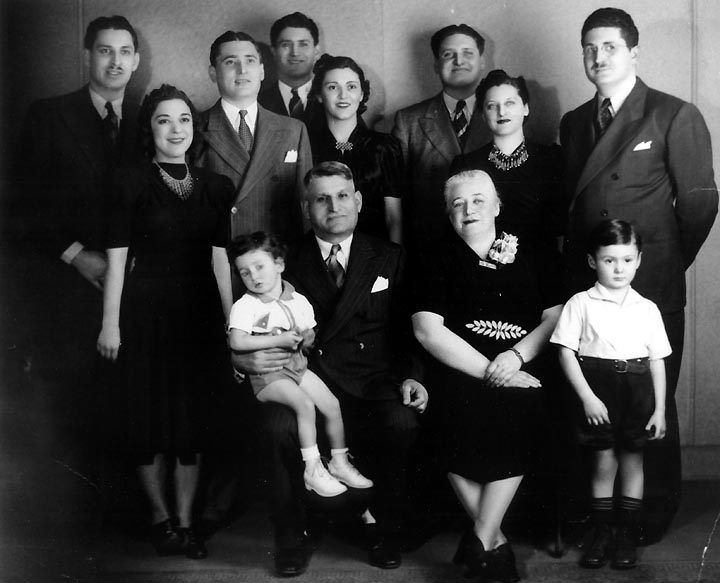
A 1998 VISIT TO THE RANGE
Following the 1998 Niavidel Family Reunion of these close knit Yurburg families in Minneapolis, I went with my sister Shirley Laden Marcus and my brother Ben Laden to visit the Mesabi range to see it with my own eyes and to attempt to make sense of a lifetime of tales of forty degrees below zero winter days and open pit mines. Apparently, others independently had the same idea. Joel Alpert (son of Leah Ellis Alpert), his sister Niki Alpert McCurry, and her husband Alan McCurry also made the trip.
On Sunday afternoon following the reunion, Shirley, Ben, and I drove up to the range and found a hotel room near Eveleth. On Monday morning we made a beeline for Virginia where my father had lived in 1930-2 while attending Virginia Junior College. In July, Virginia was a tired but substantial little town. Much of the commerce of the area has shifted to strip malls and warehouse shopping stores along U.S. 169, the main highway through the range. A giant loon floats on the lake downtown. On the shore is an old train station that has been converted to a bank building.
We walked around the town and came across the public library where we whiled away a couple of hours reading about the history of the region and checking old city directories without intending to do any serious research. We did find Harry Ellis and Sam Ellis in a 1920 directory showing their Jones Street addresses. There is probably a quite a bit more about the family that might be discovered there.
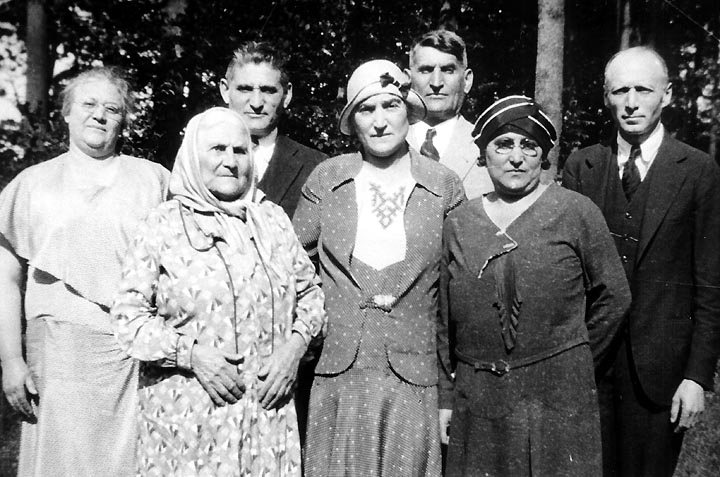
As we walked back to the car we came to the main thoroughfare and were preparing to cross the street, but for some reason, we kept to the left and walked past the Hotel Coates. As we did so, Ben spied a familiar figure in the hotel dining room. It was Joel Alpert whom we had not expected to see for another two years at the next family reunion. Inside, we found that Joel, Niki, and Alan were holding forth with Sam Bankman, the sole remaining Naividel relative living on the range. Sam had been a physicist working at Los Alamos during World War II, but had returned years ago to Virginia to run the family clothing business. Sam Bankman took us to see the Jewish cemetery in Virginia. We were not aware of any Naividel descendents buried there, and we didn't see any. The family had moved from the iron range before there were any deaths in the family (to our knowledge).

From Virginia, we all went on to Kinney, my father's birthplace. He had described to me how to identify the lot where the store was located. He said, "Start at the mine at the end of Main Street, and go two blocks. You'll see it on the corner." He had not been there in sixty-five years, but we had no difficulty in identifying the site on the corner of Main and Maple. Where the "Ladin's Store" once stood, there is now a simple garage. It is diagonally across the street from the firehouse that still stands but appears closed except for some town offices upstairs. There once was a theater on another of the corners at this intersection, but it is now gone. A boarded-up hulk of a brick storefront is directly across Main from the store site, and a stamp-sized post office stands next to it. This intersection was clearly the center of gravity of the Town of Kinney. There were only one or two other intersections to choose from. As we milled about the street marveling at the sights, we were the only people about. There were no other cars. The curtains in a mobile home across the street were pushed furtively aside and then closed. We ventured down toward the mine where a couple of one-story corrugated steel buildings housed a St. Louis County office building and the Kinney Public Library. Across the street from the library was the town's only business establishment, a bar.
In the library, we found some townspeople, two friendly men probably in their early seventies, who were pleased to tell us about the town. One was a Serb who had come to Kinney as a youngster shortly after my father left. He told of boom days at the mine when the town boasted of five grocery stores and five brothels. In an impromptu ceremony, he accepted from us on behalf of the Town of Kinney a copy of the photo of the "Laddin's Store" to be placed in the town archives.
We walked down to the mine which was long ago played out. It has now been reclaimed as a recreational lake and has the look of a pristine sylvan lake perhaps a third of a mile across and ringed by a pine forest. The town is not visible from the lake.
From Kinney, we continued on to Buhl, a forgotten backwater town, little larger than Kinney itself. From Buhl we proceeded to Chisholm where we visited the Ironworld Discovery Center which is something like a theme park where you can ride an old railroad around an open pit mine. It is also the site of the Iron Range Research Center which offers a small but very interesting library set up to allow genealogical research on iron range families. The staff was quite helpful, and we all spent a couple of hours there locating the documents that went into the preparation of this article. These included census lists, naturalization papers, voter registration records, newspaper accounts, and others. Ironworld has a wonderful website located at http://www.ironworld.com/index.html. As it had been a full day, we parted ways with Joel, Niki, and Alan. The following day, Shirley, Ben, and I continued our range tour in Grand Rapids. Grand Rapids, Minnesota is probably not the Grand Rapids, Michigan that you have heard of.
Grand Rapids, Minnesota is probably not actually part of the range, either. It is too far west, but Morris and Sarah Ladin moved their family there in 1928, and my father attended high school there.
In Grand Rapids, we found a nicely refurbished Central School that housed a few shops and a very small historical library. There we found a 1929 Grand Rapids High School Yearbook, "The Pine Needles," which featured a couple of pictures of Bernard Ladin including one of him in the orchestra. We found the old high school which had years ago been converted to a junior high school, and we walked across the bridge spanning the Mississippi River (quite small and narrow at this point close to its source) which my father says he crossed on bicycle. Our plan was to put together a package of brochures, memorabilia, and other jetsam from the trip and to mail them to my father with a hand-stamped "Kinney, Minnesota" postmark. We managed to get this package together and then raced to reach Kinney before the post office closed. Alas, we missed the four o'clock closing by ten minutes (though we were never sure that it was ever really open at all). We mailed it, instead, from Virginia.
We returned to tour Eveleth. Eveleth contains a Hockey Hall of Fame and sports the world's largest hockey stick and hockey puck located on a corner lot downtown. We located the site of "The Fair Store" and photographed the brick sidewall with the name painted on the side.
Eveleth, like other towns on the range, has seen more prosperous times. There were several empty storefronts downtown, The yards were well tended, and there were colorful annual flowers on display and banners hung from porches. Some people are still finding the great Mesabi Range a good place to live. The trip for us was truly a walk through our own history one that was filled with reminiscences and fond memories told to us by our elders.
The following was written by Leslie Bern, son of Fannie Eliashevitz Bern Rubenstein, based upon conversations with Fannie. It was shown to her, and she made corrections two weeks before her death in June 1987.
Fannie, Aunt Fannie, Grandma, Granny Fannie, Bobbe Fannie - all endearing terms for a great, grand woman - Fannie Rubinstein. She was a mother of four boys, grandmother to eleven grandchildren, great grandmother to thirty-two great grandchildren. She was the "god-mother" of a very large family - the consultant - the advisor - the judge - and she had a great deal of influence on many, many people. She was the one her children turned to, to discuss as well as argue about their way of life. She was the confidant of her grandchildren who came seeking advice - talk things over - - very personal discussion even their parents wouldn't be consulted about. She had the knack of making you discuss situations and problems you wouldn't think of revealing to anyone.
A whole city, Rochester, Minnesota, knew her as Aunt Fannie. She was a friend to everyone - gentile or Jew. She was the first Jewish woman from Rochester to become an Eastern Star. She was a walker-- walked miles for as many years as anybody can remember. She befriended the man, woman, or child on the street--always open for conversation. She was a woman libber--years before the women's rights movement even began. She had a memory for people--where they came from, who their relatives were, and what kind of work they did. She remembered in detail the streets, the people and the countryside of where she was born.
Fannie-Freda Rochel Eliashevitz was born in Yurburg (Yurberik), Kovno (Kaunas) in 1890, in what was then known as Lithuania (then part of Russia). She was one of seven children. Her family was in the grain business and milled flour. She loved to tell stories about her father Solomon, who crossed into Germany and into Russia to sell their grains. The family was well off, considering the times and the community in which they lived, but stories of the golden opportunities in America were to affect all their lives. Solomon was only forty-five when he passed away, and the oldest son Reuven decided to go to America. Other children Sam, Harry and Sarah went shortly after. In 1907, Fannie, sister Jenny and mother Miriam sailed for America.
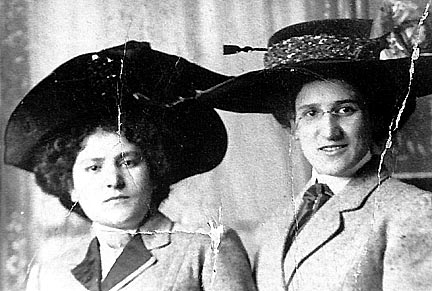
Fannie Ellis and Max Bernstein Altoona, Pennsylvania was the first stop for the new immigrants, as some of the family, the Lippmans [really Naividel, but the name was changed to Lippman upon entry into the United States], who were cousins, had come there first. But they were all destined to go west, to the state of Minnesota, to the Iron Range (North of Minneapolis near Eveleth). The Ellis clan, and many of the relatives were to make their homes in the small communities of "the Range." From the carts in Altoona, the brothers Harry and Sam sought their fortune by opening up department stores in Eveleth and Chisolm, Minnesota. Cousins and other "mishpocha" (family) opened general stores, ladies' stores in Ely, Virginia and Hibbing as well. The open-pit iron-mine workers, the Swedes and the Norwegians, were good customers and the families prospered.
Time passed, and Fannie met Max Bernstein (also from Yurburg), and fell in love. They were married in Virginia, Minnesota on April 17, 1910. They had four boys, Sanford, Howard, Leslie and James - Sholom, Chamasha, Shmuel Lipeh and Yonah. Max was a cattle buyer, but wasn't the kind of provider or father Fannie envisioned her husband should be. Differences in their life styles and goals in life, it was inevitable that there would be a separation.
In 1925, Fannie, determined to start a new life, packed up her belongings, took her four boys, ages two to twelve, and headed for Minneapolis. Many of the families were leaving the Iron Range, because they too had married and had children and headed for the big cities to bring up their children in a more Jewish atmosphere. In Minneapolis, Fannie somehow managed to open up a small department store and lived in the back of the building. Those were hard years, difficult to succeed in business, especially under her circumstances. Her sister Jenny, who had married Max Loceff was also in Minneapolis and moved to Detroit, Michigan [where many Yurburikers settled: Feinberg, Zapolsky, Craine, and Ellis families]. Fannie decided to follow the Loceffs. So in 1927, she again packed her boys and moved to Detroit. She, as well as the oldest son, Sanford, worked long, hard hours in a department store. Howard worked in a men's store. Fannie was restless; felt there was no future for her family there and decided again to move on.
In 1928, her brothers Harry and Sam opened a large ready-to-wear store on 13th and Vliet in Milwaukee, Wisconsin. Shortly after, Sam decided to leave the business, and Harry asked Fannie, as well as Sanford the oldest son to come to Milwaukee to work for him. So Fannie and her four sons headed for Milwaukee in 1929.
The Great Depression came along, and everyone was fighting to make a living. Fannie and her two boys were working, struggling to make ends meet, and yet provide a nice home for her family. Harry decided to open a chain of millinery (woman's hat) stores, so Fannie, enterprising as ever, ventured out again in the business world on her own and opened a ladies' ready-to-wear store on Green Bay Avenue. She then opened another store on Mitchell Street in the early 1930's.
As difficult as conditions were they always lived in a nice home, surrounded by a large family. Many were the family gatherings at the homes, on the beaches, and at the lakes west of Milwaukee (Oconomowoc and Pewaukee). The cousins had their card parties and their picnics--a very close knit family. But the depression took its toll, and many businesses were forced to close. Fannie had her problems as well. The stores went out of business, but it wasn't long after that she opened a department store on 24th and Vliet Street.
Her sister Jenny became very sick and had gone to the Mayo Clinic in Rochester, Minnesota for an operation. Fannie went to visit her and while there, Jenny asked Fannie to visit with someone they knew when they lived in Minneapolis, Isaac Rubinstein. He was now a widower and in the furniture business and had five children, the youngest twelve years old. Fannie met Isaac and then went home to Milwaukee. Shortly thereafter, Isaac came to Milwaukee and it was not long after, on July 28,1934, that they were married.
In the fall of 1934, Fannie took her two youngest sons and moved to Rochester. There she helped raise the youngest of the two families. Many were the large gatherings, and parties that the families looked forward to attending. Fannie was very active in the many communal organizations. The highlight of all her involvements was helping found the Bnai Israel Synagogue and Center in Rochester, which serves thousands of Jews from all over the world each year.
World War II came along, and three of her sons went to serve in the army. Many were the tense moments and anxieties that she endured for four years. Many were the bandages she made and the boxes of honey cake that she mailed to her two youngest boys, James and Leslie, in the South Pacific. The war ended and God was good to her and sent her boys home safe and sound.
After the war was over, Howard settled in Milwaukee. Sanford went to Winona, Minnesota (on the Wisconsin river, near LaCrosse Wisconsin), Jim had gone to Detroit, and Leslie went to Owatonna, Minnesota. But after a short while, all the boys ended up in Milwaukee -- all married and lived good lives.
Isaac passed away in August of 1950 and by the spring of 1952 Fannie decided to move to Milwaukee to be near her boys. She lived on Prospect Avenue, reacquainted herself with friends from years ago-- made new friends and was very happy in her new life style.
There were many events in her lifetime not related here, such as one of the happiest days in her life in April 1925 when she became an American Citizen. Perhaps some day we'll try to recollect many more of the happenings and record them for future references for our children.
Fannie lived to the age of 96, a very full life. There were happy times, sad times and hard times. Many, many people were influenced by her actions, her judgments, her thoughts, and her wisdom. And one thing for sure is that Fannie, Aunt Fannie, Grandma, Granny Fannie, Bobbe Fannie will not be forgotten. She passed away on June 13, 1987.
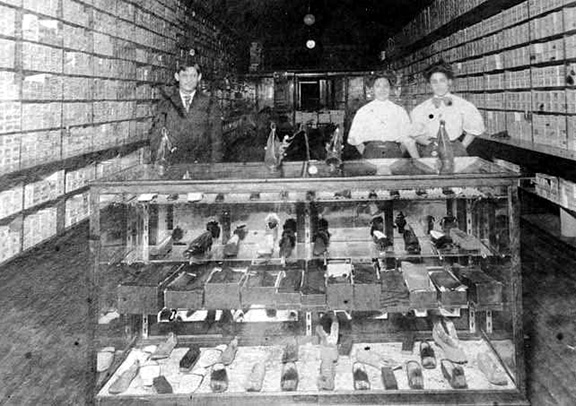
My mother's name, in Lithuania, about 1900 was Sarah Reva Eljsevicious, which was a name that was misspelled and mispronounced from its inception. As we knew it, the pronunciation was Elyasevitz.
In the first decade of the twentieth century, it took at least two weeks to cross the Atlantic Ocean. As we learn from history books, most of the Jews who came here were horribly crowded together in what was called "steerage." This is in the hold, the bottom of the ship, where freight is carried.
Ellis Island, in New York harbor, was the port of entry for immigrants, where they were processed, questioned, separated, classified, and scared to death, but eventually were accepted as legal aliens.
In a day at Ellis Island, my mother became an American. She emerged as Sarah Reva Ellis, to match the names of her brothers, Sam and Harry Ellis, who preceded her here, and proceeded to Altoona, Pennsylvania to stay with relatives.
Like most immigrants at that time, she knew about as much English as I do Hindi. Educational opportunities were very limited for most Europeans, especially women. My mother was literate in Yiddish. She read and wrote Yiddish, but she had to come here to learn English. She didn't earn any college degrees, but she got along quite well in our culture.
My maternal grandfather was Solomon, the baker from Yurburg. He died young, in his early 40s, leaving a widow with seven children, a bakery and an exporting business. They bought grain from the local farmers and sold it to the Germans who came up the Nieman River.
Eventually, my grandmother, Mary, came to America, as did six of her children. I remember her living with us in Kinney, Minnesota when I was very young.
My mother never knew much about the "life styles of the rich and famous." Going to the moon would be like "Out of this World" to her.
My mother was an unpretentious woman, completely devoted to her family. She was a hard worker; keeping house, caring for her four children, and helping my father in the store. She was sincere and straightforward. You couldn't find a better cook and baker. Home was not a place of contention. My parents had a harmonious relationship; neither drank hard liquor, smoked or gambled. They worked together for the good of the family.
Date of birth calculated from age 65 at time of death.